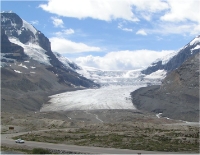
The melting of glaciers due to global warming is threatening fresh water supplies to human populations in a number of regions. Shown here: Canada's Athabasca Glacier.
The controversies generated by climate science in recent years center around the human relationship with the natural world and with natural resources. This month, historian John Brooke puts that critical question in historical perspective—deep historical perspective. For most of human history, our species had to struggle to survive powerful natural forces, like climate and disease. In the past three centuries, however, things have changed dramatically: that struggle has been reshaped by the unprecedented growth of the human population—from under one billion to now over seven. John Brooke's essay forces us to ask whether our population can continue to grow given the current Malthusian pressure on resources and on the earth system itself.
Readers may also want to see these Origins articles on the Global Food Crisis; Food Security and Gene Banks; Population Growth in India; World Water Crisis; Nuclear Power in Japan; U.S. Energy Policy; and Over-Fishing.
In the past few months, extreme weather patterns and a staggering landmark in human population growth combined to give new urgency to the existential question of human prospects on this volatile planet.
The "winter that never was" in North America, as coined by a Canadian magazine, and the unusual cold and snow in Europe coincided with an October 2011 announcement that the global population had reached 7 billion. Taken together, the events raise deep concerns over long-term patterns in the relationship between human population and the earth's climate.
Humanity has been around for a very long time, but in only a few centuries we have grown to vast numbers and transformed our world in unprecedented ways. The very long view of human history—revised in the recent research of climate scientists and environmental historians—uncovers an interesting paradox and offers some sobering conclusions as we chart a course into the future.
Our ancestors lived short, difficult lives, hemmed in by environmental constraints. Whole societies were frequently overturned by sudden, unpredictable, and naturally occurring climatic shifts. In their efforts to survive, our predecessors did little to threaten the earth system that supported them.
We, by contrast, have arrived at the opposite situation: our individual lives are far more healthy and stable, but we have begun to seriously degrade the earth system that supports us. Until recently, we thought we had transcended the environmental constraints that so bounded our forebears. But efforts to break free from the bonds of nature have tended to transform the earth's climate in unpredictable ways.
Across most of human history, overpopulation didn't pose a problem to the survival of the species. Rather, humans stood under the recurring threat of natural disasters, climatic change, drought and famine, and epidemic disease on a scale that we cannot imagine. Until about 300 years ago, every large-scale reversal of human fortunes was driven by such natural forces.
The contemporary world, forged in the revolutionary changes of industry and science that began in the eighteenth century, is fundamentally different. Our vast numbers—7 billion and climbing—have begun to interact with the natural workings of the earth system in complex, unprecedented ways and in a markedly short timeframe.
Geologists are currently debating whether the last 200 to 300 years should be given a new label: the "Anthropocene," the contemporary geological period during which human action significantly reshapes global ecosystems.
We now face the dual danger of an unsustainably large global population that has set in motion a series of changes to climate that—like the many naturally occurring shifts in climate over human history—threaten our civilizations and our existence. Environmental priorities have become far more desperate imperatives in the past 20 years, as we realize that the problem facing humanity is maintaining the essential platform for human life. Life as we know it is changing fast before our eyes.
Deep History: Climate and Human Life before the Great Transition
Let us take a quick look at this sweep of human history and the climate-human relationship on this ever changing planet. Our deep origins lie in the evolutionary history of advanced primates 5 to 10 million years ago. Modern humanity—the species Homo sapiens sapiens—was born in the stresses of the glacial cycles of the Pleistocene epoch (which ran from approximately 2.6 million to 12,000 years ago).
Truly modern humans began to emerge around 250,000 years ago, as evidenced by significant shifts in stone tool technology and the "modernization" of fossil skeletons. Genetics suggests that the earliest modern humans at first comprised a small breeding population, perhaps in the thousands. But they began to grow in numbers and colonize the earth, a process of increase and migration that did not end until Polynesians arrived in Hawaii less than 2,000 years ago.
Over the past three decades, as scientists have sought to establish a baseline from which to measure human-induced climate change, our knowledge about the climate inhabited by our ancestors has advanced dramatically in scope and precision.
Most importantly, scientists and historians have come to realize that, from the great warm-up of the early Holocene (approximately 12,000 years ago) until the eighteenth century virtually every significant transition in the human condition was in some measure shaped by shifting climatic conditions, at times interwoven with the onslaught of disease and epidemics.
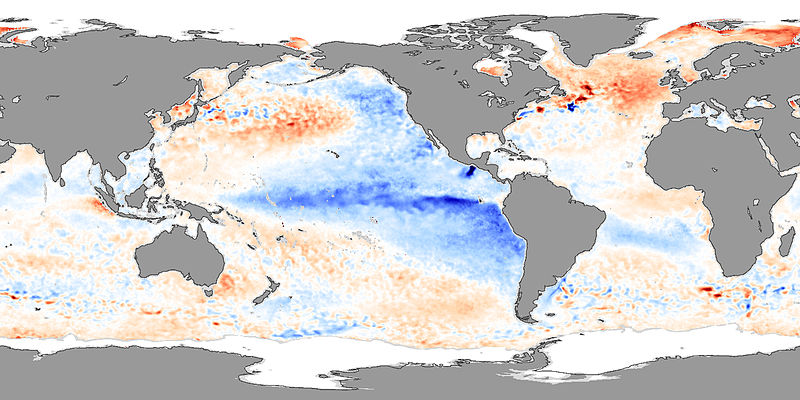
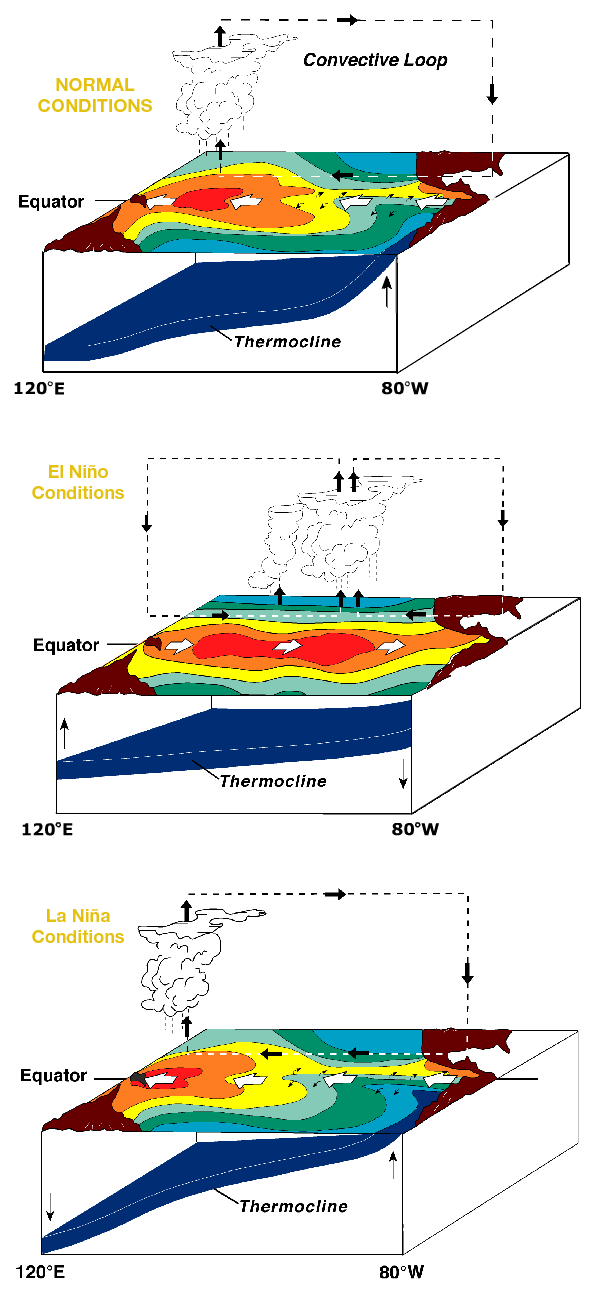
Evidence indicates that that there has been a broad coherence in global climatic patterns during the 12,000 years of the Holocene. A warm North Hemisphere has been associated with La Niña conditions in the Pacific and the Americas, and strong monsoons bringing summer precipitation to Asia and much of Africa. Conversely, a cold North Hemisphere has been associated with El Niño conditions bringing storms and flooding to the west coasts of the Americas, and weakening the Afro-Asiatic monsoons.
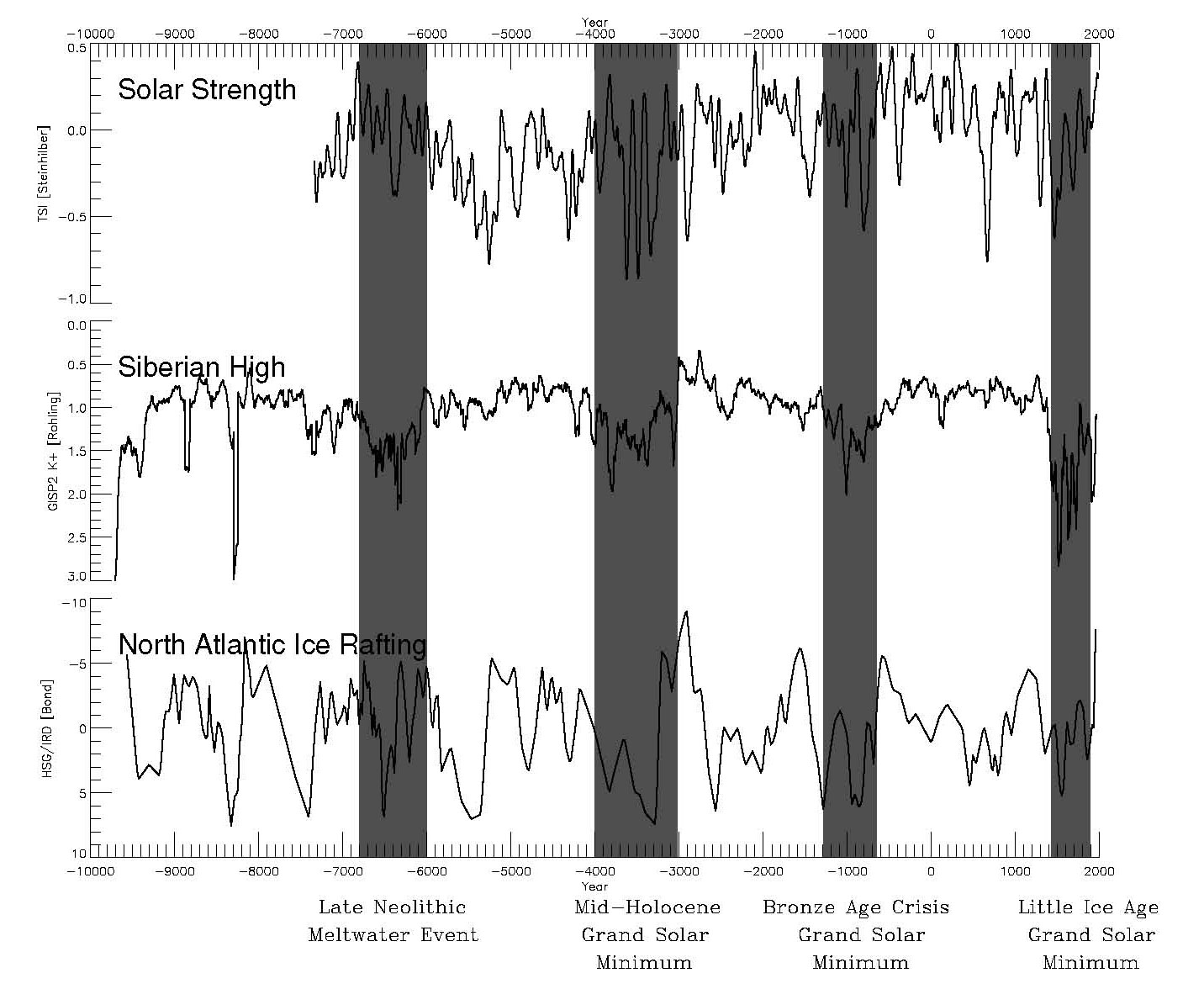
However, the current warm Holocene period, which is actually an interglacial era, has been punctuated with sharp warmups and coolings that are caused by two distinct climate cycles. The first are "Bond events," discovered in the early 1990s. Marked by great bursts of ice-rafting in the North Atlantic, Bond event sequences appear approximately every 1,470 years and are associated with broadly cooler global climates.
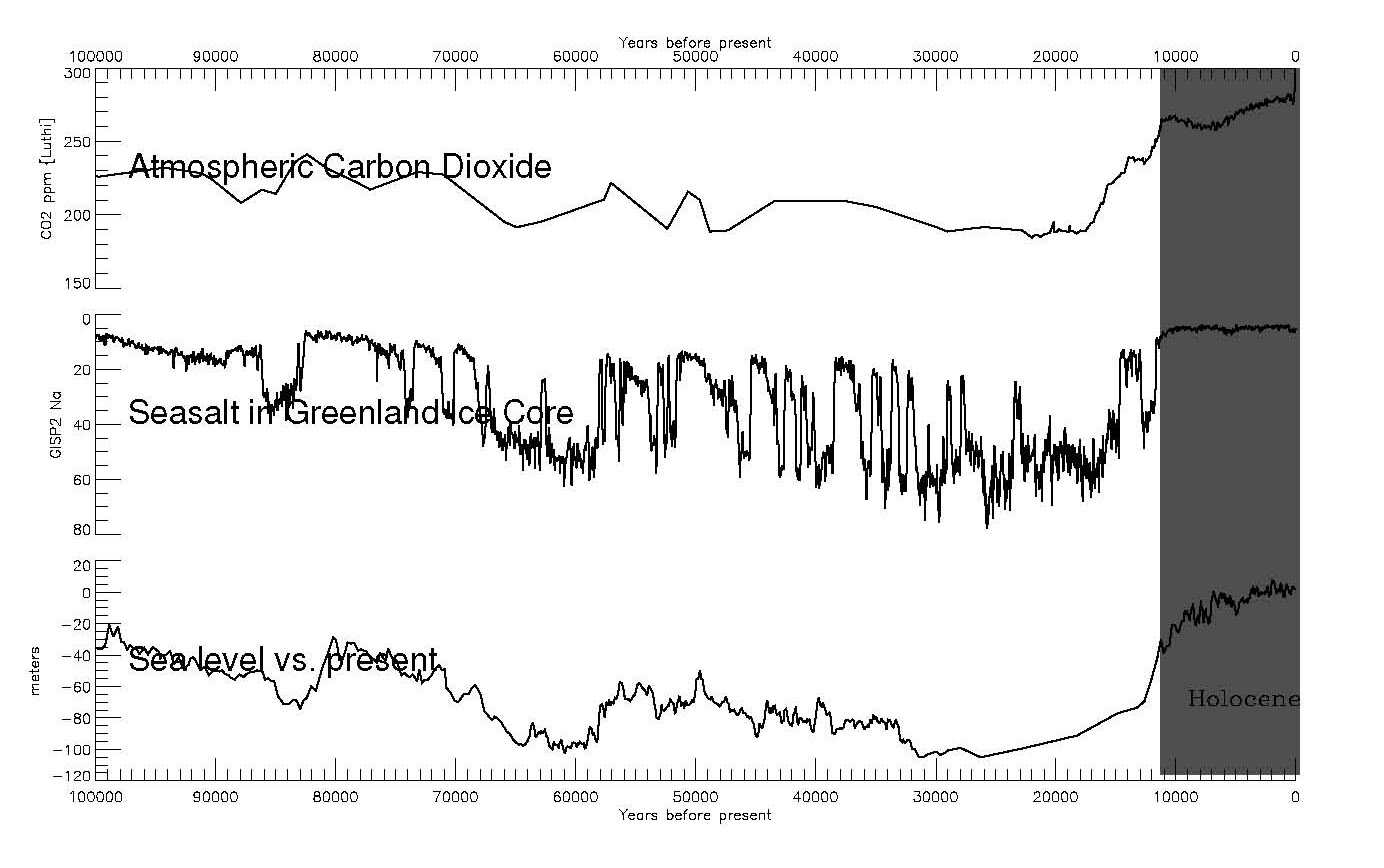
More importantly, the planet also experiences cooling cycles as a result of 2,300-year cycles of grand solar minima, called the Hallstatt cycle (when the strength of the sun on the planet is at a minimum). Three times during the Holocene, this cycle brought centuries of cold, almost glacial climates, most recently in the Little Ice Age of approximately 1300 to 1700 A.D. [See Figure 1]
These climate events molded the fate of the human societies that lived in them.
A major cold event in the 6000s B.C., peaking at 6200 B.C., was a post-glacial episode known as a "meltwater" crisis. It drove the collapse of early agricultural societies in the Fertile Crescent, and their subsequent intensification, as well as the beginning of domestication in the tropics.
The first major Hallstatt grand minimum, in the fourth millennium B.C., ended in intense droughts at 3200-3000 B.C. that launched the first states in Mesopotamia, Egypt, and the Indus Valley. A burst of El Niño likely launched the first city-states in coastal Peru.
A mystery drought at 2200 B.C., which registered throughout the world but the causes of which are as yet unclear, punctuated the histories of Bronze Age societies throughout the Old World, interrupting them around the Mediterranean, ending an epoch of urban civilization in the Indus and launching the first state in China.
The second major Hallstatt minimum hit around 1200 B.C., with a burst of cold combining around the eastern Mediterranean with what has been called an "earthquake storm." The result was war, famine, and epidemic disease—events that had nothing to do with the pressure of overpopulation, and everything to do with a potent change in the earth system.
This global climatic reversal brought the end of the Bronze Age in southwest Asia and Egypt, and the collapse of the Shang dynasty in China, where climate reversal would bring down dynasties regularly for the next 3,000 years.
Rainfall shifts in this epoch were involved in the establishment of the large villages and towns of "Early Formative" Mesoamerica, which would establish the basis for rise of states. A whiplash of El Niño flooding and drought is similarly seen as establishing the basis for the Early Horizon cultures and the Chavin cult in the Andes.
The ebb and flow of climate over the next 2,000 years—a warm Classical antiquity, a cold Dark Ages, a warm Medieval Regime, and a cold Hallstatt- driven Little Ice Age—interacted with war and epidemic to powerfully shape the fate of cultures and states around the world.
If the details of this history are too complex to even begin to describe here, the lessons of the new climate history seem to be plain.
First, for most of human history, major crises and ruptures in human societies came as a result of climate change, not because of too many people or human misuse of resources. Second, deep human history warns us that when climate patterns did change significantly, the result was societal collapse, war, epidemics, and fundamental restructurings of the geography and structures of human communities.
Ancient and medieval agrarian societies were threatened by under-population, not overpopulation. When populations grew during climatic optimums, they generally managed to achieve incremental improvements to agricultural productivity.
Life was not pleasant. Studies of wealth and income present a persistent pattern of hierarchy and poverty. A peasant family in the late Middle Ages, on average, had a standard of living not unlike that of a peasant family in the Bronze Age, and probably the late Neolithic. Average life expectancy at birth ranged from the low twenties to the mid-thirties at best.
But these societies were amazingly durable; they lasted for hundreds of years at a stretch, and then only "collapsed" when hammered by earth system forces. These were crises driven by external factors of the natural environment, not internal pressures of overpopulation or economic practices that degraded their surrounding environment.
The Great Transition: Into the Anthropocene
Beginning in the eighteenth century, changes in human population size and economic activity transformed the long-standing relationship between climate and people.
After the sudden warming that followed the final glaciation of the last Pleistocene Ice Age, by perhaps 9000 B.C., humanity might have numbered as many as 7 million (a guess to be sure, but based on a mountain of evidence). Since that population baseline, humanity grew slowly for thousands of years—generally at rates of less than 0.2% per year, with crises of collapsing populations counterbalanced by occasional surges.
But then, from roughly 1750 forward, the population began to grow at unprecedented annual rates: 0.46%, 0.61%, and 0.64%. Then the growth of human numbers accelerated, hitting 2 billion around 1930 and 3 billion around 1960. During the 1950s, annual growth rates climbed from 1.7% to 1.9%, and then peaked in 1962 and 1963 at a rate of 2% per year.
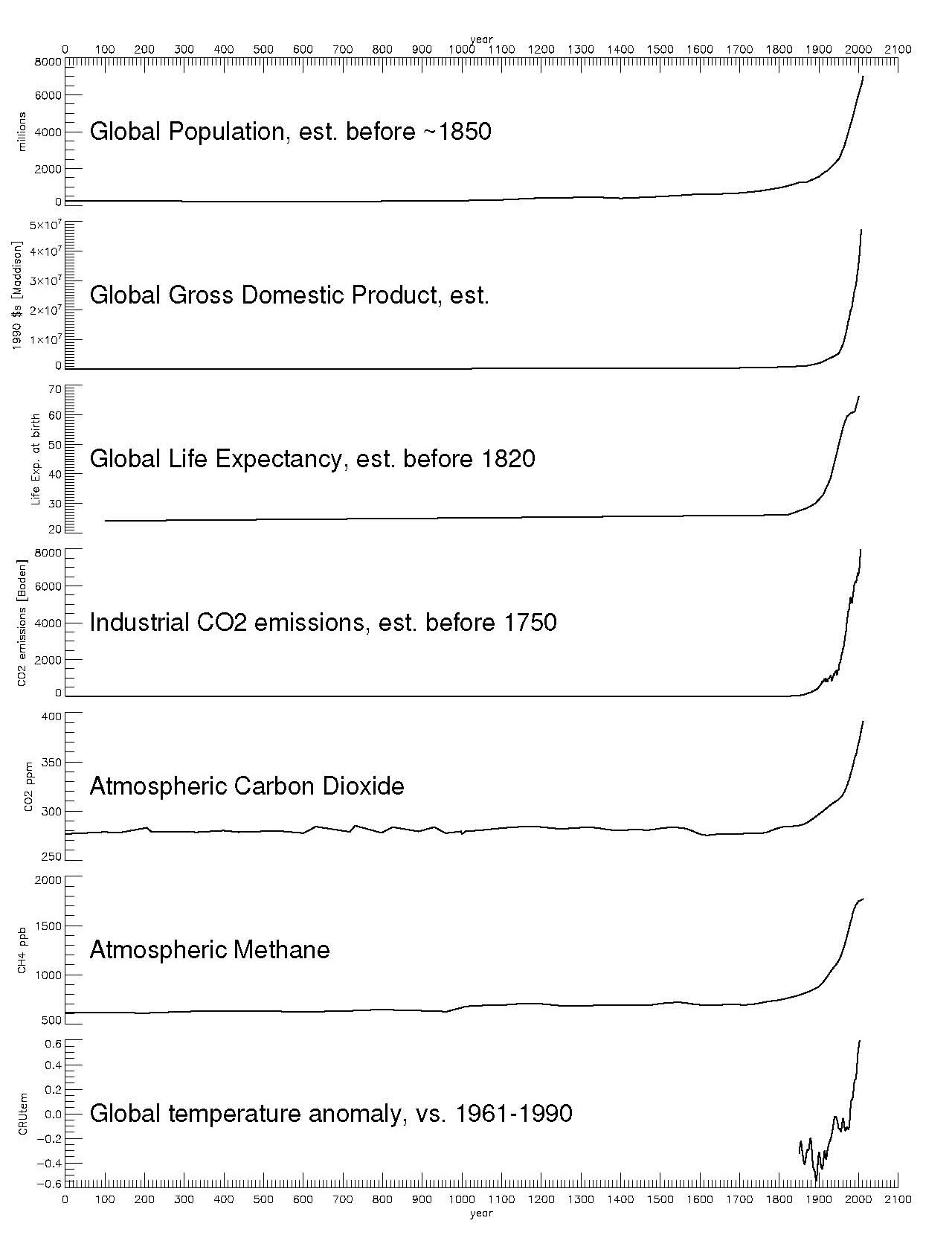
Since then the rate has slowed to 1.3% per year. Nonetheless, we hit an estimated 7 billion in October 2011: a total population a thousand times greater than the hunter-gather peoples who inhabited the earth after the last glaciation, a mere 12,000 years ago. [See Figure 2]
It helps to put this accelerating history in generational terms. Assuming roughly twenty-five years per generation, there have been 11,000-12,000 generations since the dawn of modern human abilities 250,000 ago, 500 since the end of the last ice ages, 200 since the founding of the first states in 3000 B.C., and perhaps 25 since 1492, the age of Columbus. But there have been only five to six generations since the launch of the modern industrial scientific revolutions around 1870.
Taking place a little more than a century ago, these revolutions brought us household electricity, the internal combustion engine, and modern medicine. These technological and scientific advances, as historian Vaclav Smil has argued, were a fundamental leap, taking humans into a new world utterly unknown to their forebears. The benefits of this revolution to the quality and length of human life have been enormous.
The team led by Roderick Floud and Robert W. Fogel has detailed this era, especially the way that life expectancy has risen dramatically. Where the average age of death around the world in 1820 was roughly 26, it is currently roughly 66, in the high seventies to low eighties for developed countries, and in the mid-fifties for the least developed countries. The increase in life expectancy—driven by our advancing control of disease mortality—is the direct cause of the rise of global population to 7 billion.
Heights and weights of mature adults have also risen dramatically from the late nineteenth century with better nutrition and medical care. An estimated one-fifth of the population of eighteenth-century France was too weak to work; conversely, today's stronger bodies and healthier lives translate into higher and higher levels of intellectual capability and more effective work lives, with progressive cumulative effects on the prospects of future generations.
Across the planet, we are all doing much better than our recent and distant ancestors (although unevenly, with people in certain regions faring better than those in others).
Human Population and the Earth System
But this great transformation has had an enormous impact on the earth system.
No longer simply worrying about a degradation of nature, scientists fear that we are pushing the limits of the envelope that stands between us and the chaos of space. In a little more than a century—in the blink of an eye in historical terms—we have begun to destabilize the workings of the biological, geological, and atmospheric system that maintains life as we know it.
The improved lives we enjoy individually are in direct proportion to how much carbon-based fuel we burn. Carbon dioxide (CO2) occurs naturally in the atmosphere, and since the end of the ice age it has hovered around 280 parts per million (ppm). But while it occurs naturally, additional CO2 is a byproduct of the burning of fossil fuels like coal, oil, and gasoline. It is also released when forests are cleared and burned, and even when soil is plowed.
In the middle of the nineteenth century, these levels began to rise, reaching 315 ppm in 1953, the year that I was born. Last year the readings hit 390 ppm, and this spring the monthly averages have been 393 and 394 ppm. Similarly, levels of the more potent gas methane have more than doubled, from a background in the eighteenth century of 700 parts per billion to over 1,750 parts per billion today.
Higher levels of CO2 and methane in the atmosphere can cause global warming by trapping heat and solar energy, in what is known as the greenhouse effect. [See Figure 2 and Figure 3]
The link between human activity and the levels of these gases in the atmosphere is readily apparent. The rising levels of greenhouse gases in the atmosphere precisely track with the growth of population and gross domestic product over the past century. They also track with the estimates of a rise in industrial emissions from the world economy, which in frightening detail echoes the pulse of expansion, war, depression, expansion, and recession over the recent past. [See Figure 2]
Despite a drum-beat of denial from powerful vested interests, climate change is real and it is upon us. Scientists and policy-makers now debate whether it would be safe to allow atmospheric CO2 to rise to roughly 450 ppm, a level not seen since before the Oligocene (34 million to 23 million years ago), just as the Antarctic ice sheet began to form. We read daily in the newspaper about the effects of these greenhouse gases: the earth is warming up and changing its systemic behavior.
The oceans, which absorb CO2 naturally, have reached their limits and are already acidifying, threatening marine food chains already damaged from industrial fishing. Sea levels are rising, putting coastal populations around the world into serious peril from storm surges, and these storms may become more frequent. [See Figure 3]
We are bombarded with news of strange weather patterns: persistent droughts in the American south, flooding in Pakistan, Thailand, the Philippines, and China. These patterns are the signature of the "La Niña" climatic pattern that is suspected in the intensification of Atlantic hurricanes, Pacific cyclones, and Midwestern tornadoes.
And the scientists' greatest fear seems to be unfolding: having predicted that Arctic sea-ice would melt on a gradual curve down to the end of the century, they are finding that it has been melting since the 1970s much faster than their models predicted. Here the concern is the CO2 and methane frozen in the seafloor and in permafrost under the tundra; already bubbling to the surface, these gases double the greenhouse pressures in the atmosphere in short order.
The actual hard dollar costs of inaction or business as usual are now becoming apparent. Destructive climatic events (compounded by the inevitable tectonic events) already require massive expenditures for cleanup and reconstruction, and these will only get worse as sea levels rise and storms intensify.
Warming temperatures are moving ecological zones northward, and with this shift, tropical diseases will intensify and advance into temperate regions. The breakdown of oceanic food chains is already undermining important food resources, and the shifting and strengthening patterns of drought will seriously affect grain-growing regions around the world. Drought and the melt-off of tropical mountain glaciers are threatening the supply of fresh water to huge populations in several regions around the globe.
If some interest groups deny the evidence for climate change, other major institutions do not: the escalating cost of managing crises is a dire threat to the insurance industry, which has had to rethink its business models based on now-unstable predictions of natural disasters.
Meanwhile, the military—charged with maintaining a stable environment for American and indeed global economies—is actively planning for a wave of resource wars, water wars, and subsistence wars in the coming decades.
The Malthusian Model of Environmental History
The Anthropocene constitutes a great human-made rupture with the past—and this rupture has caused historians and scientists to rethink the relationships between nature, climate, and human communities.
Since the 1960s, a new discipline of environmental history began to address big questions of the changing configurations of nature, population, and economies. From the beginning, environmental historians engaged with the formative thinking of a famous English minister, the Reverend Thomas Malthus.
Looking around him in the 1790s, Malthus was alarmed by a rapidly growing English population, and wrote his Essay on Population to sound the warning. Fueled by the natural attraction between the sexes, population could grow geometrically, while the products of the farm could only grow arithmetically, if that.
So Malthus, the good moralist, issued his warning: unless the "preventive checks" of social virtue were applied, fast, the "positive checks" of famine, pestilence, and war would cut human numbers down to size.
It turns out, I would argue, that Malthus was wrong about his past, though very right to be concerned about his present and future.
According to the Malthusian paradigm, ancient and medieval societies lived on the razor's edge of crisis, and were frequently driven into crisis by overpopulation. With the Industrial Revolution, so the story goes, we escaped Malthus's grim reaper through technological advance.
Starting in the 1960s, environmental historians told a different story. Alarmed by the degradation of the natural environment, they began to sound the Malthusian alarm.
Their basic concern is manifested in new calculations of human pressure on the earth's carrying capacity—HANPP, or "human appropriation of net primary productivity": at present humans consume roughly a quarter of the total annual biological activity on the entire globe. These calculations are the essence of the Malthusian paradigm. Human numbers might well overwhelm the biological capacity of the earth to sustain them.
If the first generation of environmental historians attacked the common understanding that humanity had escaped Malthus, they also perpetuated the common understanding that pre-modern societies stood on the razor's edge of Malthusian crisis.
In their telling, the environmental history of humanity was a long series of inevitable crises of population overwhelming local resources. The standard list includes the degradation of soil in Mesopotamia, collapse of Mayan civilization and Easter Island, the Black Death in the Middle age, and the crises that struck across Eurasia in the seventeenth century. These events were moral examples of, in Jared Diamond's words, "societies that chose to fail" by not altering their impact on the natural environment.
I have been teaching environmental history since 1994. For almost a decade I followed the Malthusian orthodoxy of the founding generation of environmental historians—the human past was filled with Malthusian crises—in which the geometric rise of population overran the ability of limited technology to feed everyone.
Starting in the late 1990s the evidence for abrupt climate change—in climate history, archaeology, and economic history—began to complicate this story. What if these ancient societies were not doing too badly, but the playing field and goalposts changed fundamentally, on scales that they simply could not anticipate?
The Reverend Malthus was right about the world in which he lived: populations in late-eighteenth-century England were indeed growing at an unprecedented rate, as were populations in much of Europe. But China, England, and the United States led the way, England and China with annual rates of 1.3% per year—dwarfed by the surging population advance in eighteenth and nineteenth century America—but well above the healthy global average of approximately 0.6%. Nothing like this had happened before, and Malthus had a reason to be nervous about the press of population.
England escaped the Malthusian calculus through industrialization and imperial reach, and the United States escaped through the conquest of "free" land to the west. China did not escape, suffering a devastating crisis in the middle of the nineteenth century when the Taiping Civil War of 1850-1864 killed 20 million people, perhaps as many as 70 million.
The new climate science—and the insights of a generation of archaeologists and economic historians—suggests that this crisis in China was the first true civilizational Malthusian crisis humanity ever suffered. In fact, it was literally the first in human history that was not, in great measure, the result of abrupt climate change.
Human Prospects on a Volatile Earth
With the new results of climate science, historians know quite a lot about how climates have changed in the past, and the result is a renewed appreciation of the global earth system as an autonomous, exogenous actor in human history. The ways in which naturally induced climate change radically transformed human existence in past millennia is a wake-up call to the prospects of similar convulsions as a result of the contemporary, human-induced climate transformations.
At the same time, the long perspective of climate history allows us to reconsider the Malthusian calculus, and it highlights the burgeoning, unprecedented crisis of population we now face.
Ancient populations suffered poor individual life outcomes, with poor health and low life expectancy; conversely, they imposed relatively low environmental impact and enjoyed long-term societal sustainability. Whatever their flaws, ancient societies should not be condemned for failings of environmental consciousness.
Modern populations, by contrast, enjoy excellent individual outcomes, with amazingly good health and high life expectancy (even if varying geographically), but are causing systemic changes to the entire global ecology. Whether these changes are sustainable is very much an open question.
In the life spans of the past five to six generations, the double-edged sword of science and industry has carried humanity through a great and paradoxical transition to prosperity and peril. After two decades of sounding the warning, most in the scientific community are exhausted and depressed.
Throughout the world people attuned to the perils upon us are sobered by how much it will cost and how long it will take to construct a new energy system to fill the place that fossil fuels now occupy in the delivery of essential services to massive new populations around the world. Close to home, despite the fact that Americans per capita consume roughly twice the hydrocarbons of anyone else in the world, there is no sign that we are willing to voluntarily restrain ourselves.
The fertility transition that has begun to slow the rate of global population growth is a hopeful sign. Certainly much of the reduction of fertility has come by government fiat in China, but it is notable how in many countries—India, Iran, Bangladesh stand out as examples—the classic transition of educating women and raising aspirations has reduced the pressure of new births to the point that experts see population growth rates stabilizing and reversing in the coming decades.
On the climate front, the Montreal protocols to control ozone-depleting CFC emissions have been a great success since they went into effect in 1989, and this experience stands as a model for the control of carbon dioxide and other greenhouse gases.
Attention is now being focused on strictly controlling methane and black soot—the most extreme and volatile elements of the greenhouse gases emitted by the global economies. Getting these under control might make significant differences, buying time for longer-range shifts to take effect.
Whatever the future holds, it is coming at us with breakneck speed. And just as a long historical horizon allows us to look back at the circumstances of previous generations, it demands that we think forward to the fortunes of generations to come.
Check out a lesson plan based on this article: World Population
Elizabeth Harney, In Senghor's Shadow: Art, Politics, and the Avant-Garde in Senegal, 1960-1995 (Durham: Duke University Press, 2004).
John Glover, Sufism and Jihad in Modern Senegal: The Murid Order (Rochester: Rochester University Press, 2007).
Linda Beck, Brokering Democracy in Africa: The Rise of Clientelist Democracy in Senegal (New York: Palgrave Macmillan, 2008).
Eric Edi, Globalization and Politics in the Economic Community of West African States (Columbia: Carolina Academic Press, 2007).
Jean-François Bayart, The State in Africa: The Politics of the Belly (London and New York, Longman, 1993).
Tony Chafer, The End of Empire in French West Africa: France's Successful Decolonization? (Oxford and New York: Berg, 2002).
Gary Wilder, The French Imperial Nation-State: Negritude and Colonial Humanism between the Two World Wars (Chicago: University of Chicago Press, 2005).
Ibrahima Diallo, The Politics of National Languages in Postcolonial Senegal (Cambria Press, 2010).