
On May 8, 1946, shortly before 10 p.m., two teenage Estonian schoolgirls, Aili Jürgenson and Ageeda Paavel, set out to blow up a wooden memorial dedicated to fallen Soviet Red Army soldiers. Using pipes stolen from chair legs, a fuse, and a piece of detonator cord procured by a friend’s cousin, the girls quickly placed their makeshift bomb at the base of the monument.
They lit the fuse and ran, only hearing the explosion behind them as they made their way through the streets of Tallinn. As an adult, Jürgenson conceded, “Of course, we could have burned the monument. But a bang was more effective.”
After the Estonian War of Independence in 1918, the new Estonian government erected nearly 200 monuments to commemorate Estonia’s newfound freedom from the tsarist Empire. World War II and the eventual victory of the Soviet Union over Nazi Germany brought an end to these monuments when the Soviet occupation of Estonia began in 1940.
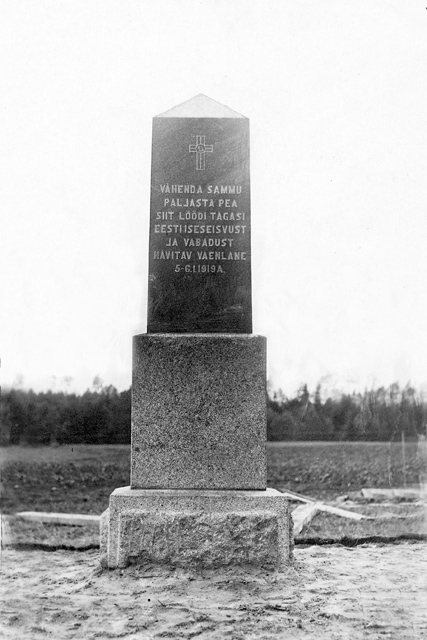
In addition to the general destruction of war, the Soviet Union removed many Estonian monuments, replacing them instead with memorials better suited to communist sensibilities. These emphasized the triumph of communism over fascism.
In 1946, a year after the end of the war, Jürgenson and Paavel, then 14- and 15-years old, walked daily by the wooden Soviet memorial on their way to the nearby Hariduse Street school. Both girls engaged in anti-Soviet activity, like distributing anti-communist leaflets, and both deeply resented the monument’s presence, viewing the memorial as a violation of Estonian sovereignty.
“When the Russians came to Estonia in 1940,” Paavel later recalled, “they removed all memorials to the War of Independence. That didn’t sit right with us. We decided that we’d get the Russians back and show them what it feels like to have statues torn down.”
Yet, by the next morning, May 9 or Victory Day (commemorating the end of World War II), local Soviet authorities had already replaced the splintered memorial. Carpenters from the nearby Patarei prison worked through the night to construct a new monument and authorities began looking for the party responsible for the memorial’s destruction.
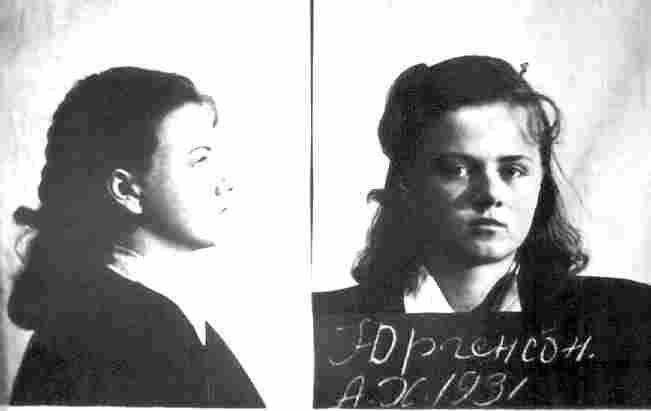
A week later, Soviet authorities arrested both Jürgenson and Paavel for assisting a wounded anti-Soviet partisan at a local hospital. While the girls were in custody, Jürgenson’s boyfriend informed the police of the girls’ involvement in the explosion. Soviet authorities soon sentenced both Jürgenson and Paavel to 8 years of exile in prison camps in the Russian interior and present-day Ukraine, respectively.
Bronze Soldier, Bronze Nights
By the time Paavel and Jürgenson returned to Estonia in 1955 and 1971, respectively, the wooden memorial they destroyed had long since been replaced by a bronze statue of a soldier.
Placed in 1947, the Bronze Soldier officially marked the graves of 14 Red Army soldiers and took on increasing significance in local life as the site of public celebrations.
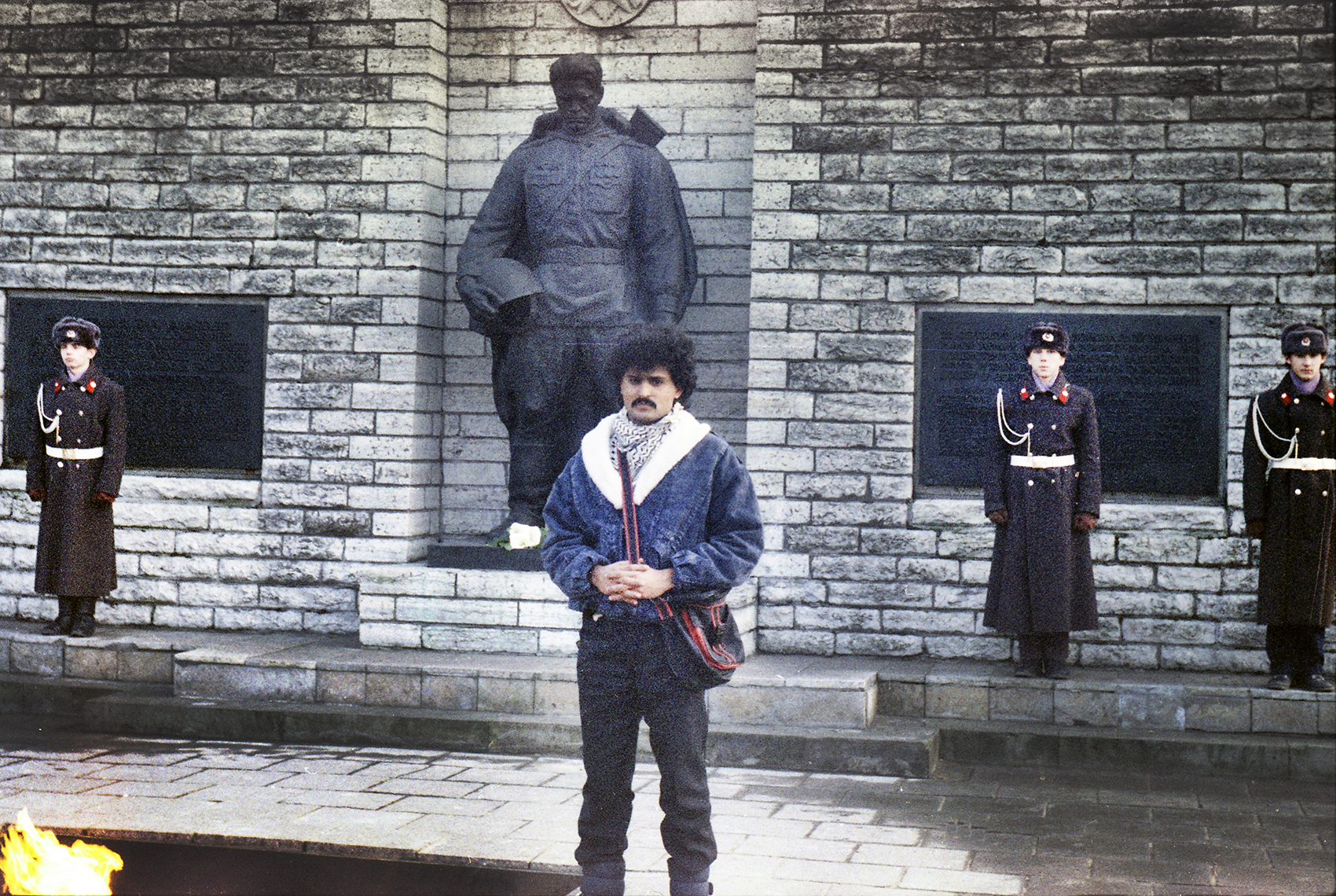
As in many parts of the Soviet Union, the Bronze Soldier offered a public space for mourning the death and destruction brought about by World War II, although it primarily held this function for ethnic Russians.
Ceremonies like lighting an eternal flame, which sat at the base of the Soldier, provided a public outlet for grief. War memorials also provided public reminders of the victory of the Soviet Union over Nazi Germany.
For Estonians, monuments like the Bronze Soldier failed to capture their collective memory. Many Estonians associated such memorials with the illegal occupation of the Soviet Union. While Estonians participated in the rituals of Soviet life, like Victory Day celebrations, many failed to personally identify with them.
The collapse of the Soviet Union in 1991 further complicated the Estonian relationship to the Bronze Soldier. Although the dissolution of the Soviet Union brought about Estonian re-independence, it also ushered in a rapid and tumultuous transition to capitalism.
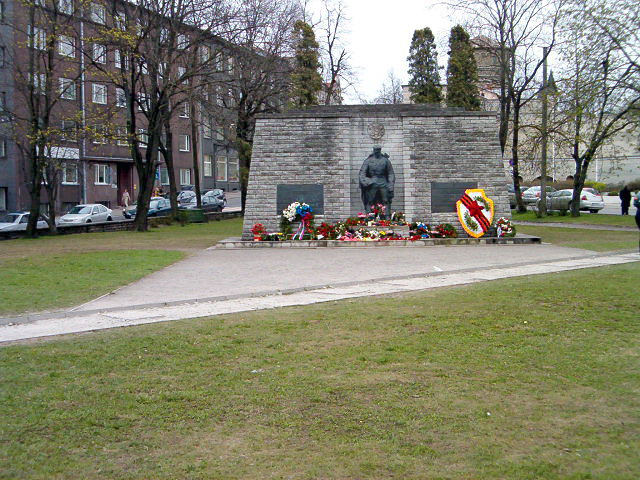
In the absence of a Soviet government, residual Estonian anger toward the Soviet Union turned toward local ethnic Russians and their monuments. For Russians, many of whom considered themselves Soviet citizens, the Bronze Soldier came to symbolize a home to which they could no longer return.
Estonia’s accession to the European Union in 2004 brought these tensions to a boiling point.
By 2006, public debate centered on removing the Bronze Soldier. Although Jürgenson threatened to bomb the statue herself if the government failed to remove it, the Estonian public remained largely undecided about dismantling the monument.
On April 26, 2007, however, the Estonian government prepared to move the Bronze Soldier without providing prior notice to the public. Seeing the monument covered by a white tent and surrounded by a fence, predominantly ethnic-Russian protestors living in Tallinn gathered to protest the movement of the monument and the reburial of the interred soldiers.

Nearly 1500 protestors demonstrated for two days during the “Bronze Nights,” shouting chants of “fascists.” The protests led to nearly 800 arrests, one death, and over 150 injuries.
Following the Bronze Nights, the Estonian government relocated the monument and interred the soldiers' remains at the Defense Forces Cemetery in Tallinn, approximately two miles southeast of their original location.
“Tearing Open Old Wounds”
The struggle to determine what appears in public space that Jürgenson and Paavel sparked in 1946 continues today.
In 2022, the Bronze Soldier once again functioned as an outlet for public anger. Following Russia’s invasion of Ukraine on February 24 (also Estonian Independence Day), vandals removed one of the medals engraved on the chest of the soldier, sparking a new wave of debate on the function of Soviet monuments in Estonia in a new era of Russian aggression.
By that summer, then-prime minister Kaja Kallas announced the removal of Soviet-era war monuments from public spaces in Narva, a predominantly ethnically Russian town on the Estonian border with Russia. Kallas framed the movement of the T-34 tank monument from a public park to the Estonian War Museum as an effort to preserve internal security, evoking fears of ethnic Russian allegiance as a potential weapon to regain Estonian territory.
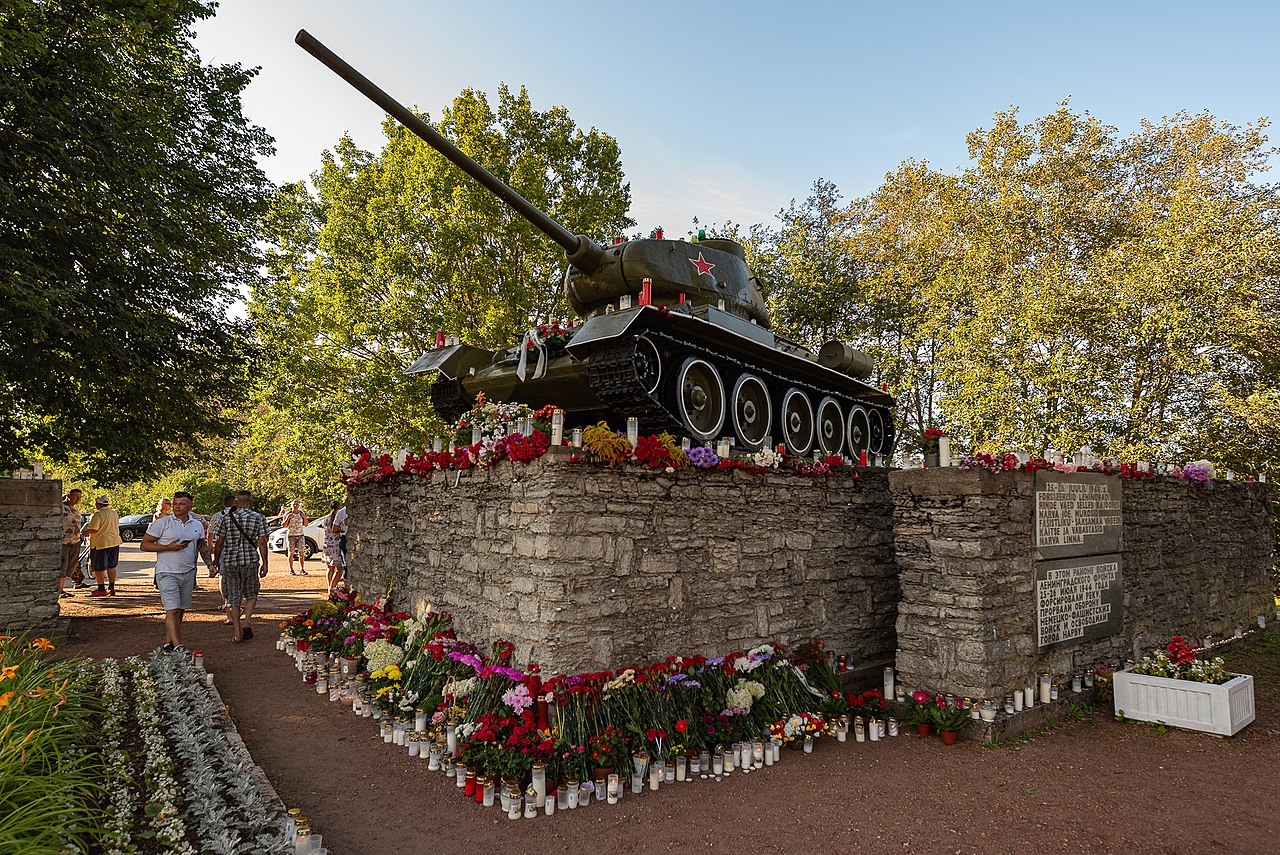
She argued for the removal of the monument in a press release: “We will not afford Russia the opportunity to use the past to disturb the peace in Estonia...This is why the government adopted the decision to remove the war monuments of the foreign regime there to prevent them from mobilizing more hostility in society and tearing open old wounds.”
In response, the Kremlin placed Kallas on a wanted list for “hostile action toward historic memory.”
Although Aili Jürgenson passed away in 2017, Ageeda Paavel lived to see this latest debate over monuments in Estonia reignite. She passed away in 2023, waiting to see if the old wounds of contested public space and Estonian identity opened in 1946 will ever fully heal.

Learn more:
Martin Ehala, "The Bronze Soldier: Identity Threat and Maintenance in Estonia", Journal of Baltic Studies 40, no. 1 (2009): 139–58.
Kristen Ghodsee and Mitchell Orenstein, Taking Stock of Shock: Social Consequences of the 1989 Revolutions. Oxford University Press, 2021.
Lisa Kirschenbaum, The Legacy of the Siege of Leningrad, 1941-1995: Myth, Memories, and Monuments. Cambridge University Press, 2009.
Kristo Nurmis, "Our Real Chances of Survival": Estonian Democrats between the Nazis and the Allies", Peripherial Histories, April 2025.
Jelena Subotić, Yellow Star, Red Star: Holocaust Remembrance After Communism. Cornell University Press, 2019.


