
In April 1936, a series of Arab-Jewish clashes led to an Arab general strike that developed into an armed revolt against the British mandate government and the Zionist movement in Palestine. Although the British crushed the revolt by 1939, it had a profound impact on the evolution of the Zionist-Arab conflict.
Historians date the beginning of the Great 1936-39 Arab Revolt, as it came to be known, to the killing of two Jews by Palestinian Arabs near the town of Tulkarm on April 15, 1936, followed by Jewish retaliation against Palestinians that expanded into riots in Jaffa and Tel Aviv.
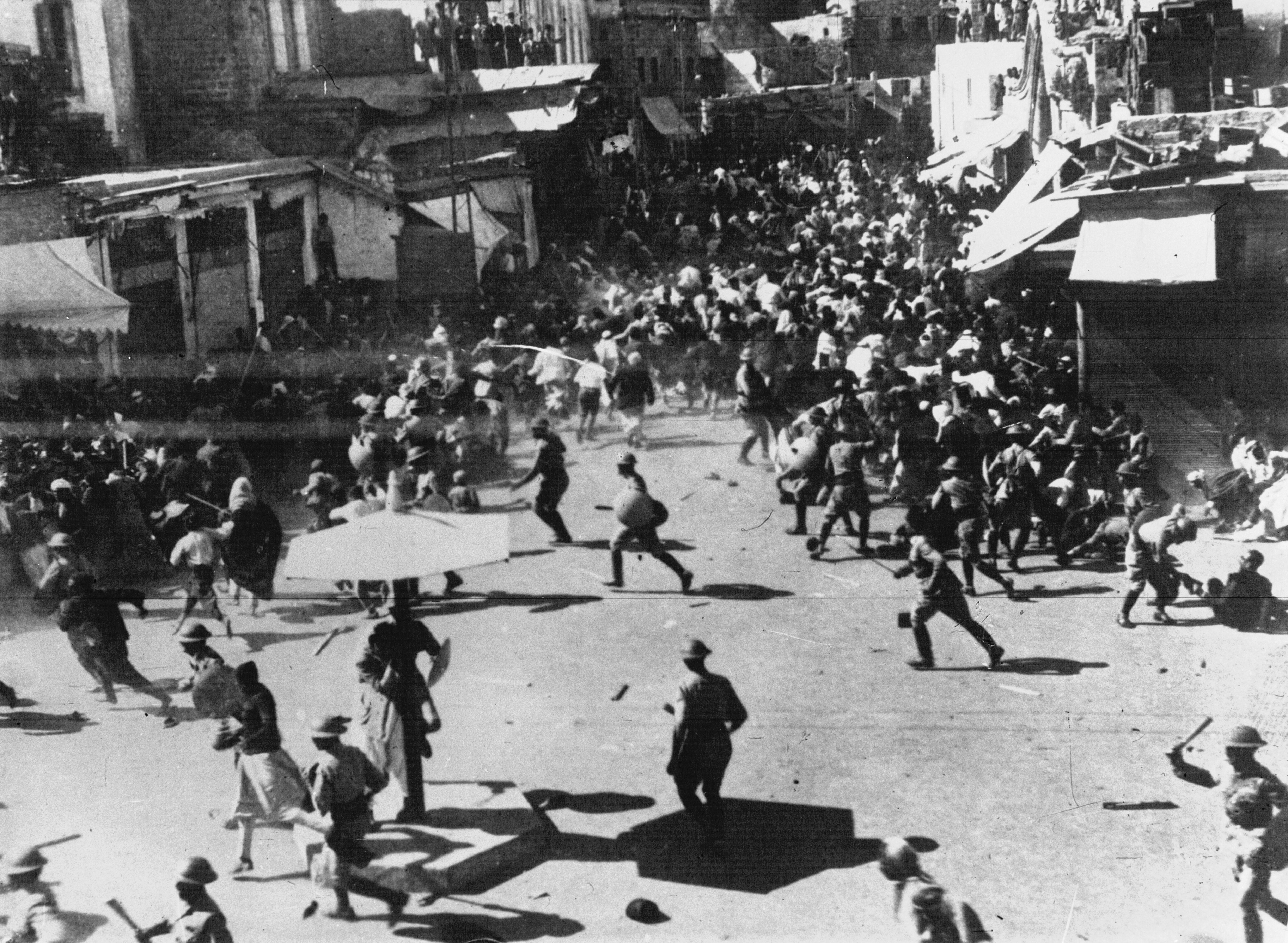
But the revolt had deeper roots.
Palestinians have opposed Zionist settlement in Palestine since its inception under Ottoman rule in 1882. After World War I, Britain began governing Palestine under a League of Nations mandate, the terms of which included the Balfour Declaration of 1917, where Britain endorsed the establishment in Palestine of a “national home” for the Jewish people.
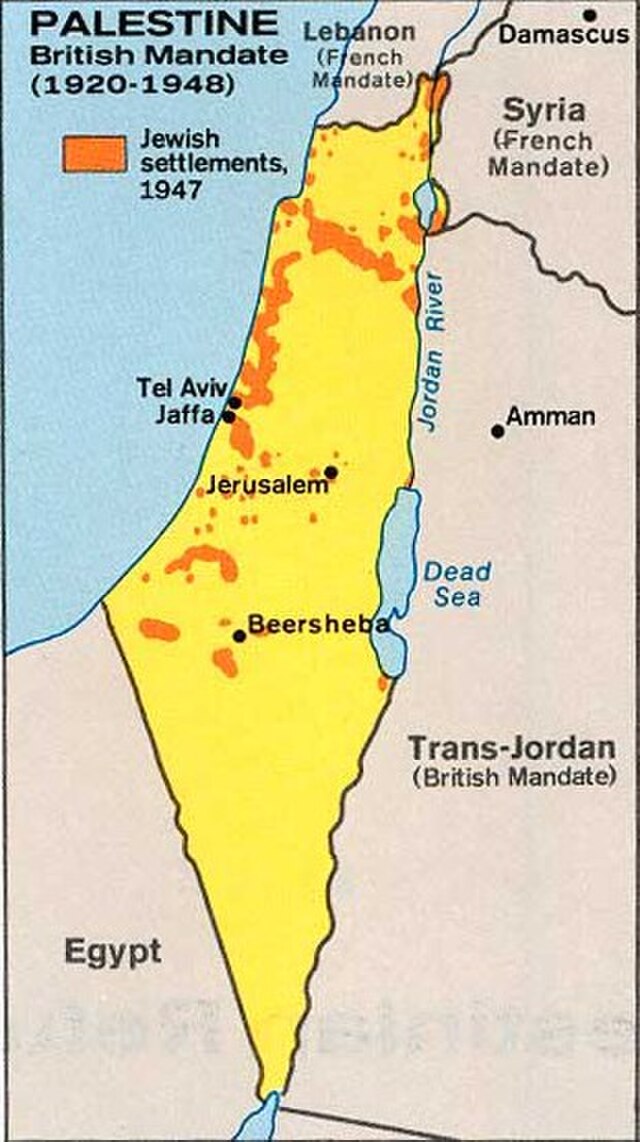
During the mandate Palestinian opposition intensified, especially against the background of growing Jewish immigration. Most Jewish immigrants came from Eastern Europe. While some were motivated by Zionist ideology, the majority sought refuge in the Jewish historic homeland from antisemitic persecution and economic hardships.
The rise of Nazism led to an upsurge in Jewish immigration in the 1930, increasing the percentage of Jews in Palestine from less than 10% in 1882 to 28% by 1936.
The Zionist movement established new settlements and institutions that advanced the Jewish national home (Yishuv), despite Palestinian opposition. The Zionists built their settlements on land purchased from Arab owners living in Palestine or in neighboring Arab countries. The transactions had a devastating impact on Palestinian society as they often involved the removal of Palestinian peasants from the land.
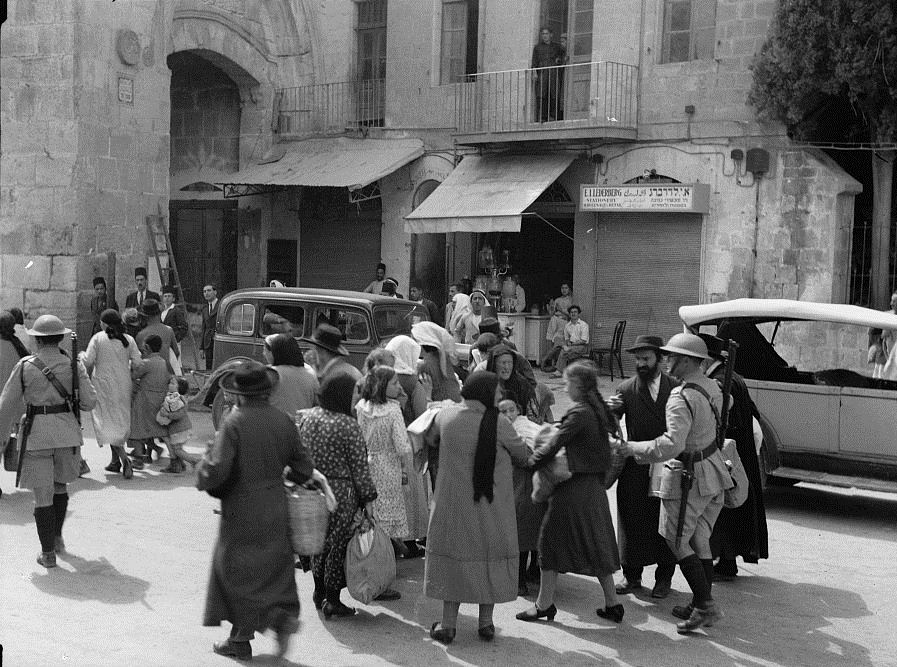
The distress of thousands of uprooted peasant families coupled with frustration over the failure of the traditional leadership to halt Zionism led to a grassroots uprising launched by younger nationalist activists. On April 25, 1936, Palestinian political parties temporarily put aside their differences and created a coordinating body called the Arab Higher Committee (AHC), headed by Hajj Amin al-Husayni, the Grand Mufti of Jerusalem.
The AHC declared a general strike demanding an end to Jewish immigration and land purchase and the establishment of an independent national government.
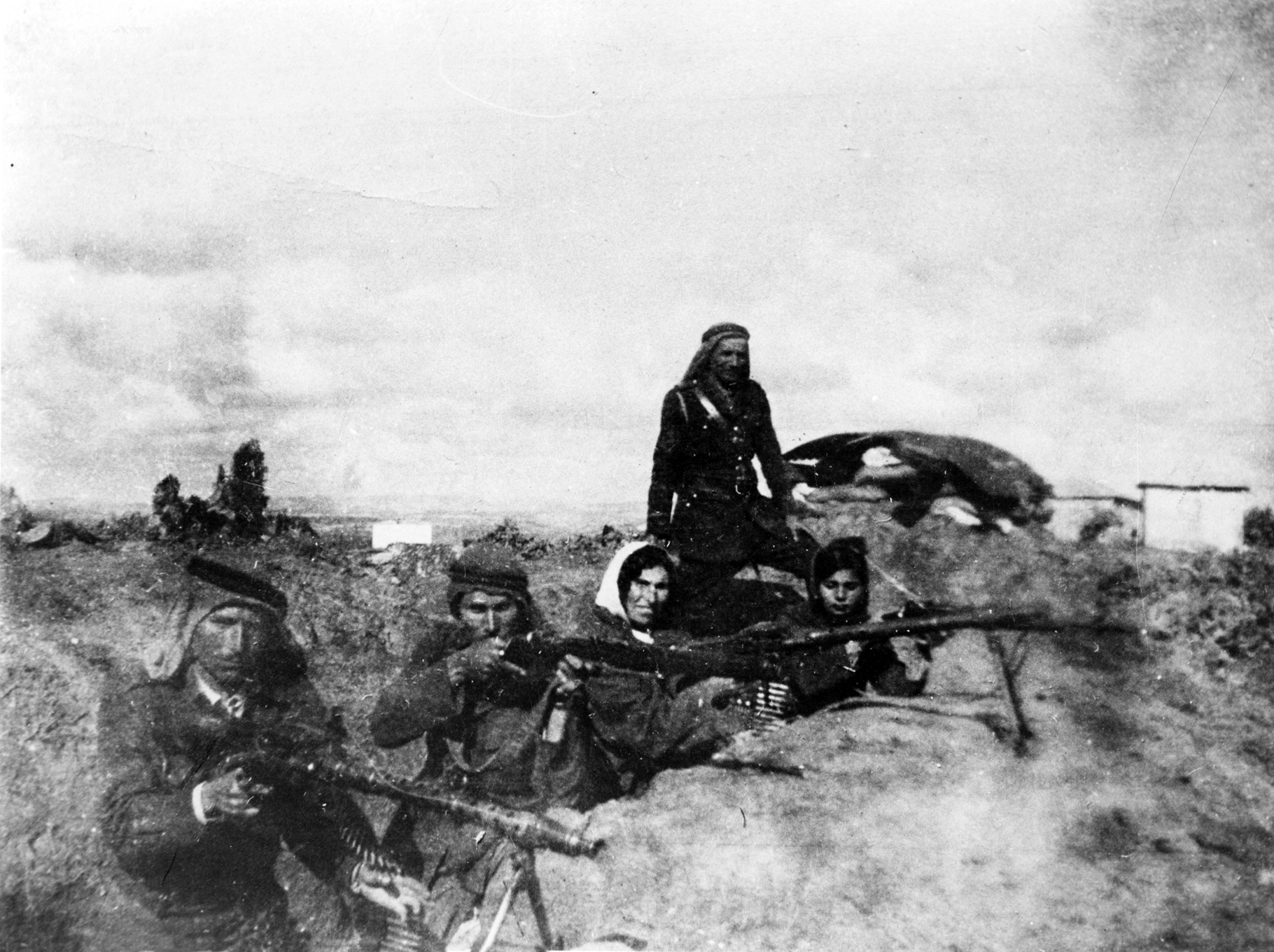
When the British refused, rebels mounted violent attacks on British and Jewish targets, including civilians. The revolt quickly spread to the countryside where rebel groups established themselves by creating their own military and administrative systems, taxing the peasants, and committing acts of terror against locals accused of collaboration with enemies.
Several months into the revolt, the British formed a Royal Commission under Lord Peel to investigate the reasons for the unrest.
In July 1937, it published its conclusions. The mandate was unworkable, the Commission wrote and recommended that Palestine should be partitioned. A Jewish state would be established on 17%of the country, and the rest would comprise an Arab state to be united with Transjordan under Emir Abdullah. Jerusalem with its holy sites and some other places would remain under a British mandate.
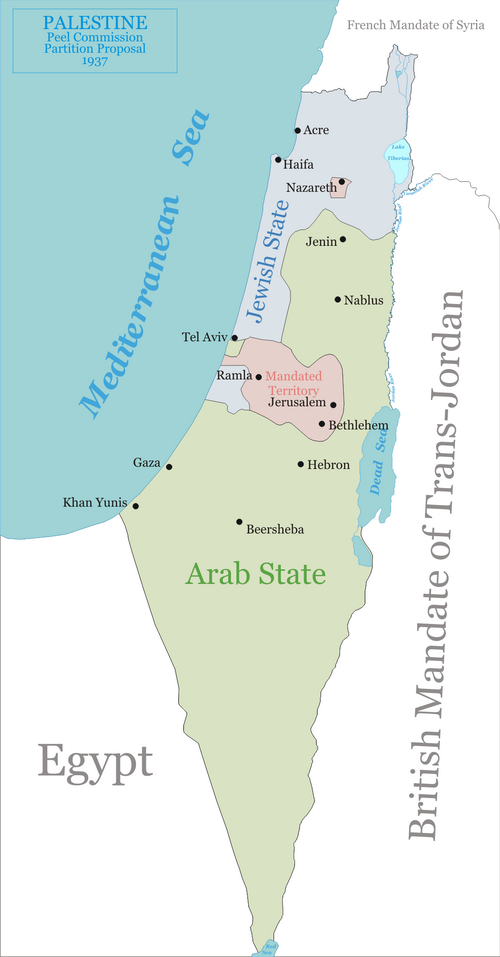
About 200,000 Arabs would be “transferred” from Jewish to Arab areas, and about 1,000 Jews from Arab to Jewish areas. The Zionist leadership opposed the proposed borders but accepted the principle of partition. The Palestinian leadership rejected the plan altogether.
The revolt intensified, reaching its height in the fall of 1938, when the rebels controlled significant parts of the urban and rural areas of Palestine.
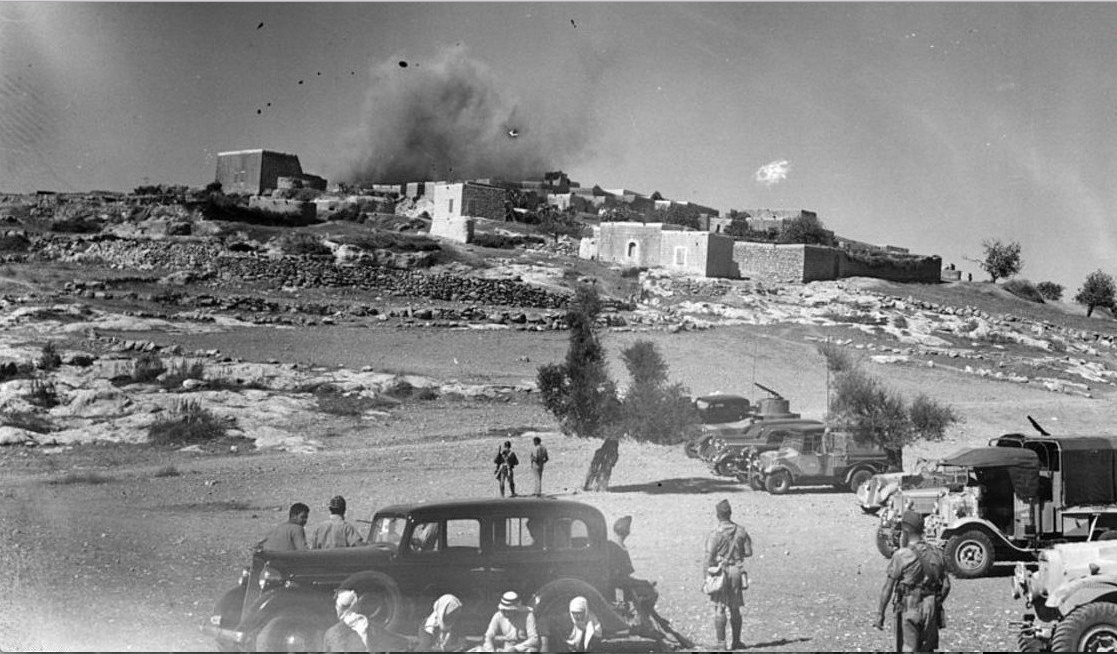
The British sent 20,000 troops to Palestine and used harsh measures against the rebels, including house demolitions and executions. They outlawed the AHC, arrested and expelled activists, and disarmed the Palestinians. The revolt was suppressed by the summer of 1939, leaving a toll of approximately 5,000 Arab, 415 Jewish, and 100 British deaths.
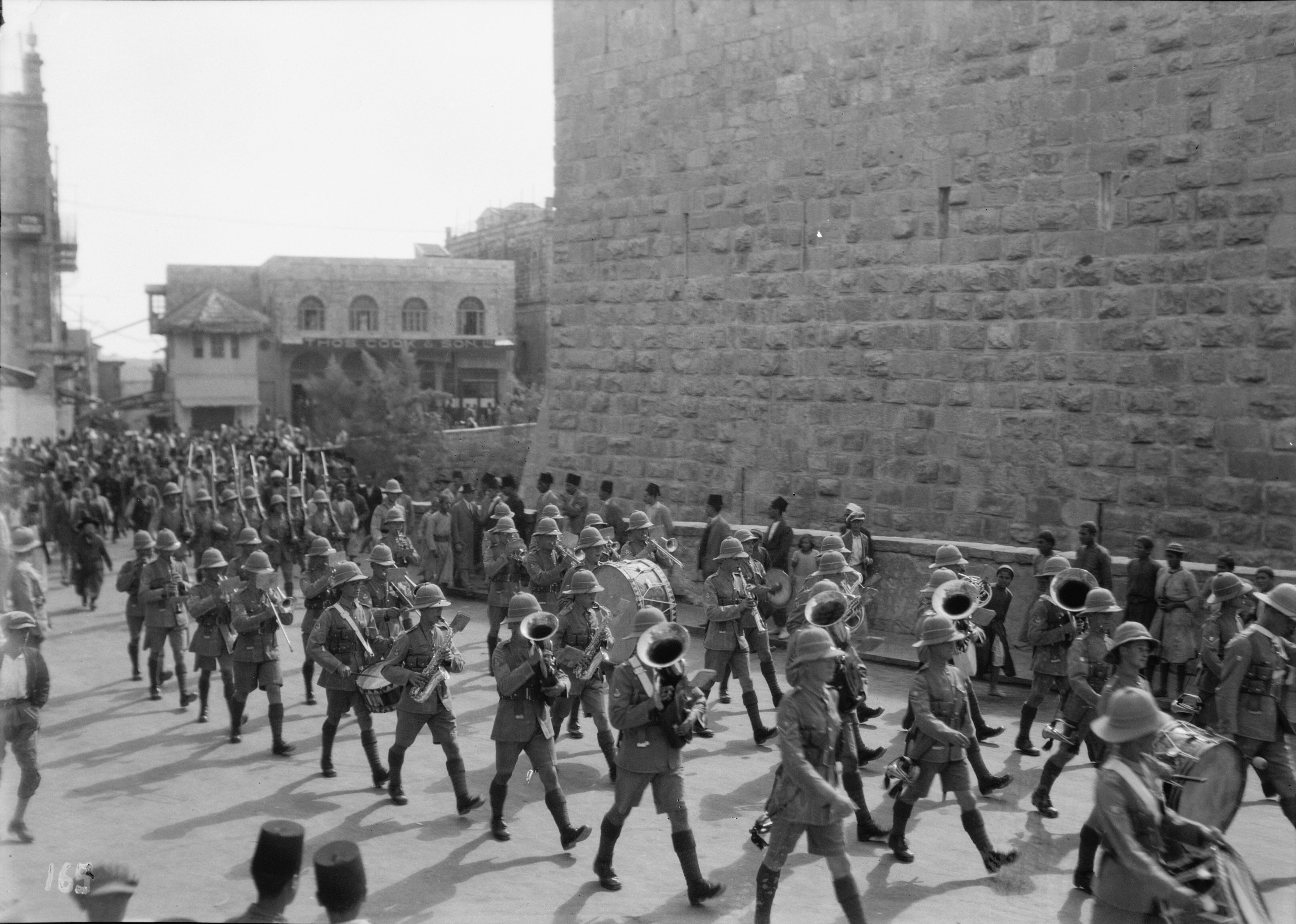
The six-month general strike that had started the revolt is considered a powerful demonstration of Palestinian national unity and defiance of foreign rule. Yet the consequences of the revolt were mostly negative for the Palestinians.
The brutal British oppression dealt a severe blow to the Palestinian national movement. And while the creation of the AHC signified national unity, as the revolt progressed, it exposed old and new internal divisions among political and social groups and leading notable families.
Bitter conflicts emerged between the followers of Raghib al-Nashashibi, former mayor of Jerusalem, who supported compromise with the British, and those of the more dominant Mufti, who opposed compromise, resulting in hundreds of assassinations of Palestinians by Palestinians.
While the revolt left Palestinian society weak and divided, the better organized and more united Yishuv in some ways benefited from it. The general strike prompted the Yishuv to develop a more self-reliant economy, and Palestinian violence brought about military cooperation between British authorities and Zionist armed groups, which adopted aggressive methods, including attacks against Palestinian civilians.
But the revolt also had negative consequences for the Jews. In May 1939, the British issued a “White Paper” that placed limitations on Zionism aimed to reduce Arab hostility to Britain in the Middle East in view of the looming war with Germany.
The White Paper restricted Jewish land purchase, and more seriously, limited Jewish immigration to no more than 75,000 over the next five years, severely curtailing the number of Jews who could seek refuge in Palestine during the Holocaust.

Eventually, the British handed over the Palestine problem to the United Nations. On November 29, 1947, the UN adopted a resolution to partition Palestine. Once again, the Zionists accepted and the Arabs rejected partition, sparking violence that led to the 1948 Arab-Israeli War.
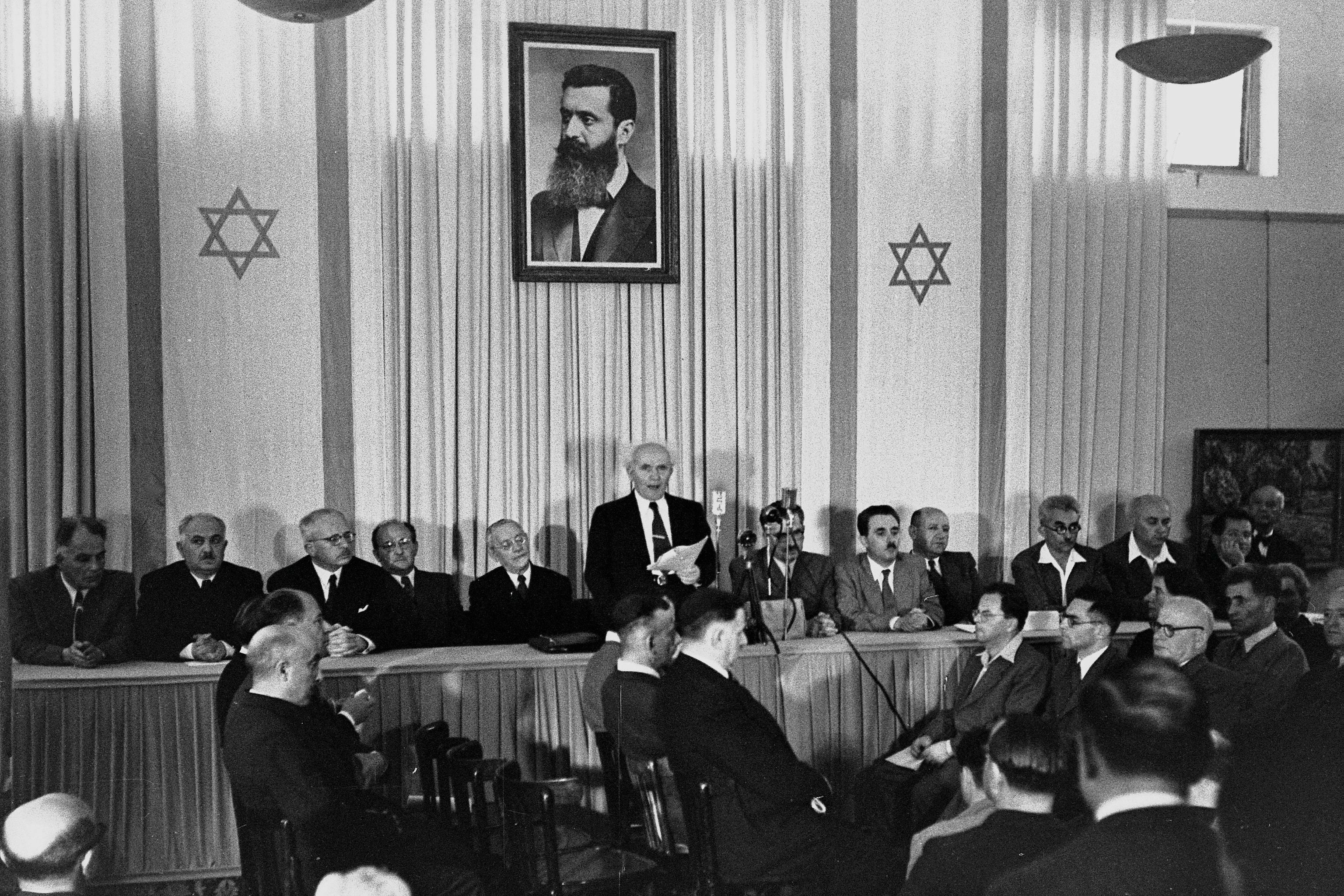
The British departed in the midst of war in May 1948 and immediately thereafter the Zionist leadership declared the independence of the State of Israel, whose newly established army had by early 1949 defeated the Palestinians and several Arab armies. About 700,000 Palestinians were expelled by Jewish forces or fled from their homes in what came to be known as the Nakba, or catastrophe.
An important reason for the Palestinian defeat in 1948 was the devastating impact of the 1936-39 revolt.
The Israeli-Palestinian conflict has gone through numerous—and tragic—transformations in the 90 years since the revolt, and some of its features are still relevant. One may point, for example, to the conflict’s global dimensions and the role of foreign powers, or to the intricate relationships between violence and politics and national unity and division.
The Peel Commission was the first to introduce the “two-state solution,” which is still debated today. The commission also importantly defined the conflict as one of “right with right,” expressing the idea that both parties have legitimate claims to the land.

Learn more:
Khalidi, Rashid, The Hundred Years War on Palestine: A History of Settler Colonialism and Resistance, 1917-2017 (New York: Metropolitan Books, 2020)
Klausner, Carla and Ian J. Bickerton, History of the Arab-Israeli Conflict (New York: Routledge, 2023)
Morris, Benny, Righteous Victims: A History of the Zionist-Arab Conflict, 1881-2001 (New York: Vintage Books, 2001)
Swedenburg, Ted, “The Role of the Palestinian Peasantry in the Great Revolt,” in Ilan Pappé, ed., The Israel/Palestine Question (New York: Routledge, 1999), pp. 114-146
Shikaki, Khalil, Abdel Moneh, Shai Feldman, Arabs and Israelis: Conflict and Peace Making in the Middle East (New York: Palgrave Macmillan, 2013)
“Palestine Royal Commission Report,” Presented by the Secretary of State for the Colonies to the Parliament by Command of His Majesty, London, July 1937


