
A few years after the anti-monarchy revolution of 1911-12, the Republic of China descended into civil war, with various militarists fragmenting the country. In February 1923, the Chinese Nationalist Party (Guomindang) set up a local government in the southern city of Guangzhou, quickly forming a united anti-militarist front with the Chinese Communists.
With the financial and military support of the Bolshevik Party in Russia, the Guomindang began to build its National Revolutionary Army (NRA). By the end of March 1926, General Chiang Kai-shek had emerged as a key military figure within the Guomindang.
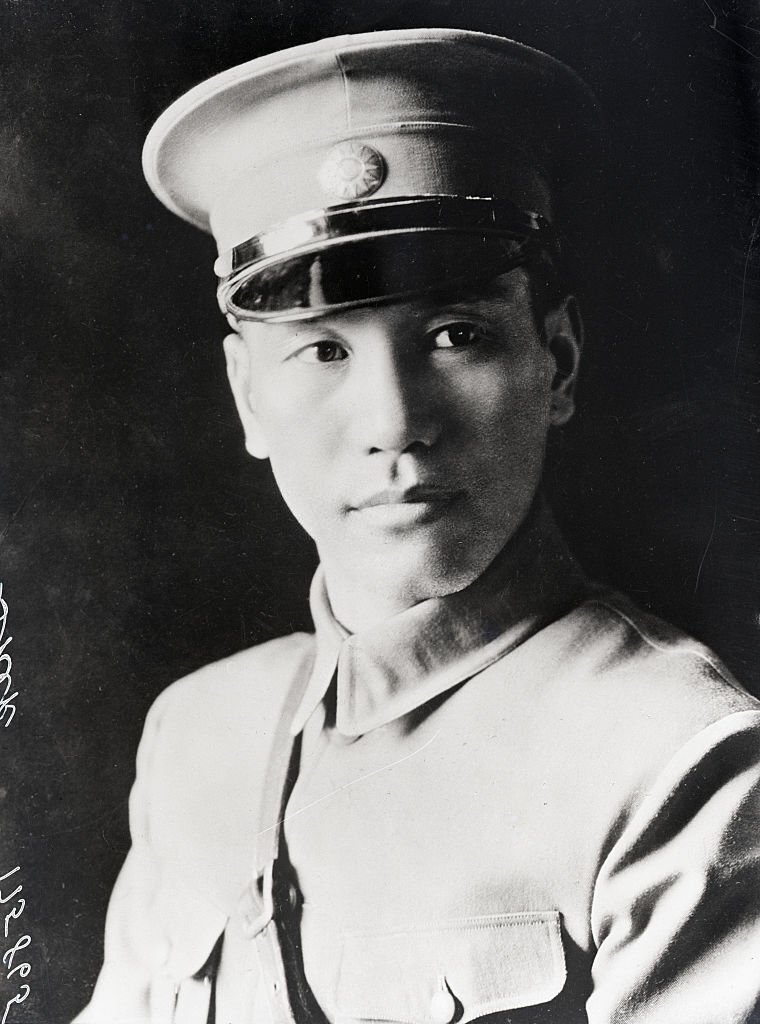
He was popular among the NRA officers and men, who numbered about 100,000.
However, one step remained for him to become the Generalissimo, the commander-in-chief of the army.
On May 21, 1926, the Central Executive Committee (CEC) of the Guomindang published a manifesto announcing the imminent commencement of the Northern Expedition, the aim of which was to unify the country. Four days later, during a private talk, the chief political adviser to the CEC Guomindang, the Soviet Communist Michael M. Borodin, offered Chiang the post of Generalissimo.
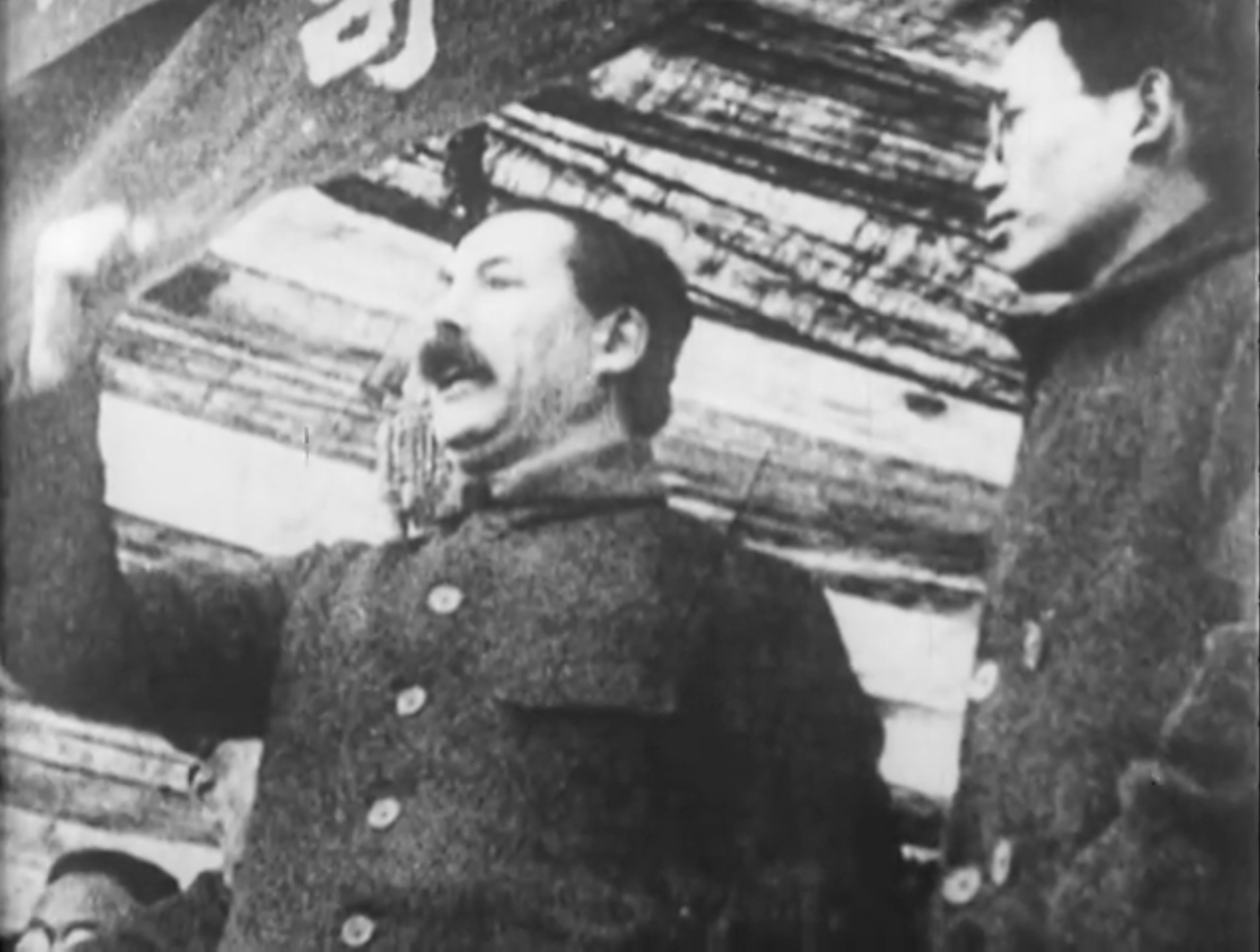
Chiang discussed this offer with his close associates on May 31 and June 3. Though he initially planned to decline, Chiang later wrote in his diary that “The various army commanders insisted on my appointment. If I had refused, it would have been seen as irresponsible, leaving me in a difficult position.”
Only thereafter, did he accept the post. On June 4, the Guomindang CEC and its Political Committee approved Chiang’s appointment, and the following day he was officially confirmed by the government.
Though Chiang was happy, he nevertheless conceded that, “he was [also] plagued by doubts and anxieties.” He had always believed that only a strong disciplined army equipped with modern weapons could unite China since “the Chinese people are timid, weak-willed, and confused; if they do not study and strive for progress on their own, the nation is doomed.” Chiang continued to ponder the issue in his diary: “If we cannot rouse them with severity and strictness, is there any hope left?”
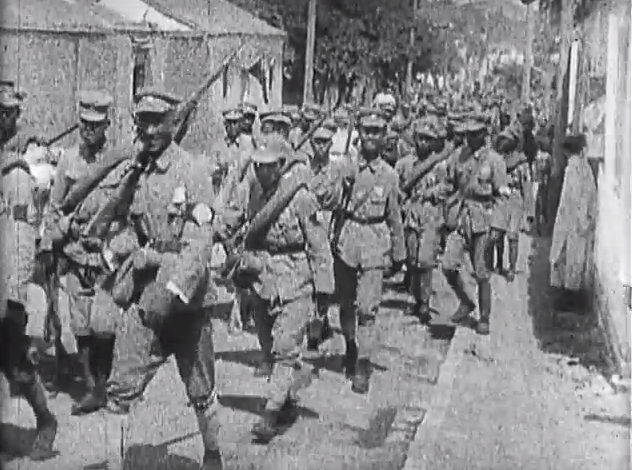
The task, however, was challenging. The armies of the three main militarist groups opposing the NRA outnumbered the Guomindang forces and occupied most of the country. At the head of these three groups were General Wu Peifu in Central China, Marshal Sun Chuanfang, who had split from Wu Peifu, in Eastern China, and Marshal Zhang Zuolin in North and Northeast China. The armies of Wu and Sun each numbered some 200,000 fighters, while Marshal Zhang could muster 350,000 men.
But Chiang got lucky. In February 1926, General Tang Shengzhi, commander of the Fourth Division, rebelled, splitting the army of Hunan governor Zhao Hengti. This army had composed part of General Wu’s group. Under these circumstances, Chiang sent one of the regiments of the NRA, numbering some two thousand men, to Hunan. On June 2, Tang’s division was incorporated into the Eighth Corps of the NRA and Tang announced the start of a struggle against Wu Peifu and the expulsion of Zhao Hengti.
Thus, the Northern Expedition materialized before it was officially proclaimed on July 9, 1926. On that rainy morning at 9:00 a.m. on the Eastern Square of Guangzhou, which in the Ming and Qing dynasties (1368-1912) was used as a military parade-ground, in the presence of no fewer than 50,000 persons, Chiang took a solemn oath of allegiance as Generalissimo of the NRA. In “an impressive ceremony,” greeted with thunderous ovations, he swore “to smash the northern militarists, put an end to imperialist oppression, fulfill the behest of Sun Yat-sen, and to wipe away our shame.”
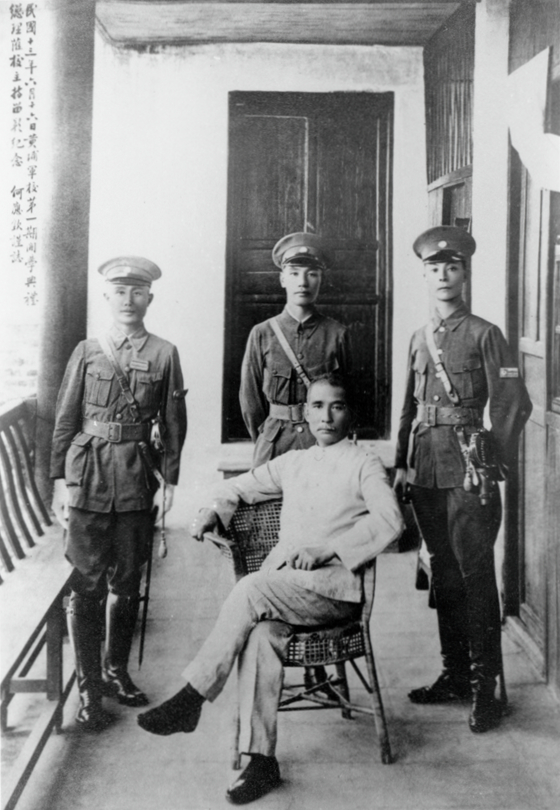
Just two days later his forces, inspired by the ideas of the nationalist revolution, scored their first major victory over the militarist Wu Peifu, after which they occupied Changsha, the capital of Hunan province. The local inhabitants, who hated Governor Zhao Hengti because he had established a regime of terror, “welcomed [them] as heroes.”
Afterwards, minor militarists, afraid of losing their troops, power, and income, began to convert to the side of the Generalissimo, who represented, in the opinion of one contemporary, “a new type of man: able, keen, executive.”
Chiang received them, appointed them as generals, and folded their regiments and divisions into his own armed forces. “Everywhere they want to surrender to me,” he said, delightedly. “Their only fear is that I may not permit them to capitulate . . . All of them are opportunists.”
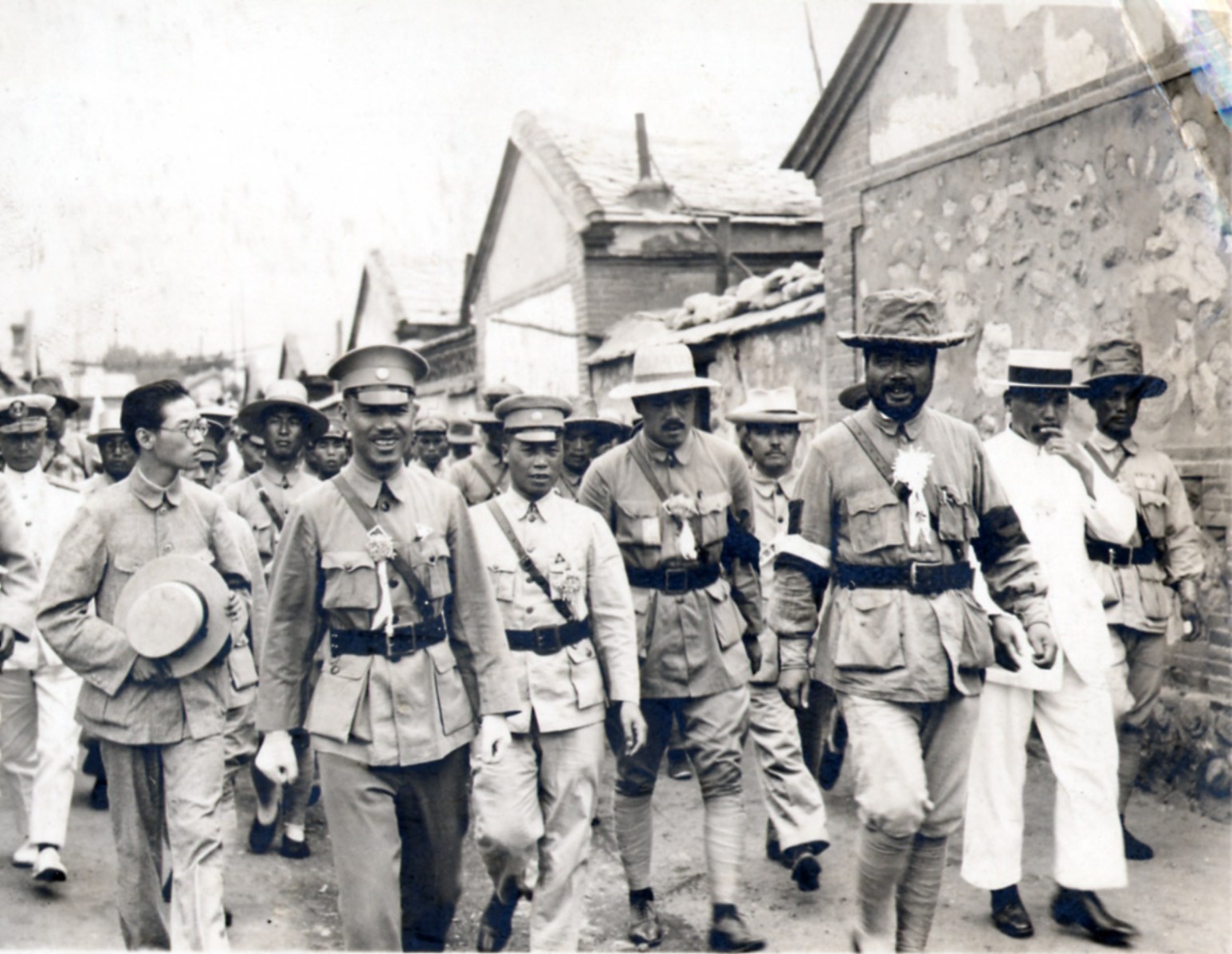
As a result of these many conversions, the NRA’s officer corps began to acquire a distinctly conservative character. Consequently, the influence of the rightists grew, and Chiang increasingly leaned toward their position.
At the same time, following the movement of NRA columns into the villages and cities of Hunan and then Hubei, unrest broke out among a part of the rural and urban population that had long been seen not only by wealthy landowners but also by ordinary peasants and merchants as the most destructive factor in society. These “lumpens,” along with the paupers who joined together with them, hungry and ragged, wanted to dominate, humiliate, and grind into the dirt everyone who lived even slightly better than they did.
In conditions of revolution and war, the lumpens had a chance to avenge their humiliation and poverty. Even though the mass of ordinary peasants were not guilty of anything, they represented the most convenient target simply because the two groups lived side-by-side. Naturally, pauper-lumpen banditry posed a threat to the united front because the generals and officers of the NRA were from more or less affluent families.
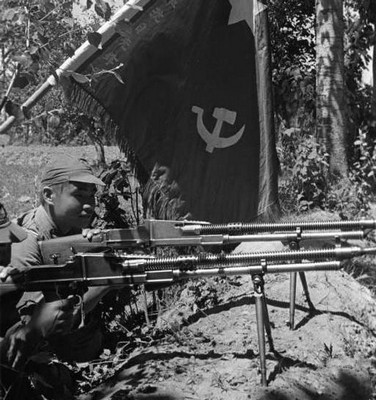
But the Communists began to organize the lumpens and paupers into so-called “peasant unions,” striving to establish in the future their own hegemony in the revolution. As for eliminating anticommunists from the GMD, the Communist Party demonstrated its complete powerlessness, as the balance of forces in the GMD was not in their favor.
The success of the Northern Expedition would inevitably turn into an extended bloody fight for power between Chiang Kai-shek’s Guomindang and the Chinese Communist Party, a fight that would last for over twenty years and result in Chiang’s dramatic defeat in 1949. Mainland China fell under Communist dictatorship, forcing the Generalissimo to flee to Taiwan. With American military and financial support, Chiang transformed this island into a strong anti-Communist bastion.

Learn More:
Alexander V. Pantsov, Victorious in Defeat: The Life and Times of Chiang Kai-Shek, China: 1887-1975 (New Haven: Yale University Press, 2023).
Angus W. McDonald Jr., The Urban Origins of Rural Revolution: Elites and the Masses in Hunan Province, China, 1911-1927. Berkeley, CA: University of California Press, 1978.
Ch’en Li-fu. The Storm Clouds Clear over China: The Memoir of Ch’en Li-fu, 1900-1993. Edited and Compiled, with an Introduction and Notes, by Sidney H. Chang and Ramon H. Myers (Stanford, CA: Stanford University Press, 1994).
Chiang Chung-cheng (Chiang Kai-shek). Soviet Russia in China: Summing-up at 70. Translated Under the Direction of Madame Chiang Kai-shek. Revised, Enlarged ed. with Maps (New York: Farrar, Straus, and Cudahy, 1957).
Jay Taylor, The Generalissimo: Chiang Kai-shek and the Struggle for Modern China. (Cambridge, MA: The Belknap Press of Harvard University Press, 2009).
S. I. Hsiung, The Life of Chiang Kai-shek. London: Peter Davies, 1948.


