
In English history, few women are more notorious than Anne Boleyn, the second of King Henry VIII’s six wives. Boleyn’s rapid rise into royal affection and political intrigue has been the subject of an endless stream of biographies, films, documentaries, and stage plays.
Just as fascinating is her even more rapid fall from favor. On May 17, 1536, Anne was executed by beheading with a sword outside the Tower of London, having been found guilty of treason against her own husband.

Henry VIII had come to the throne in 1509 not as the larger-than-life figure of historical memory but as a strapping seventeen-year-old. Shortly after his coronation, he married Catherine of Aragon, the daughter of two Spanish royal houses.
Since the Tudors had come to the throne only a few decades earlier, after a long period of civil war, this was an extremely advantageous match for the English.
So advantageous, in fact, that Catherine had first been married to Henry’s older brother, Prince Arthur, before his death in 1502. The terms of the widowed Catherine’s subsequent union with Henry would become controversial later. Yet it is important to remember that the pope granted a dispensation allowing them to wed, and Henry and Catherine were married peaceably for twenty-four years.
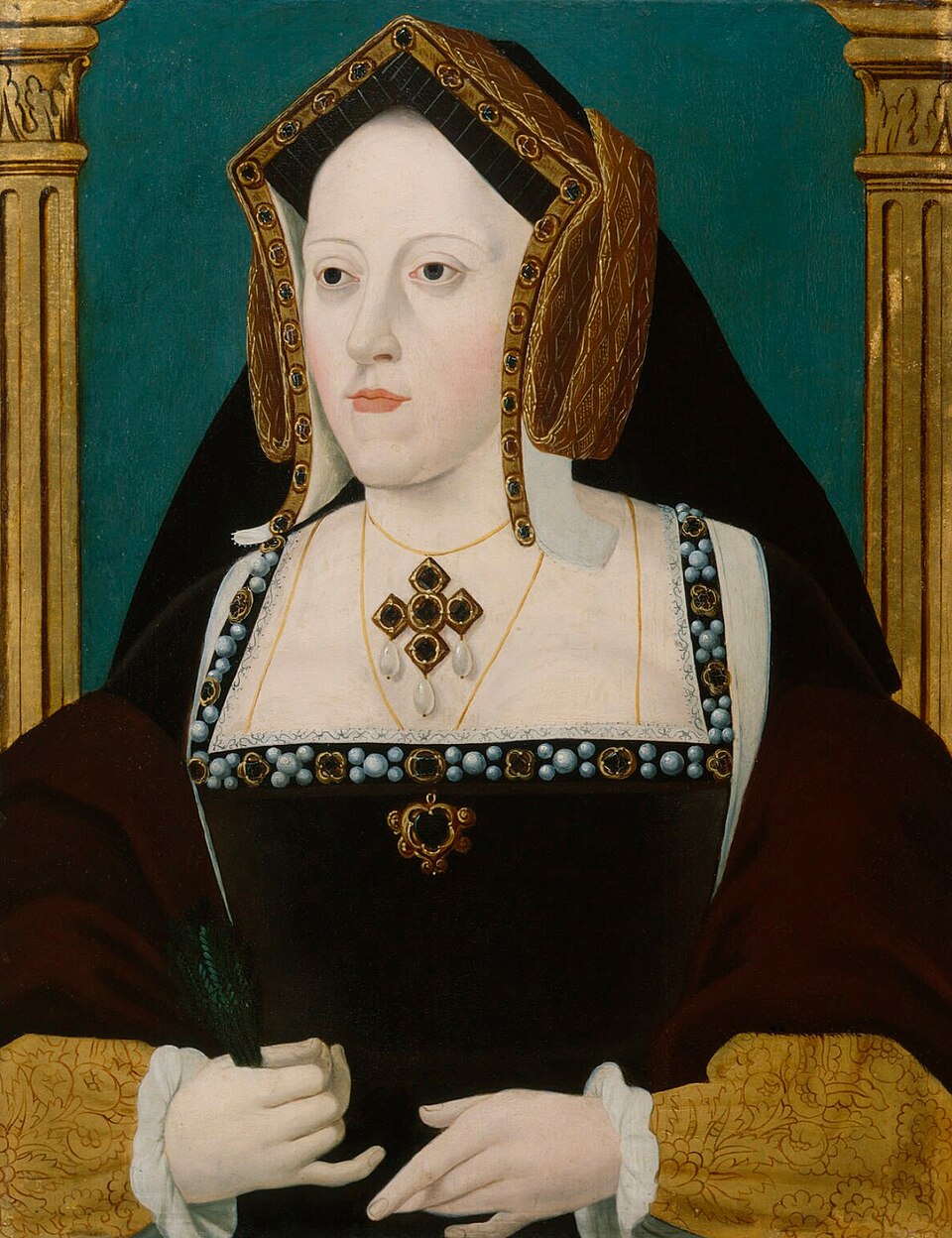
By the time the couple entered their forties they had produced one living child, the Princess Mary, born in 1516. Mary later came to rule England as queen regnant in 1553, but she was the first woman ever to do so. Nonetheless, for many years, Henry believed it was imperative that he produce a son to take over from him, or else risk more instability.
Catherine suffered a series of miscarriages and stillbirths into the 1520s. This was a time when medical explanations for fertility problems often gave way to more misogynistic and superstitious ones. Henry increasingly believed the couple’s fertility problems to be a divine consequence of Catherine’s earlier marriage to his brother.
Enter Anne Boleyn, who arrived at Henry VIII’s court in 1522.
Anne was the daughter of English nobility, and spent her teens educated and employed at royal courts in Europe, including in France. She was roughly twenty-years old when she returned to England and became a lady-in-waiting to Queen Catherine.
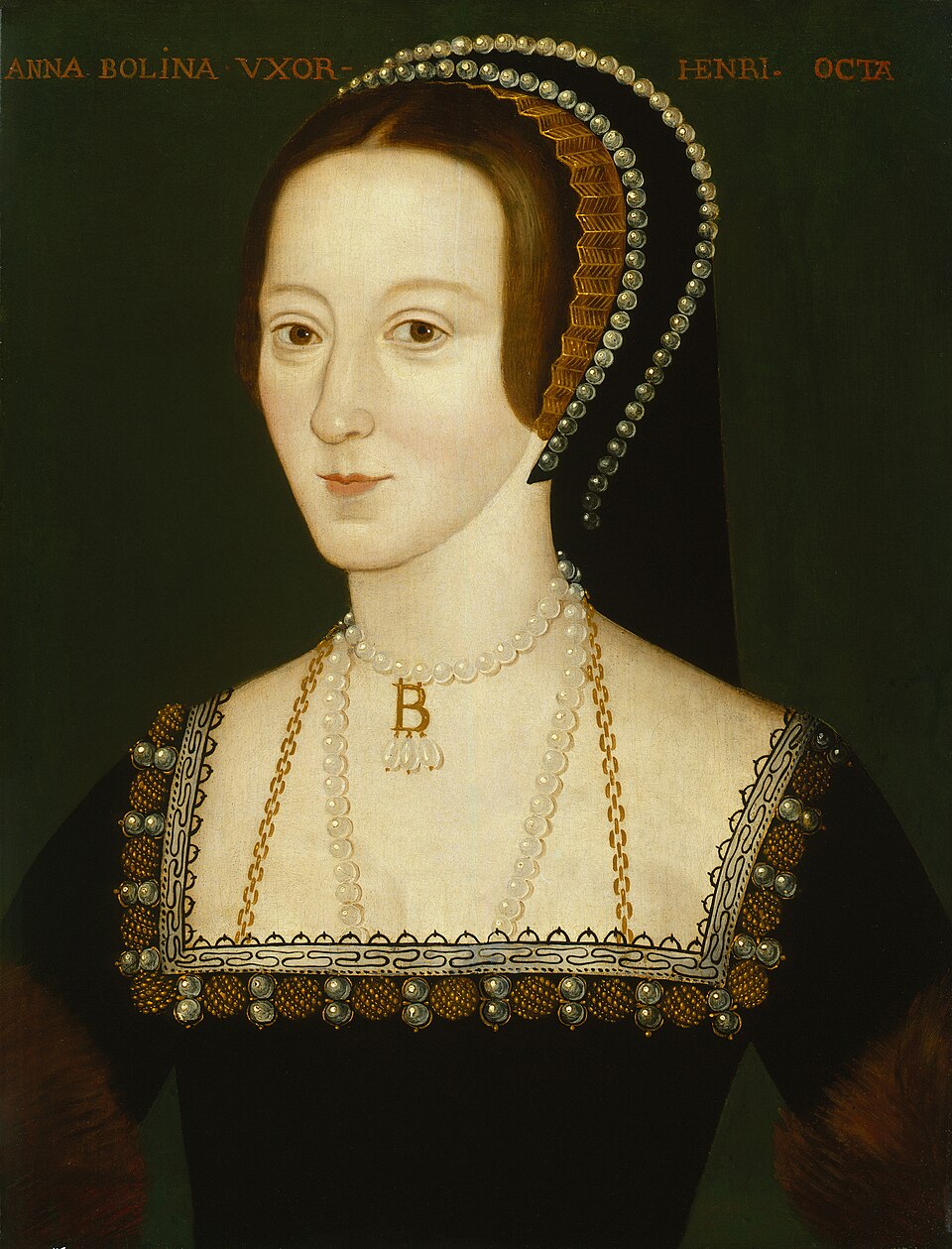
As captured by the modern-looking fashion of Natalie Dormer’s portrayal of Anne in The Tudors or the millennial-speak of SIX The Musical’s rendition (“Everybody chill, it’s totes God’s will!”), the lingering impression we have of “that Boleyn girl” is that she represented something new and exciting for English courtiers.
The King is known to have courted mistresses outside of his marriage before, Anne’s older sister Mary likely among them. With another mistress Henry even fathered an illegitimate son, Henry FitzRoy. Yet with Anne, more so than any other, Henry seems to have fallen into infatuation.
By the late 1520s, Henry's desire to separate from his first wife was out in the open. Traditionally, it was the pope who would handle the matrimonial issues of Catholic Europe’s royals, but no annulment was forthcoming from him. Pope Clement VII was entangled in war with Charles V, the Holy Roman Emperor, who also happened to be Catherine’s nephew.
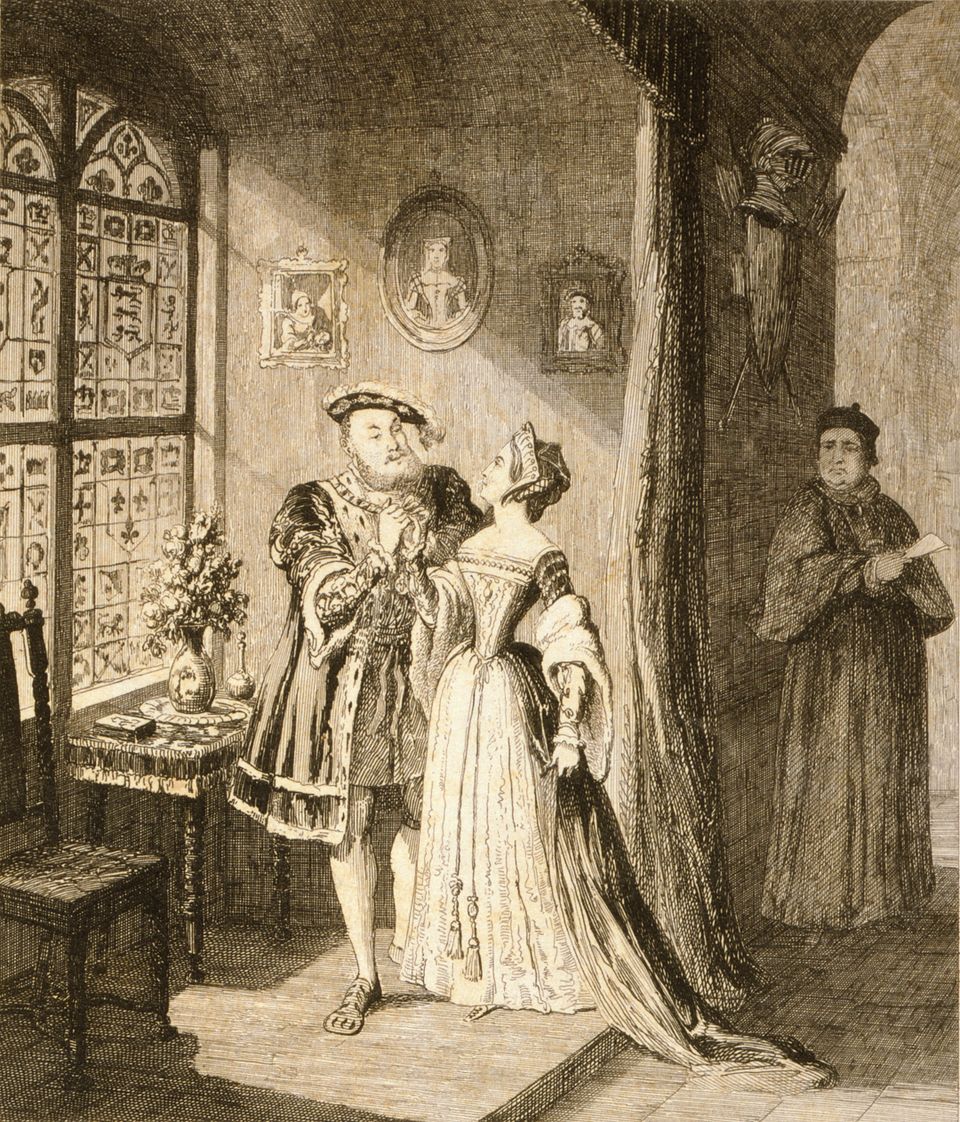
Impatient with Clement’s prevarications, Henry took his “Great Matter” into his own hands. He appointed more favorable clergymen and had himself married to Anne in secret, in January 1533. Meanwhile, Henry’s marriage to Catherine was quietly annulled; not divorced, as the rhyme goes, but rendered void, as though it had never happened.
A year later, Henry convened a long session of parliament that formally and legally separated England from the authority of the Pope and the Catholic Church.
Henry’s marriage to Anne and the events of the English Reformation are therefore inextricably connected, the personal and political colliding head-on to shape policy. It may even have been Anne who presented Henry with some of the arguments for replacing papal with royal authority.
Anne was crowned as queen consort on June 1, 1533. In September of that year, she gave birth to a daughter, Elizabeth—not the son Henry had hoped for, even if this daughter too would go on to rule England as queen.
Anne was also unpopular with the wider English public. Conversations reported to the king’s council suggest widespread disbelief that Henry would cast off a woman of royal heritage like Catherine for Anne, who was from comparably humbler stock.
When the northern counties broke out in rebellion in 1536, they lumped Anne in with Henry’s reformist “evil councillors” as the source of all England’s problems as the Reformation unfolded.
It is unlikely that Henry paid much heed to the criticisms of his subjects. He was paying attention to someone else by early 1536, however: Jane Seymour. Where Anne had supposedly demanded more than being a royal mistress, and perhaps even pushed for a break with the papacy, Jane politely resisted the King’s advances.
Anne now faced the same usurpation as queen consort that she herself had achieved a few years earlier. Another unfortunate parallel with Catherine was that Anne herself experienced several miscarriages. By early 1536, Henry was musing to his closest councillors that Anne had bewitched him into marriage.
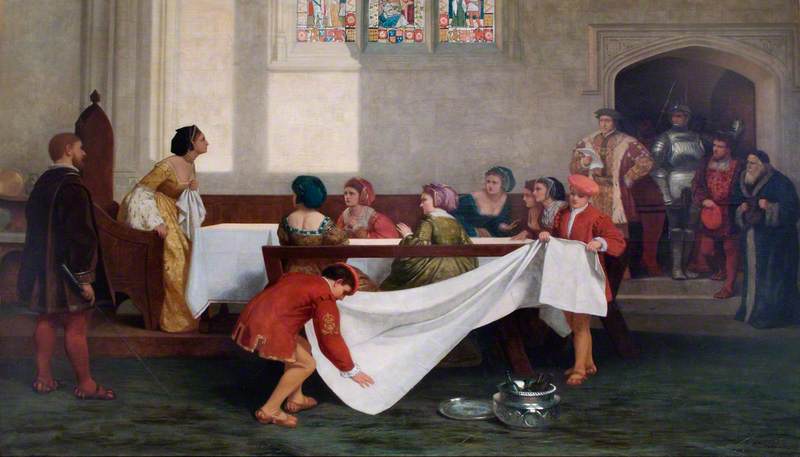
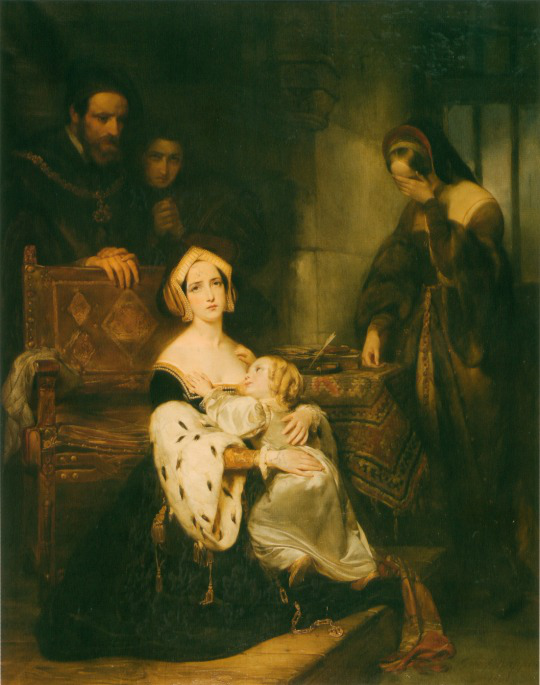
Suddenly, on May 2, 1536, Anne was arrested and delivered to the Tower of London. Based on testimonies by servants of Anne’s household, she was accused of adultery with several men in her service, including her musician, Mark Smeaton, and even her own brother George. She was also said to have spoken recklessly of the King’s death, a treasonous offence. Only Smeaton ever pled guilty, likely under torture.
After a brief hearing, Anne was convicted of treason and faced inevitable death unless the King showed mercy.
As the verdict approached, the constable of the Tower of London assured her that even “the poorest subject the king hath, had justice,” to which she is said to have laughed aloud. Even before the swordsman she insisted on her innocence.
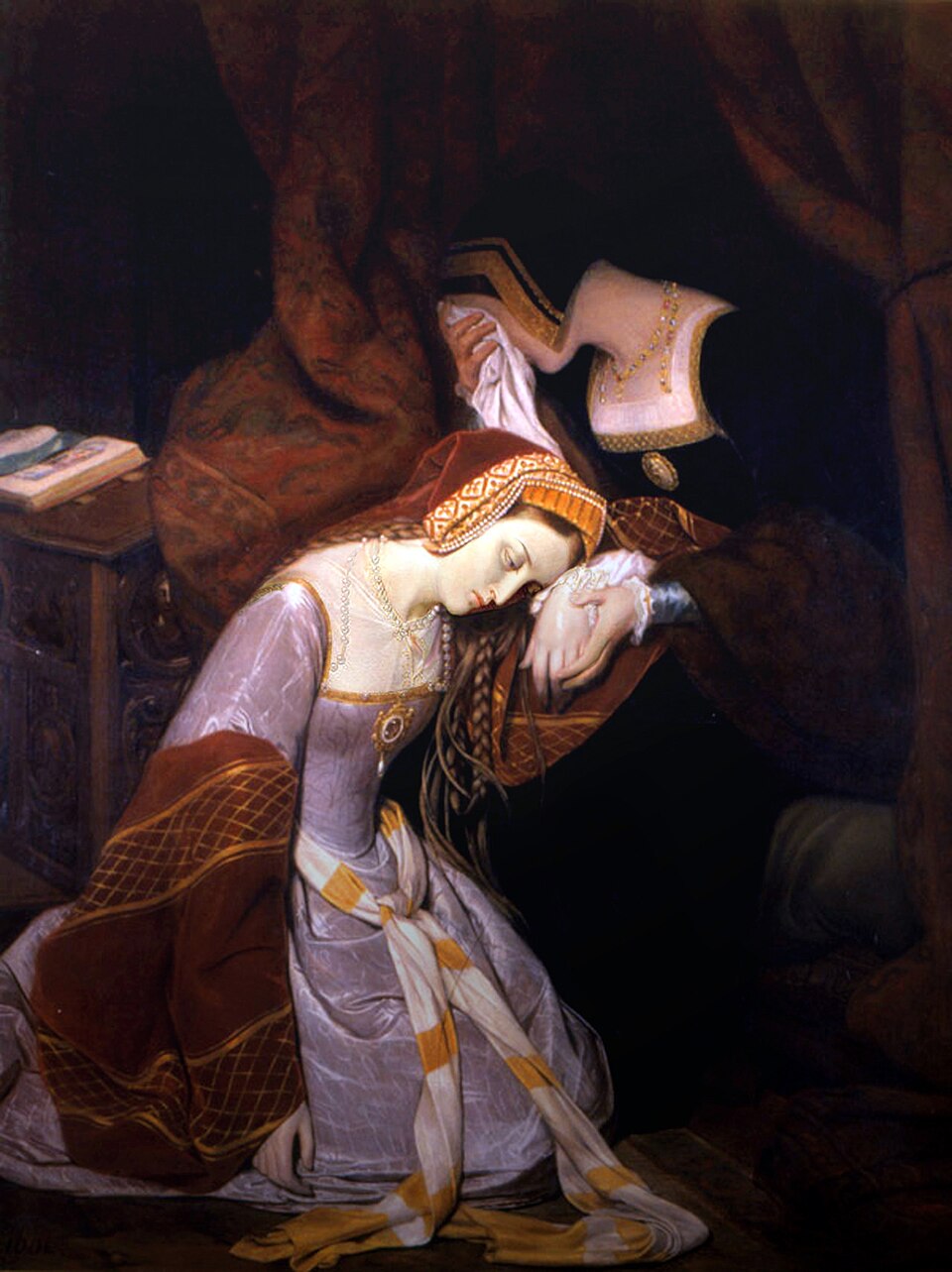
Today, while interest in Anne shows little sign of waning, we take for granted how groundbreaking it was for a queen consort to be judicially executed.
It was the product of various mounting tensions: an ever-changeable king and the court battle to influence him; a new dynasty desperately in need of heirs; and a country recently ravaged by internal conflict.
It also set a legal precedent in the short-term, one Henry would make use of again just six years later to dispatch another wife.

Learn More:
Susan Bordo, The Creation of Anne Boleyn: A New Look at England’s Most Notorious Queen (2013)
Eric Ives, The Life and Death of Anne Boleyn: ’the most happy’ (2004)
David Loades, The Boleyns: the rise & fall of a Tudor Family (2nd end. 2012)
Elizabeth Norton, Anne Boleyn: In Her Own Words & the Words of Those Who Knew Her (2011)
Stephanie Russo, The Afterlife of Anne Boleyn: Representations of Anne Boleyn in Fiction and on the Screen (2020)


