
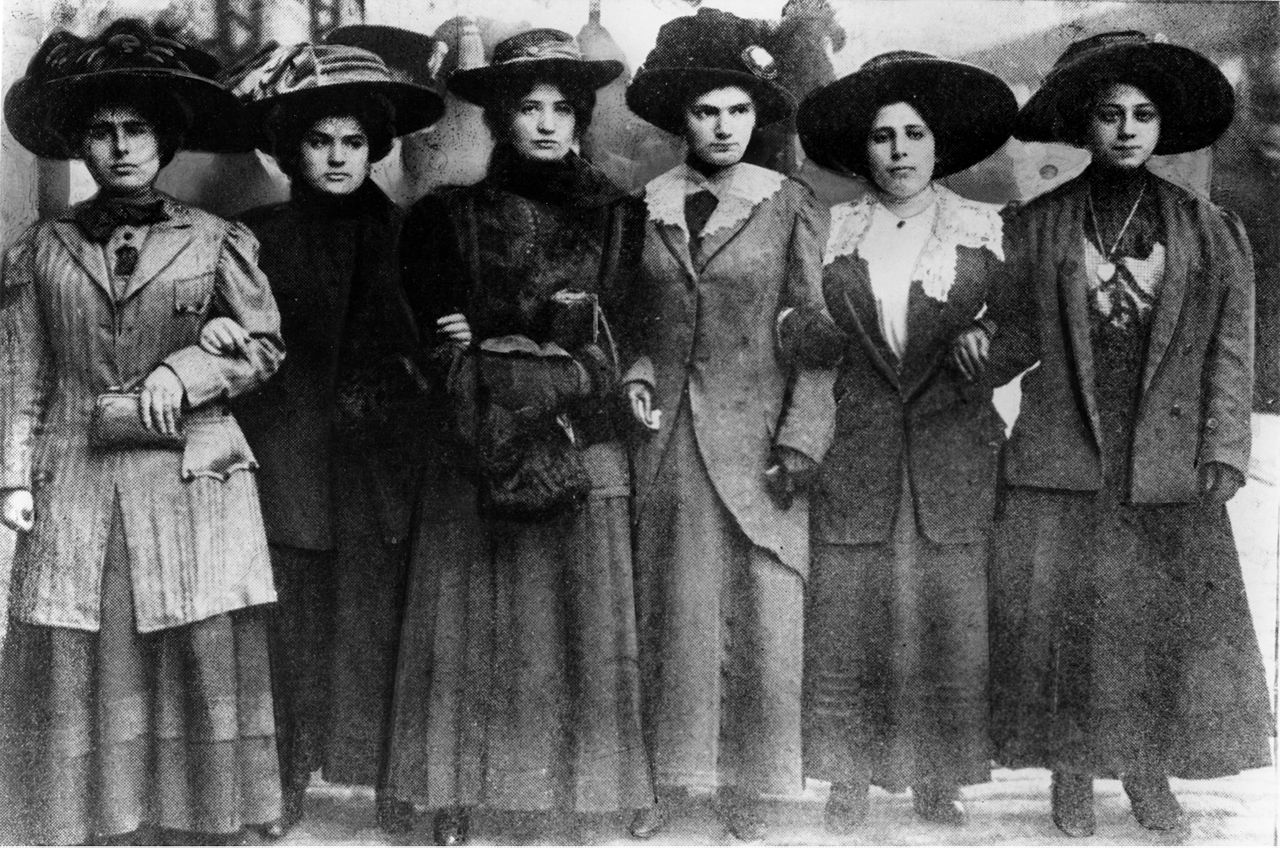
A fire in New York City over a century ago has shaped your life in ways you may not realize. The 1911 Triangle Shirtwaist Factory fire killed 146 workers, mostly Jewish or Italian immigrant women and girls, the youngest of whom were just fourteen.
It was horrific, but it didn’t have to be that way. If bosses and politicians had not put profits before people, the fire might not have happened, or if it did, workers could have survived the blaze. That realization spurred people to organize after the fire and fight for safer working conditions and the right to unionize. Their efforts made life better for all working people in the United States.
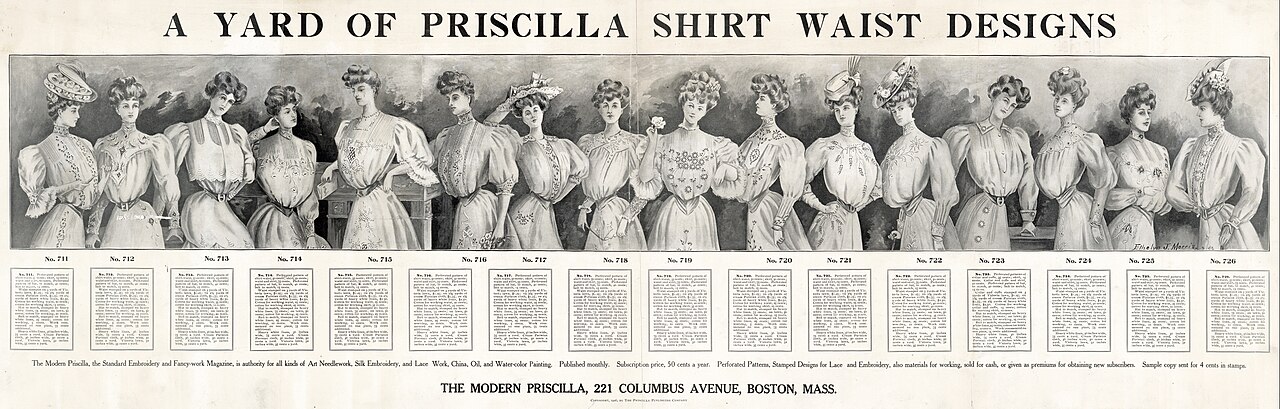
If you look at the tags on your clothes, you’ll likely see that they were made overseas. That wasn’t the case in 1911. New York was the capital of American garment manufacturing. The industry employed nearly half of the urban workforce, and many of those workers were women.
At Triangle, a factory that produced tailored women’s blouses, or shirtwaists, the workday went from 7 am to 8 pm. Pay ranged from seven to fifteen dollars per week. Talking or singing during working hours was forbidden and bathroom breaks were monitored to prevent “lingering.” Workers who broke the rules had to pay a fine.
Yet despite long days, low pay, and surveillance, Triangle, located on the eighth, ninth, and tenth floors of the Asch (now Brown) Building near Washington Square Park, was not a sweatshop, but a modern factory in a state-of-the-art structure.
Factory owners Max Blanck and Isaac Harris, known as the “shirtwaist kings,” were famous for their business savvy and infamous (among workers at least) for their hatred of unions.

Triangle workers were not unionized. Factory doors were locked to keep organizers out. It was a clear violation of the law, but no one in authority took such violations seriously. Workplace safety was not a major concern. There were no mandatory fire drills. Sprinkler systems were not required. Factory doors opened inward.
Ladders on firetrucks reached only as high as the sixth floor. Although designers boasted that the Asch Building was fireproof, the floors and frames around the windows were made of wood. The rules required three exit-stairways for a building of its size, but a flimsy fire escape was allowed to count as the third exit.
A couple of years before the fire, a walkout at Triangle led to a general strike of women in the industry.
The “1909 Uprising of the 20,000,” as it came to be called, brought better pay, improved working conditions, and a union, the International Ladies Garment Workers Union (ILGWU), to many factories in the neighborhood. But Blanck and Harris refused to settle with their workers and conditions at Triangle remained unchanged.
March 25, 1911, was a Saturday, and people were strolling through Washington Square Park and around Greenwich Village. When fire broke out on the eighth floor of the Asch Building at about 4:45 pm, the smoke and shouts brought them running to the site. They watched, helpless, as firefighters tried desperately to extinguish the flames.
They saw workers from the eighth floor make their way out of the building, having found the one door that was not locked to scramble down the stairs, or via the elevator, manned by a nineteen-year-old Italian immigrant named Joe Zito, who made as many trips as he could before it stopped working.
They saw factory owners, family members, and other workers on the tenth floor, who had been warned about what was happening by a phone call from the eighth floor, scramble up to the roof, where they were brought safely to the building next door.
A few minutes later, they saw workers from the ninth floor—who did not get a call and did not know what was happening until the fire threatened to engulf them—rush to the windows, desperate for someone to save them.

But no one could save them.
The ladders from the fire truck—fully extended—left a gap of three floors. As workers stepped out of the windows onto the ledge, firefighters held out nets hoping to catch them if they jumped.
A few did. The nets burst apart from the impact. As the flames closed in, dozens more workers stepped onto the ledge and jumped. None of them survived.
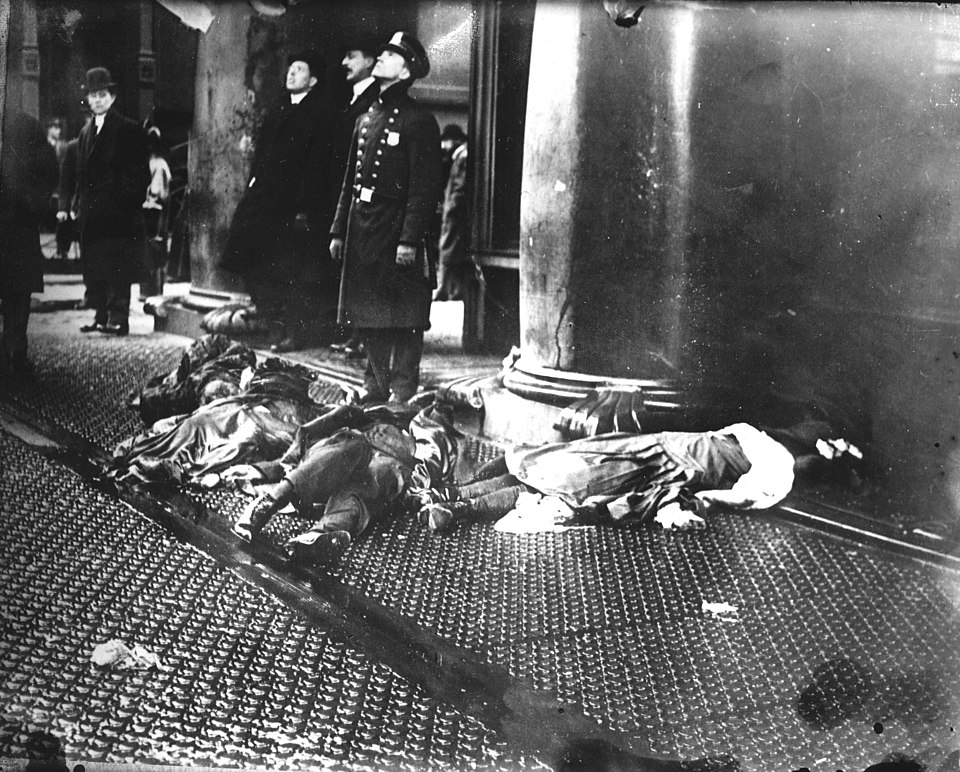
The horror of watching scores of young women and several young men die, combined with the awful realization that this tragedy could have been prevented, steeled the determination of workers, activists, and public officials to ensure that disasters like Triangle would never happen again.
They turned to the justice system, but justice was not forthcoming. Blanck and Harris were tried in criminal court for locking the doors and found not guilty.
When they finally settled the multiple civil suits brought against them, the men turned a profit, earning more from the insurance money they received than what they were required to pay to the families of the workers who died.
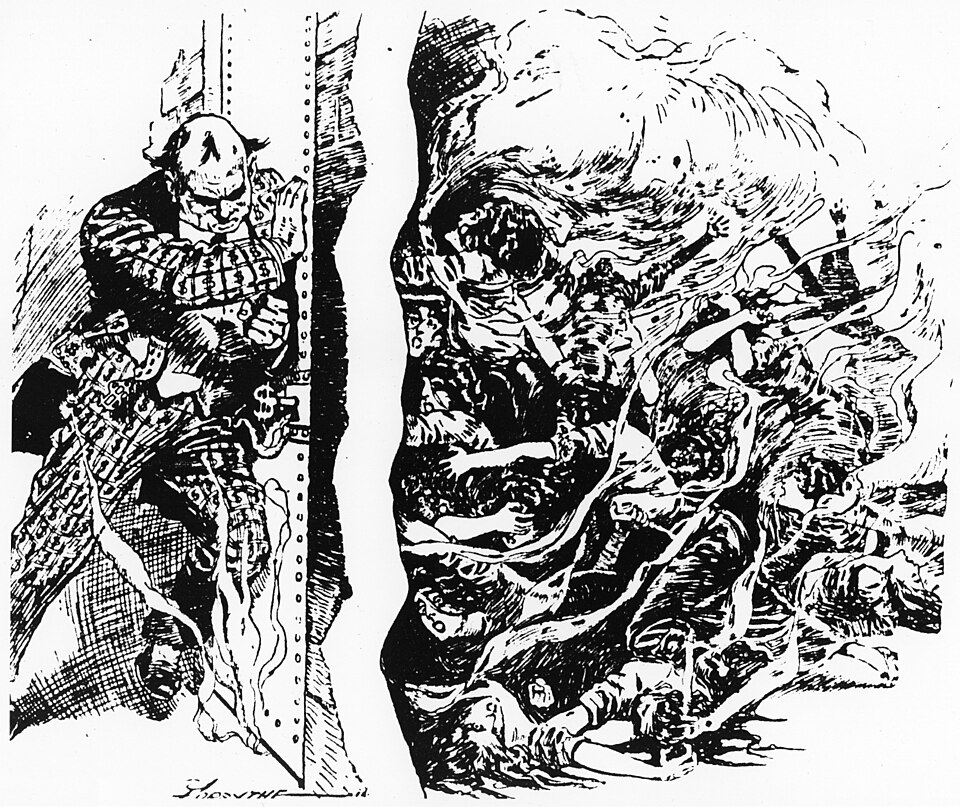
Many workers decided the best way to protect themselves was to build a militant working-class movement. Their organizing efforts transformed the ILGWU into a powerhouse union that championed workers’ rights for decades and helped fuel the growth of the U.S. labor movement.
People also demanded that the government do more for working people.
In response, New York created the Factory Investigating Commission, which travelled around the state visiting factories, talking with workers, and observing working conditions. In 1912, the commission issued a report calling for new labor codes with worker protections. Twenty new laws were passed as a result.
One of the investigators for the commission was Frances Perkins. Perkins had witnessed the fire and the experience transformed her into a fierce advocate for working people.
When she was later named President Franklin Roosevelt’s Secretary of Labor, her memories of the fire motivated her to champion many of the laws that constituted the New Deal. At the event for the fiftieth anniversary of the fire, she noted, “the New Deal began on March 25, 1911.”

Every year on March 25, people gather in front of the memorial that now graces the Brown (formerly Asch) Building to remember and honor the 146 people whose lives were taken from them and to pay tribute to the movements for worker rights and safety that were galvanized by their deaths. We also recognize that there is still work to be done.
Here in the United States, it seems like we’ve gone backwards to 1911: child labor is on the rise, union busting is rampant, too many workers toil in unsafe conditions for meager wages, the lives of immigrants are considered expendable, and the drive for profit eclipses concern for the wellbeing of people.
If the Triangle fire teaches us anything, it is that we have the power to affect the kind of positive changes we need to turn things around, if we join together and demand better from our government and one another.

Learn More:
Edvige Giunta and Mary Anne Trasciatti, eds., Talking to the Girls: Intimate and Political Essays on the Triangle Shirtwaist Factory Fire (New Village Press, 2022).
The Kheel Center for Labor-Management Documentation & Archives, Catherwood Library, Cornell University, “Remembering the 1911 Triangle Factory Fire,” Cornell University - ILR School - The Triangle Factory Fire.
Annelise Orleck, Common Sense and a Little Fire: Women and Working Class Politics in the United States, 1900 – 1965 (Univ. of North Carolina Press, 1995).
Ruth Sergel, See You in the Streets: Art, Action, and Remembering the Triangle Shirtwaist Factory Fire (University of Iowa Press, 2016).
Leon Stein, The Triangle Fire (ILR Press, 2011).
David Von Drehle, Triangle: The Fire that Changed America (Grove Press: 2004).


.jpg)


