
The story of the civil rights movement is often told as a southern struggle led by a handful of national figures in the 1950s and 1960s. This month, Dr. Hasan Kwame Jeffries challenges that narrative by examining Ohio’s long history of racial exclusion and Black resistance, from abolitionist organizing and the Underground Railroad to urban uprisings, Black student activism, and the Black Lives Matter movement. By tracing the fight for freedom and democracy across more than two centuries, he shows how Black Ohioans have continually challenged white supremacy and expanded the meaning of citizenship, equality, and justice.
Most Americans think they know the story of the Civil Rights Movement.
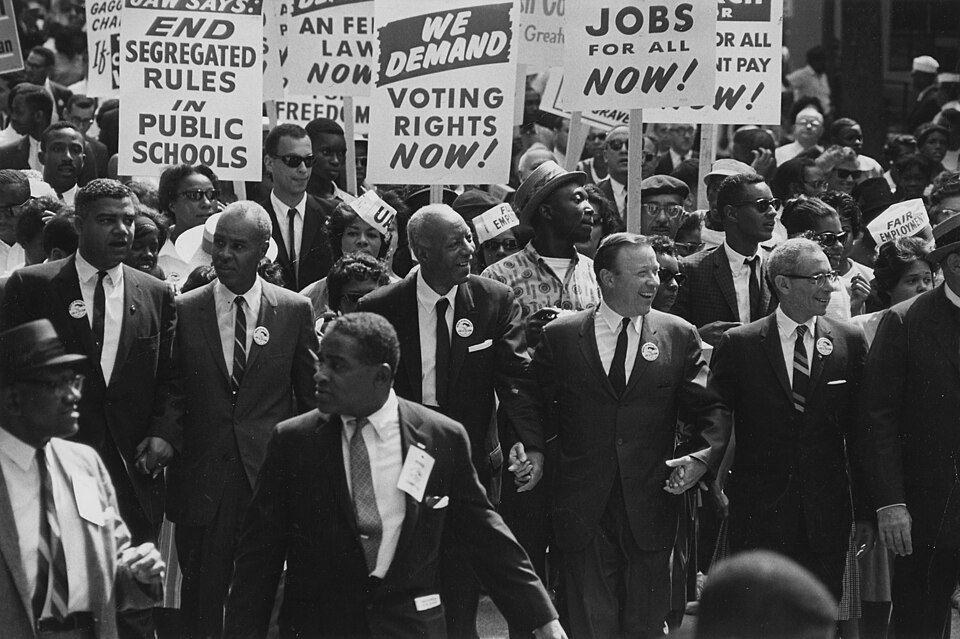
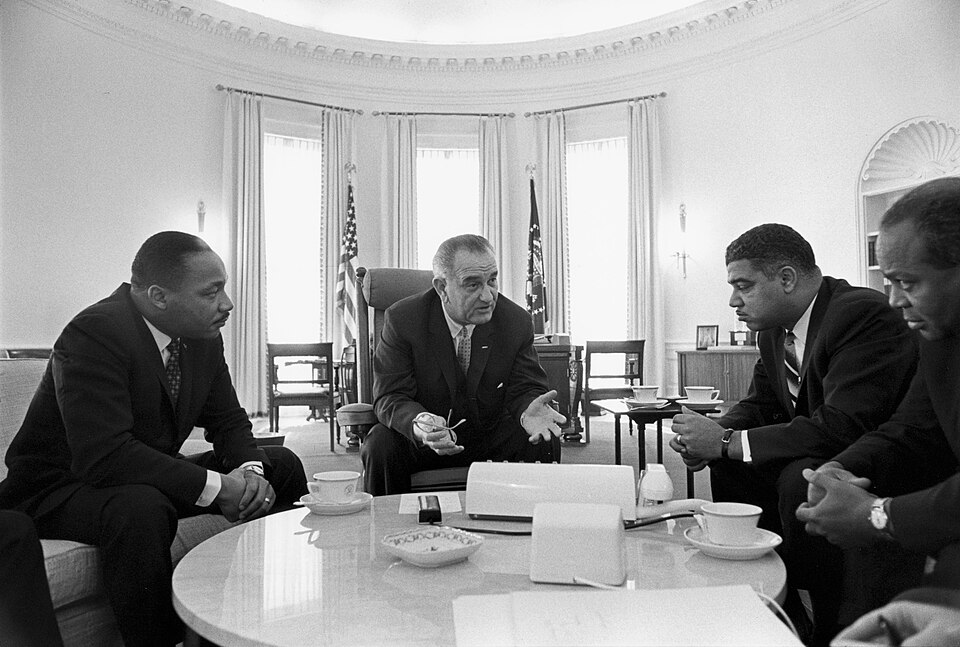
It begins in 1954 with Brown v. Board of Education. It unfolds through bus boycotts and sit-ins. It is led by Martin Luther King Jr., supported by a courageous federal government, and driven forward by nonviolence. It peaks with landmark legislation in the mid-1960s.
And then it ends.
That is the story we have been taught.
It is familiar. It is reassuring. And it is wrong.
Civil Rights activist Julian Bond called this the Master Narrative of the civil rights movement. It is not just incomplete. It distorts the movement so thoroughly that it becomes almost unrecognizable.
According to this narrative, the movement is short, southern, and simple. It is short because it begins in the 1950s and ends in the 1960s. It is southern because it takes place primarily in places like Alabama and Mississippi. And it is simple because it is driven by a handful of leaders, a single strategy, and a narrow set of goals.
But when we look more closely—when we examine the history as it actually happened—we find something very different.
Before we turn to Ohio, let me briefly name the problems with this narrative:
It falsely suggests that the movement began in the 1950s, ignoring centuries of Black protest. It confines the struggle to the South, erasing activism in places like Ohio. It centers Martin Luther King Jr. at the expense of grassroots organizers and Black women. It reduces the movement’s goals to legal equality, ignoring broader demands for freedom and dignity.
It also treats nonviolence as the only strategy, ignoring traditions of self-defense and militancy. It frames white supremacy as the work of a few bad actors, rather than a system embedded in policy and practice. And it misreads outcomes—treating legislation as victory and protest without immediate results as failure.
But the deeper problem is this:
It tells us that if King didn’t show up, nothing happened.
It tells us that white supremacy was a southern problem, not a national one.
And when it finally turns north—to places like Cleveland or Cincinnati—it tells us that Black uprisings were simply senseless violence, rather than political acts rooted in lived experience.
If we accept that story, then a place like Ohio disappears from the history of the civil rights movement.
So here, I want to tell a different story. And Ohio is the place to begin.
Founding a Free State Built on Exclusion (1803–1830s)
Ohio entered the Union in 1803 as a free state. Its constitution prohibited slavery. On the surface, that looks like a moral stance—a rejection of the slave system.
But that is not what it was.
White Ohioans did not oppose slavery because they believed in racial equality. They opposed slavery because they did not want Black people in the state—enslaved or free.
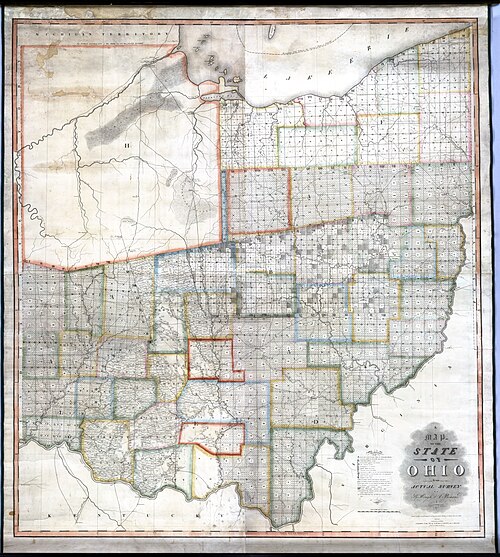
We know this because of what they did next. Ohio’s early laws required Black migrants to post a bond—sometimes as high as $500—guaranteeing their “good behavior.” In effect, Black freedom was conditional. Black presence was suspect.
This tells us something important. White supremacy was not confined to the slave South. It was deeply embedded in the thinking and policy of so-called free states like Ohio.
And when Black people attempted to build lives in Ohio, they encountered that reality directly.
In August 1829, Cincinnati erupted in racial violence. White rioters moved through Black neighborhoods with purpose. Homes were looted and burned. Families were beaten and forced into the streets. Black churches—central spaces for organizing and community life—were attacked. Schools were destroyed, cutting off access to education. The violence was so intense that hundreds of Black residents fled the city altogether, some leaving for British Canada in search of safety.
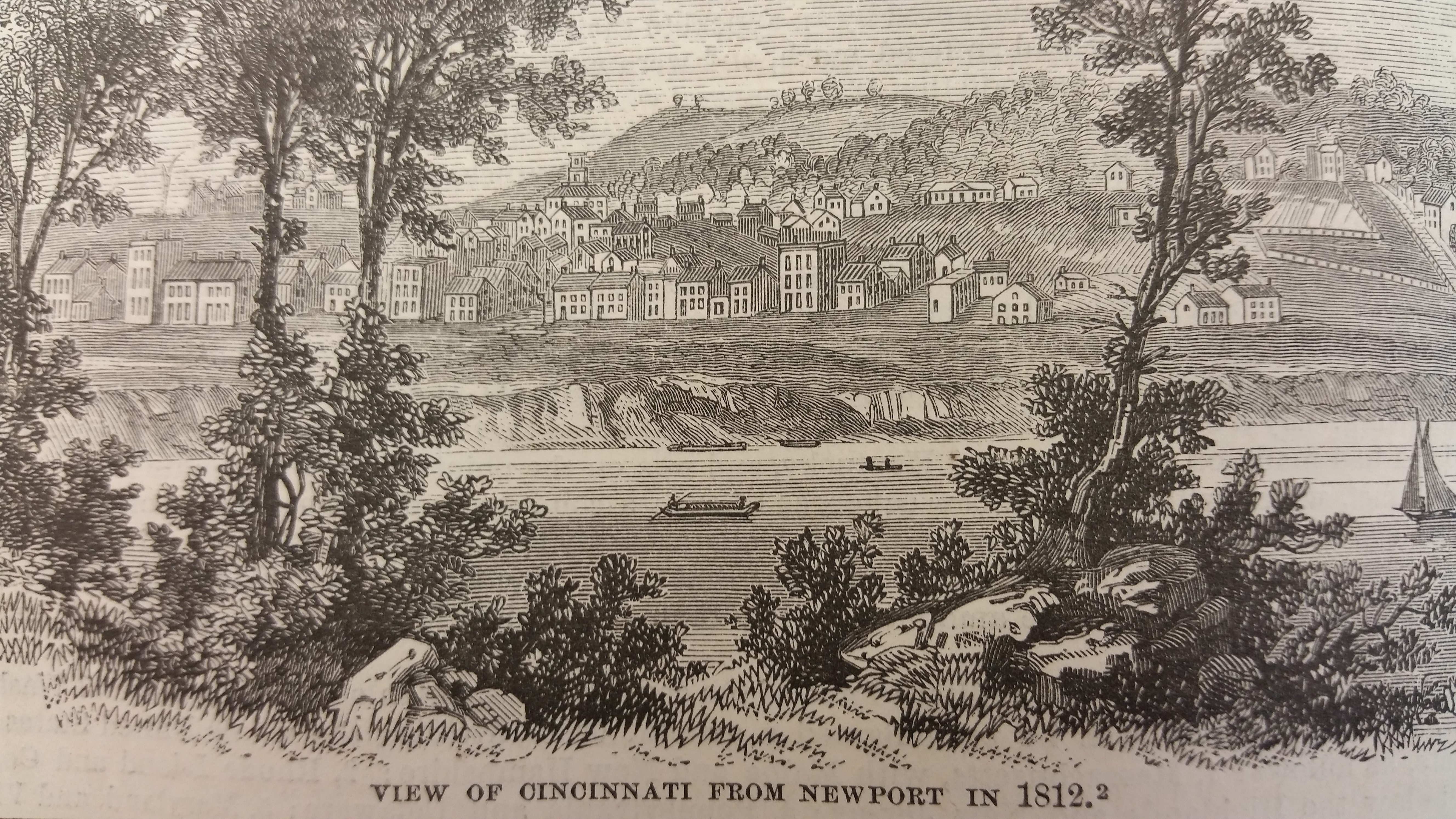
This was not random violence. Black residents in Cincinnati had begun to establish a foothold—working as laborers, artisans, and small business owners, building institutions, and creating a sense of stability and independence. That modest success provoked a white backlash, especially among working-poor Irish immigrants
What was destroyed was more than property. It was a fragile but real experiment in Black freedom—a community that had begun to take root in a so-called free state.
And the message was unmistakable: even in Ohio, Black advancement would be met with force.
This was not an anomaly. It was an expression of a broader racial order—one that sought to limit Black mobility, Black opportunity, and Black belonging.
Abolition and the Work of Black Activism
And yet, even in this hostile environment, Black activism flourished.
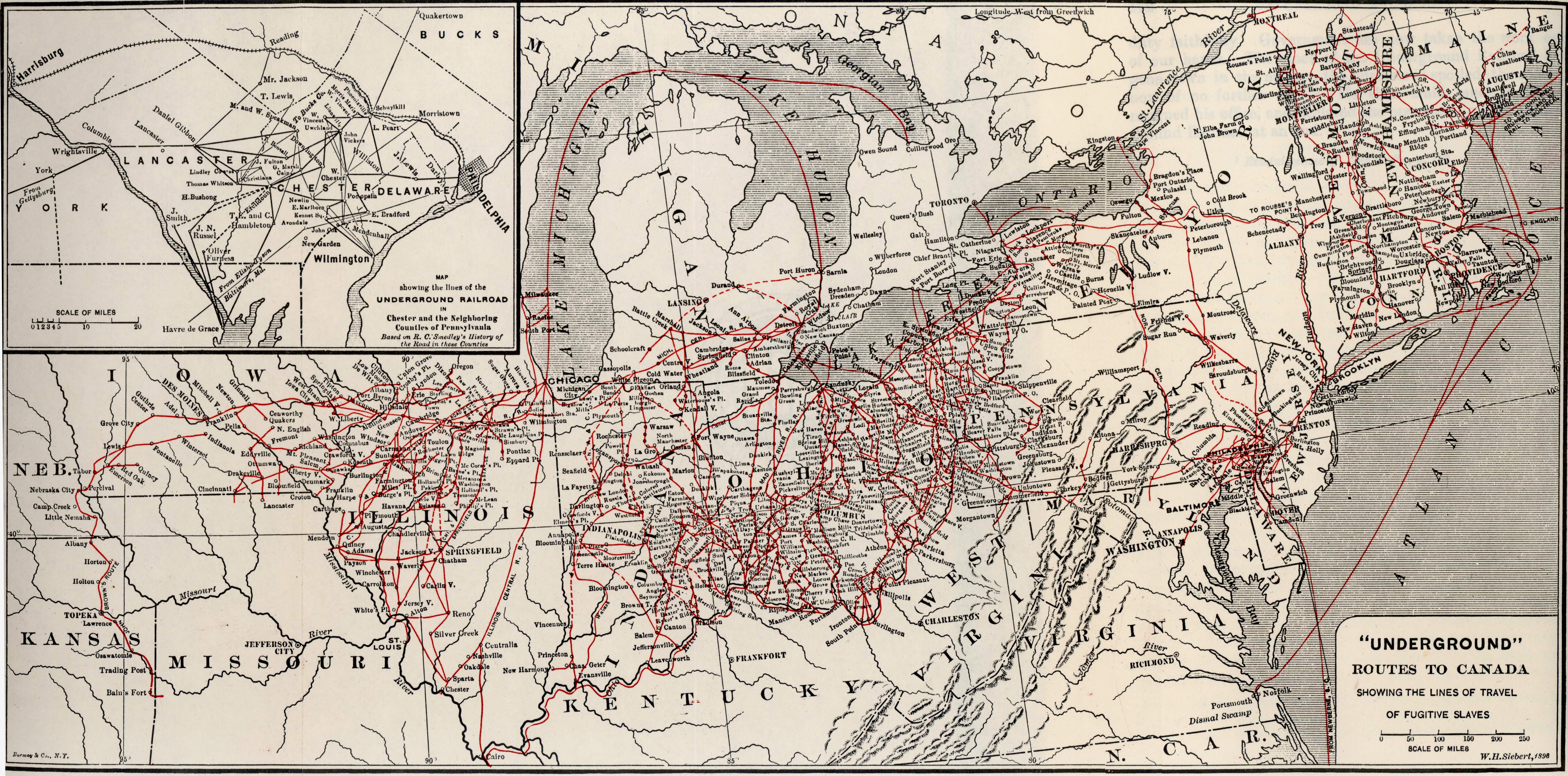
Ohio became a critical hub of the Underground Railroad. Along the Ohio River, freedom seekers crossed from slavery into uncertainty. On clear nights, the river reflected lantern light from safe houses like the Rankin House, signaling that help was near—but never guaranteed.
But we need to be clear about something.
The Underground Railroad was not primarily run by white abolitionists. Black men and women—many of them formerly enslaved—were its backbone. They moved people quietly, often at night, sometimes hiding them in wagons, sometimes guiding them on foot through unfamiliar terrain. If they were caught, they faced imprisonment, violence, or worse.
One of the most remarkable of these figures was John Parker of Ripley, Ohio. Born into slavery in Virginia, Parker purchased his own freedom and settled in Ripley, where he became a successful iron foundry owner—an entrepreneur who built real economic independence in a society that sought to deny it to him.
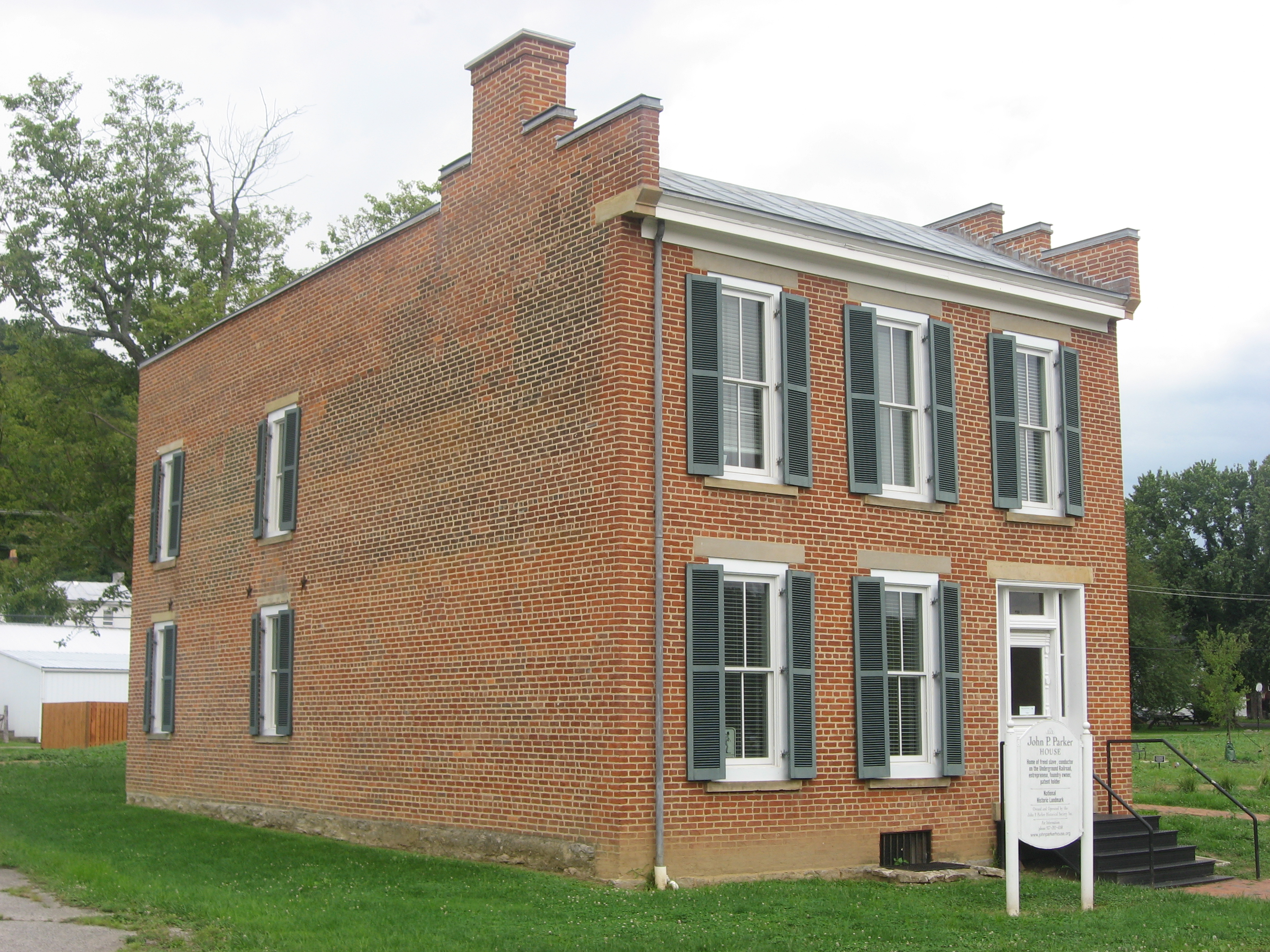
But Parker did not simply build a business. He used his position, his resources, and his courage to fight slavery directly. Crossing the Ohio River again and again, often under the cover of darkness, he guided enslaved men, women, and children out of Kentucky and into Ohio. He sometimes traveled miles into slave territory to lead people to freedom, fully aware that if he were captured, he could be killed or re-enslaved.
Parker’s work reminds us that the Underground Railroad was not abstract. It was personal. It was dangerous. And it was driven by Black people who were willing to risk everything—not just to be free, but to make freedom possible for others.
Black newspapers in Ohio gave voice to abolitionist thought and connected communities across distance. Papers like The Palladium of Liberty in Columbus, one of the earliest Black newspapers in the state, reported on slavery, exposed racial injustice, and circulated antislavery arguments across the region.
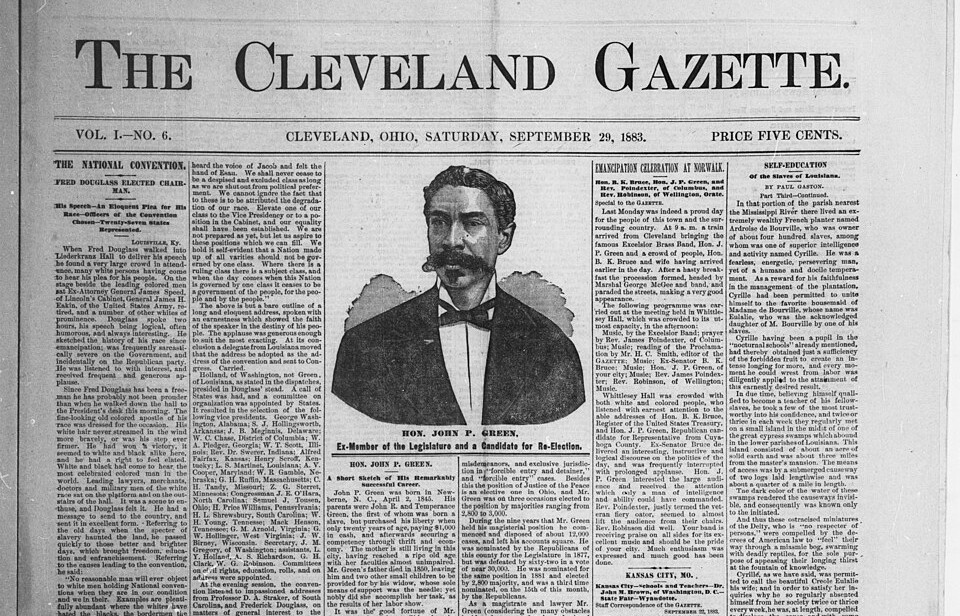
Much later, publications such as the Cleveland Gazette continued that tradition, linking local struggles to national debates and helping to build a shared political consciousness among Black Ohioans.
Across these decades, Ohio became a hub of abolitionist activity—hosting conventions, mass meetings, and political gatherings where Black leaders and their allies debated strategy and pressed for both civil and human rights: from the end of slavery to access to education, fair labor, and full citizenship. These meetings connected local struggles to a broader movement, turning Ohio into a place where ideas were forged and campaigns were coordinated.
And in 1851, Sojourner Truth stood in church in Akron and delivered what would become one of the most famous speeches in American history: “Aren't I a Woman?” In that moment, she did more than speak. She challenged the very definition of womanhood and citizenship in the United States.

Ohio was not just a backdrop. It was a stage.
It was also home to one of the most radical figures of the era: John Brown.
Brown lived in Akron for nearly two decades, yet that Ohio connection is often ignored. In popular memory, he is reduced to a fanatic—an outlier to be explained away rather than understood. But that framing misses who he was and what he represented.
In Ohio, Brown sharpened his convictions in conversation with Black communities and abolitionists who were already fighting for freedom. He did not simply oppose slavery—he rejected white supremacy in its entirety. He lived among Black families, worked alongside them, and treated them as equals in a society structured to deny that possibility. What others debated in theory, he practiced in daily life.
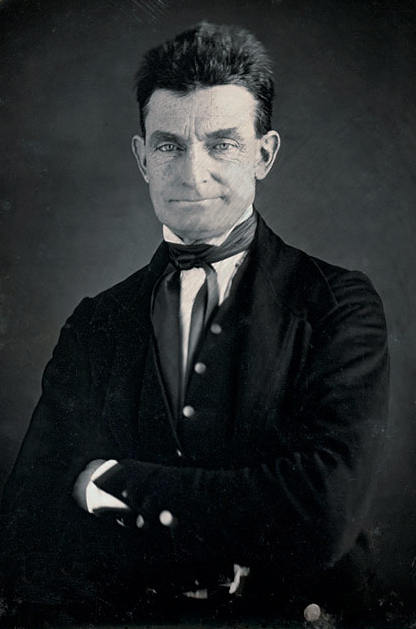
From that experience, Brown reached a conclusion that many abolitionists were unwilling to accept:
Slavery would not end without violence.
This was not the conclusion of a madman. It was the conclusion of someone who had watched a system of racial domination refuse reform, who had seen law and custom align to protect slavery, and who understood that power would not yield without force.
And he was right. When the Civil War finally came, it proved him correct.
John Brown was willing to die for that belief.
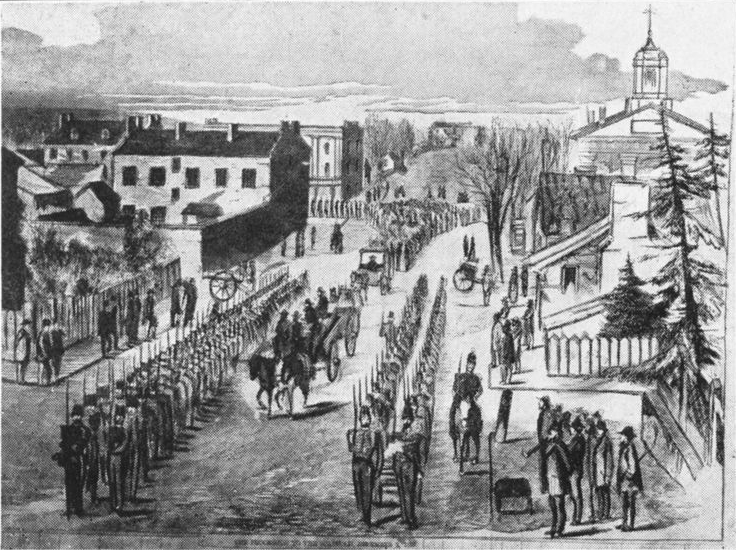
More than that—he was willing to see his sons die for it.
And he did. And they did too.
If we overlook Brown—or dismiss him—we miss more than a man. We miss an example of moral clarity and commitment. At a moment when many were willing to compromise with injustice, he refused. He acted. And his actions forced the nation to confront what it had long tried to avoid.
That is why he matters—not as a symbol of extremism, but as a reminder of the kind of courage and conviction that movements for freedom have always required.
Civil War, Reconstruction, and Black Possibility
The Civil War brought that violent reckoning.
Black men from Ohio did not wait passively for freedom—they fought for it. Thousands served in the United States Colored Troops, including regiments like the 5th and 27th USCT, many recruited in Ohio.
These men were not simply fighting for Union victory; they were fighting to destroy slavery itself. They endured unequal pay, harsh conditions, and the constant threat of execution if captured. And yet they fought—because they understood that freedom would not be given. It would have to be taken.
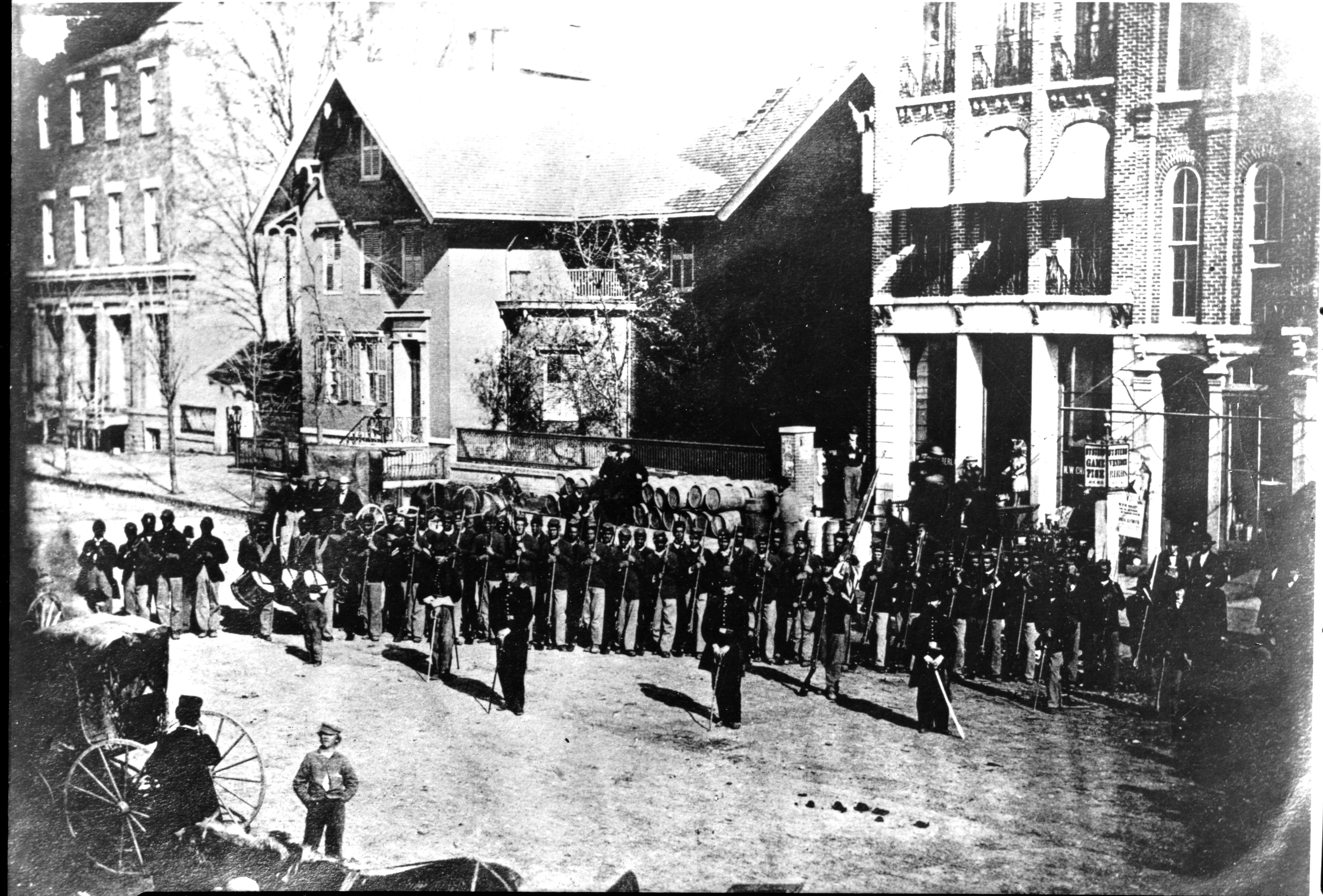
Reconstruction opened new possibilities.
Black Ohioans built communities, acquired land, and entered political life. Across central Ohio, Black landownership became one of the clearest expressions of freedom—not just survival, but stability, autonomy, and generational vision.
One powerful example sits in Upper Arlington. The land on which Upper Arlington High School now stands was once owned by Pleasant Litchford, a formerly enslaved Black man from Virginia who purchased his freedom and migrated to central Ohio in the early nineteenth century.
A skilled blacksmith and farmer, Litchford built a successful business and acquired 227 acres in what was then Perry Township. That land included the present-day sites of Upper Arlington High School, Northam Park, and Tremont Elementary School.
Litchford’s story reveals what Black landownership meant in the aftermath of slavery and in the decades before and after the Civil War. It was not simply a matter of property. It was a claim to independence, security, and belonging.
On his land, Litchford helped establish a school for African American children and created a family cemetery because Black families were often excluded from white burial grounds. He was also a founding member of Second Baptist Church in Columbus, an important Black religious institution with deep antislavery commitments.
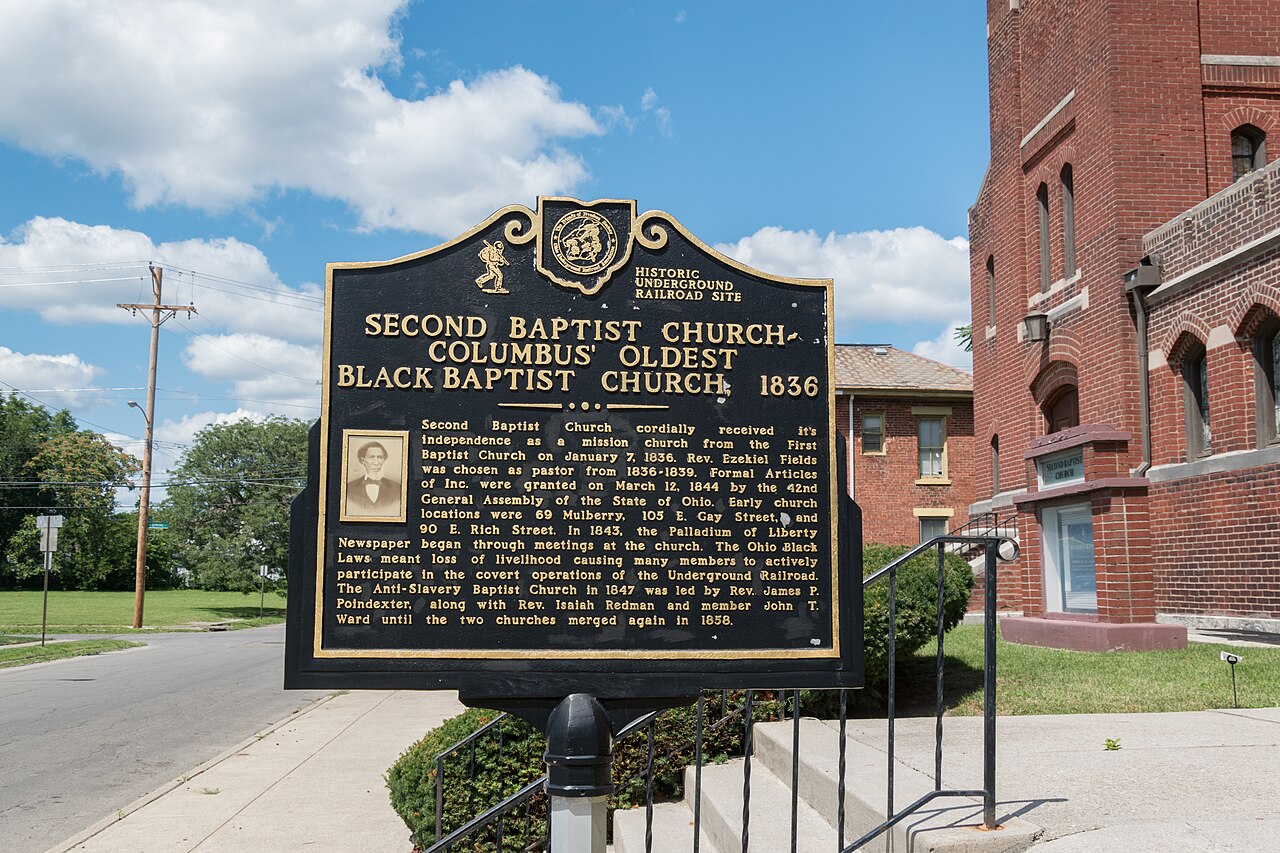
And then, generations later, even that history was nearly erased. In the 1950s, as Upper Arlington expanded, the school district used legal action to acquire the cemetery land for the construction of the high school. Dozens of bodies were removed, and the presence of this Black family and community was pushed out of public memory.
The point is not only that a Black man once owned land in what became one of central Ohio’s most affluent suburbs. The point is that Black freedom took root there—and then the evidence of that freedom was obscured, paved over, and forgotten.
Litchford's was not an isolated case. Black Ohioans across the state—farmers, laborers, entrepreneurs—acquired property wherever they could, often on the margins, often against resistance. Their efforts created stable Black communities that anchored churches, schools, and businesses.
These were not marginal developments. They were foundational.
But when Reconstruction was defeated through violence, terror, and political retreat, what followed was not progress, but retrenchment.
The Nadir: Segregation and Self-Determination
The late nineteenth and early twentieth centuries marked what historians call the Nadir—a low point in Black life.
In Ohio, segregation deepened—more rigid, more normalized, more entrenched in everyday life.
But Black communities did not simply endure—they built.
Wilberforce University stood at the center of that work. Founded in 1856 and later sustained by the African Methodist Episcopal Church, Wilberforce was not just a school—it was a project in freedom.
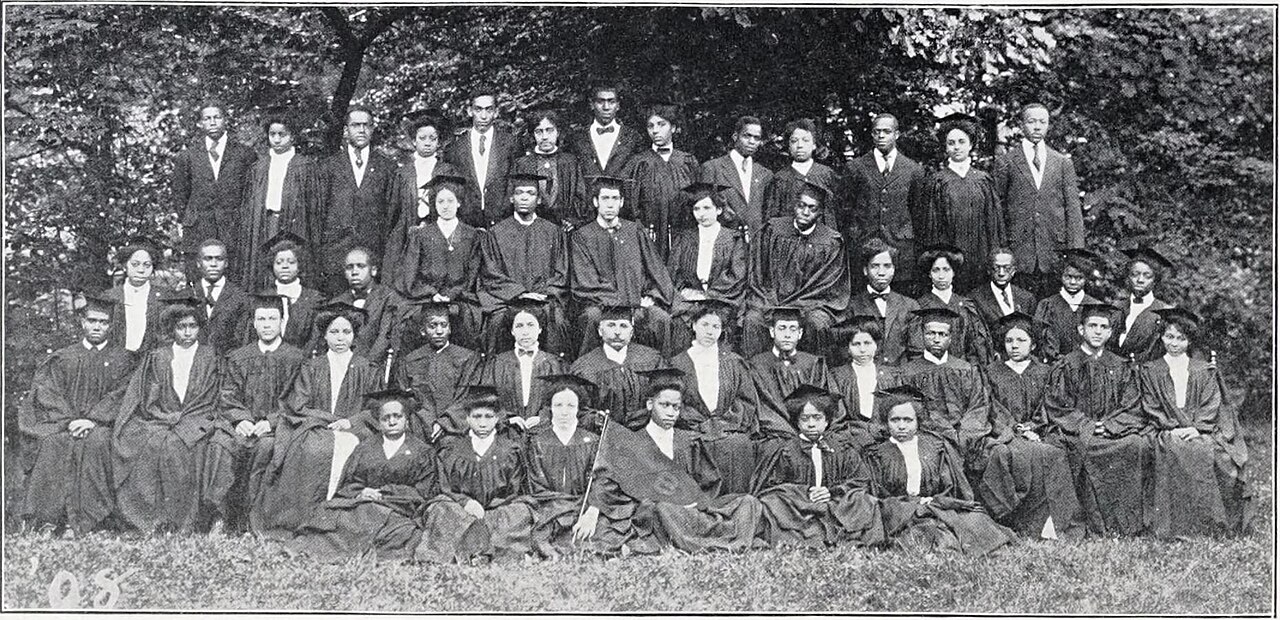
Its mission was clear: to educate African Americans in a society that denied them access to education, and to prepare a leadership class capable of advancing the race. It trained teachers, ministers, professionals, and organizers—people who would carry forward the work of Black uplift and political struggle.
When W. E. B. Du Bois taught there in the 1890s, he encountered a student body deeply engaged in questions of race, citizenship, and power. Wilberforce was not isolated from the world—it was shaping it.
It was also connected to a long tradition of Black military service. Just down the road, Charles Young—one of the first Black graduates of West Point and one of the highest-ranking Black officers in the U.S. Army before World War I—made Wilberforce and nearby Wilberforce community part of his life and work.
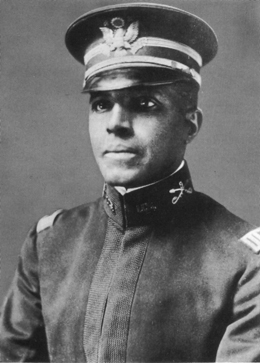
Young commanded Black troops, trained future leaders, and embodied the contradiction of Black service in a segregated nation: fighting for a country that denied full citizenship at home. His career reminds us that Black military service has always been tied to claims of belonging and equality—and that those claims have often been met with resistance, marginalization, or erasure.
At moments like the present—when efforts are made to strip away or suppress the history of Black service and achievement in the military—Young’s life becomes even more important. It forces us to remember that inclusion has never been automatic. It has always been contested.
At the same time, Black artists and writers used culture as a form of resistance. Paul Laurence Dunbar, born in Dayton, captured the emotional complexity of Black life in poems like We Wear the Mask. As he wrote, “We wear the mask that grins and lies,” a line that speaks to the necessity of concealment in a society structured by inequality—the distance between how Black people were forced to appear and what they actually lived.
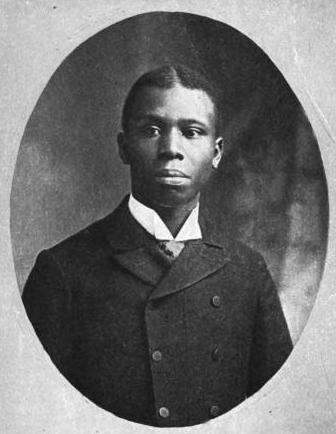
This was not passive endurance. It was active creation—building institutions, shaping ideas, and asserting humanity in the face of a system designed to deny it.
Migration, Segregation, and Community Building
By the early twentieth century, another major shift was underway.
In the 1910s and 1920s, tens of thousands of Black southerners came to Ohio, part of the larger movement of more than a million African Americans out of the South during World War I.
They sought opportunity in cities like Cleveland, Toledo, and Youngstown—drawn by wartime labor shortages in steel mills, meatpacking plants, and auto factories—and, they fled the violence and degradation of the Jim Crow South.
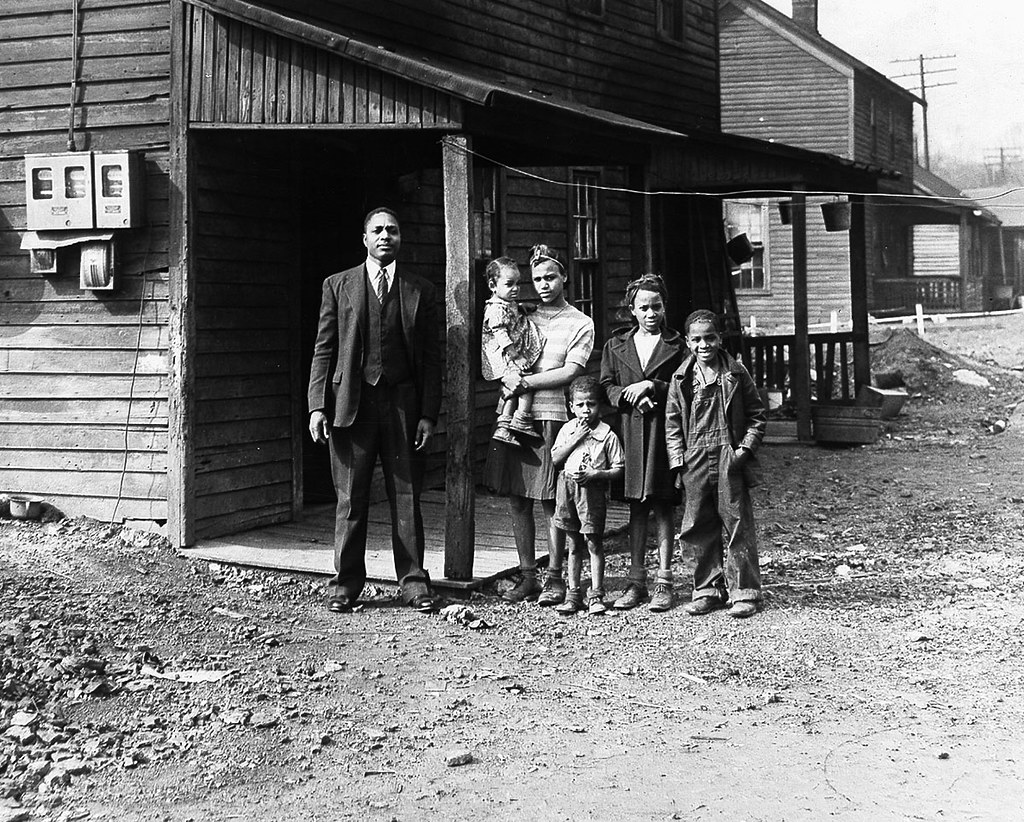
Some arrived with little more than a suitcase. Others came following letters from family members who had made the journey before them—letters that described specific jobs at places like U.S. Steel in Cleveland or Willys-Overland Motors in Toledo, better wages than sharecropping could offer, and the possibility of something more.
But Ohio was not the Promised Land.
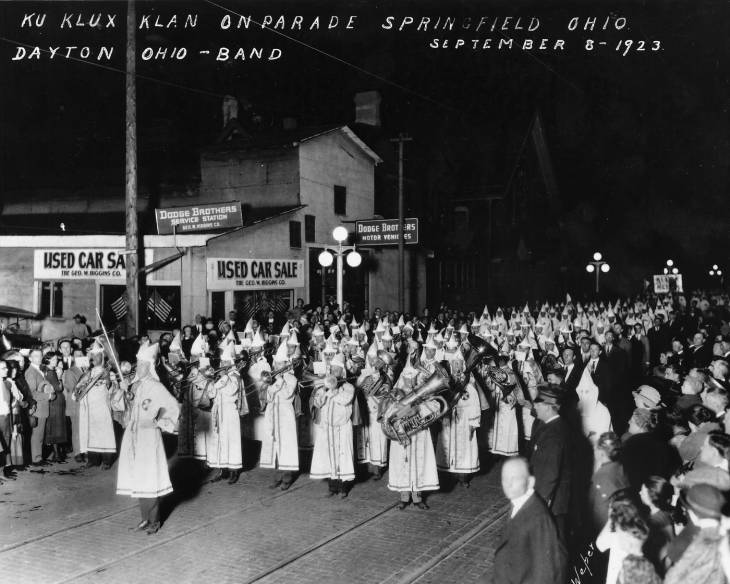
It was filled with sundown towns—places where Black travelers could not safely remain after dark. It witnessed racial violence, including the Springfield riots of 1904 and 1906, when white mobs attacked Black residents, burned homes and businesses, and drove families from their neighborhoods.
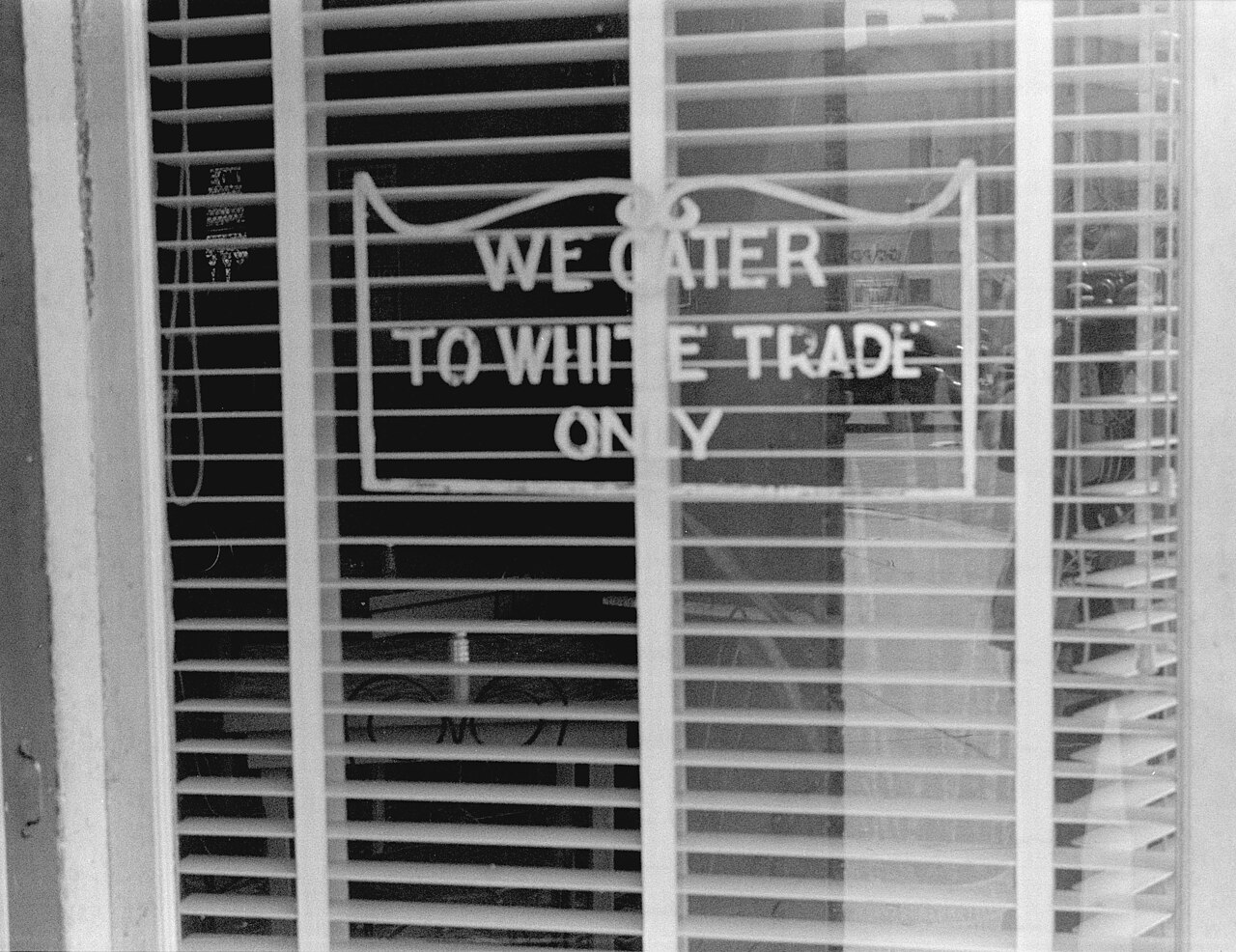
And in the cities, Black migrants encountered new forms of exclusion—less visible than Jim Crow signs, but no less real.
Housing segregation. Employment discrimination. Segregated public spaces.
In Cleveland, Black residents were confined to overcrowded neighborhoods like the Central District, hemmed in by restrictive covenants and informal agreements among white homeowners.
Federal policy reinforced these lines: the Home Owners’ Loan Corporation graded Black neighborhoods as “hazardous,” and the Federal Housing Administration refused to insure mortgages there, making it nearly impossible to build wealth through homeownership.
A Black family might find work in a factory, earn a steady wage, and still be told they could only live in a narrow band of streets. They might dress up for an evening out, only to be denied entry into restaurants or theaters just blocks from their homes.
So Black communities did what they had always done. They built.
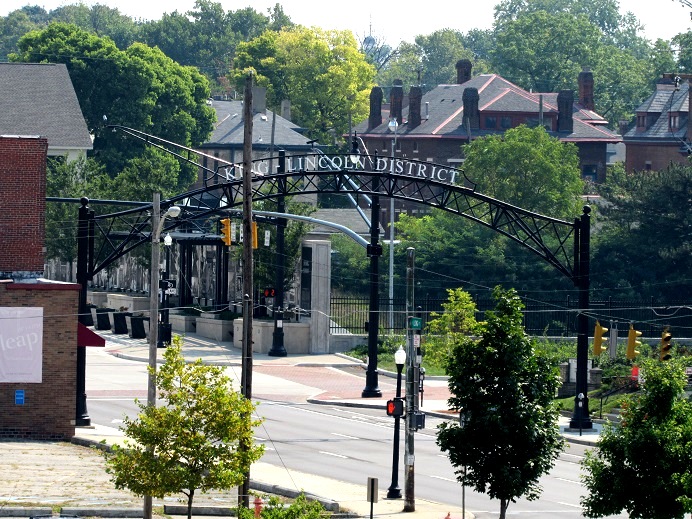
In Columbus, the King-Lincoln District became a center of Black life—home to Black-owned businesses, churches, newspapers, and a vibrant cultural scene along Long Street, where jazz clubs and theaters created spaces of joy and expression.
Institutions like the Columbus Urban League, founded in 1918, and the local NAACP, organized earlier in the century, worked to connect migrants to jobs, advocate for fair treatment, and challenge discrimination.
And when private housing markets shut Black families out—when restrictive covenants in towns like Bexley made it clear that Black homeownership would not be tolerated—African Americans turned to the federal government.
They demanded access to decent housing.
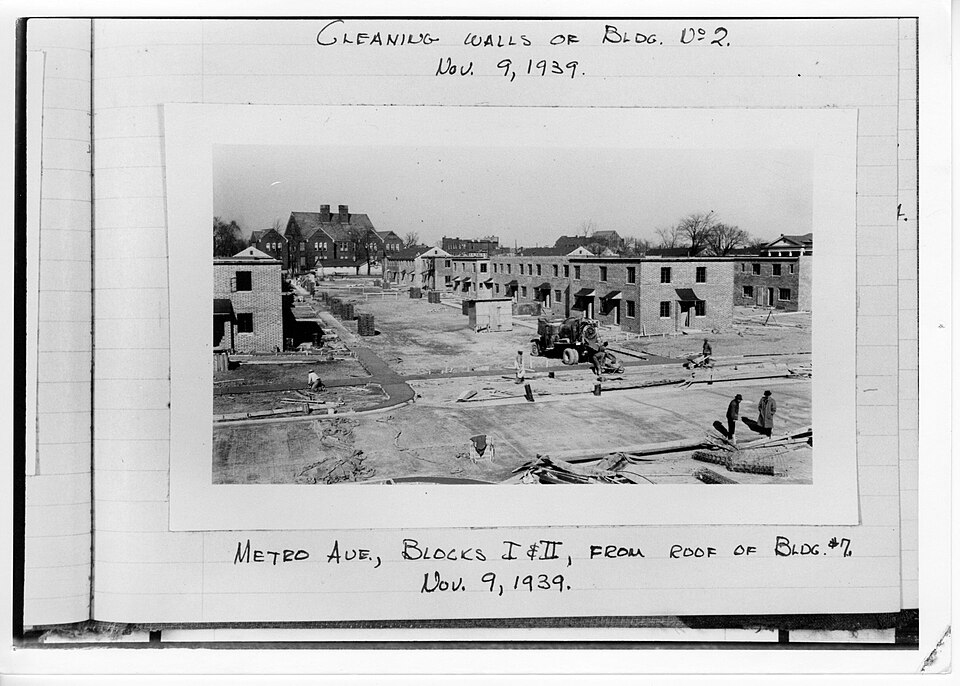
That is how Poindexter Village came to be in 1940—one of the first public housing projects in Columbus, built specifically for Black residents who had been excluded from private housing options.
But even here, the story is complicated.
Poindexter Village provided modern amenities and stability, but it also reinforced segregation by concentrating Black residents in a single, designated space. Public housing, initially envisioned as a solution, became another mechanism through which racial boundaries were maintained.
And those tensions—between opportunity and exclusion—would shape the next phase of struggle.
Civil Rights in Ohio: Policy and Protest
Those tensions came to a head in the mid-twentieth century.
Civil rights struggles intensified across Ohio, but we must understand something clearly: The federal government was not always an ally.
It helped create segregation through housing policy. It refused to insure mortgages for Black families. It sanctioned inequality.
And when Black communities managed to build wealth, public policy often destroyed it.
In Columbus, Interstate 70 cut through Hanford Village—a thriving Black neighborhood—displacing families and erasing opportunity. More than sixty homes were destroyed, many owned by Black veterans who had served their country and returned home expecting to share in its promise.
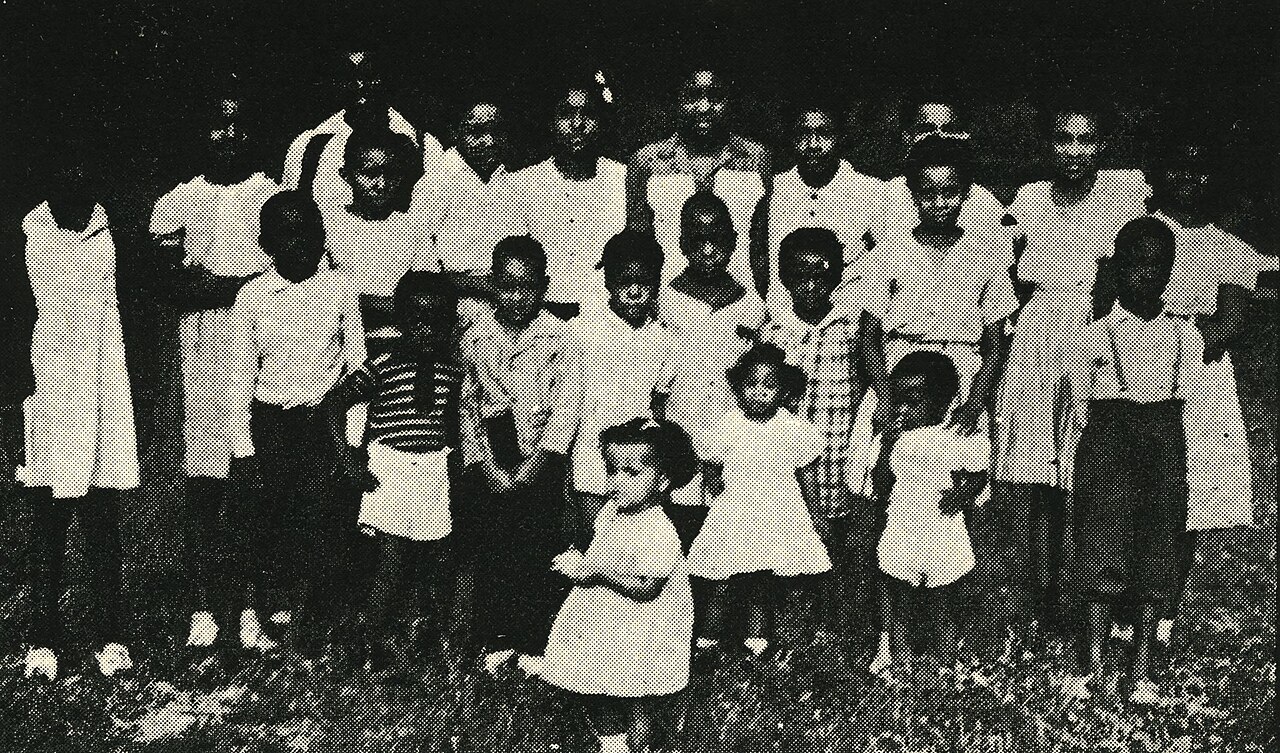
This was not accidental. It was policy. And it had consequences.
It meant that the very institutions Black Ohioans had built—homes, churches, businesses, schools—could be undermined or erased by decisions made far from their communities. It meant that equality under the law did not translate into equality in lived experience. It meant that even when Black families did everything right—worked, saved, purchased property—the rules could be rewritten against them.
Those realities did not produce resignation. They produced resistance. They made clear that if policy had created inequality, then policy would have to be challenged—and changed—through organized action.
So, the fight for civil rights in Ohio was not abstract. It was rooted in these lived experiences of exclusion and loss. And it moved from recognition of injustice to coordinated efforts to confront it.
So Black Ohioans organized.
They fought for education, housing, and political representation. They registered voters, challenged discriminatory practices, and built coalitions that could wield political power.
And crucially, Ohio was not just a site of struggle—it was a site of preparation and strategy for the broader movement.
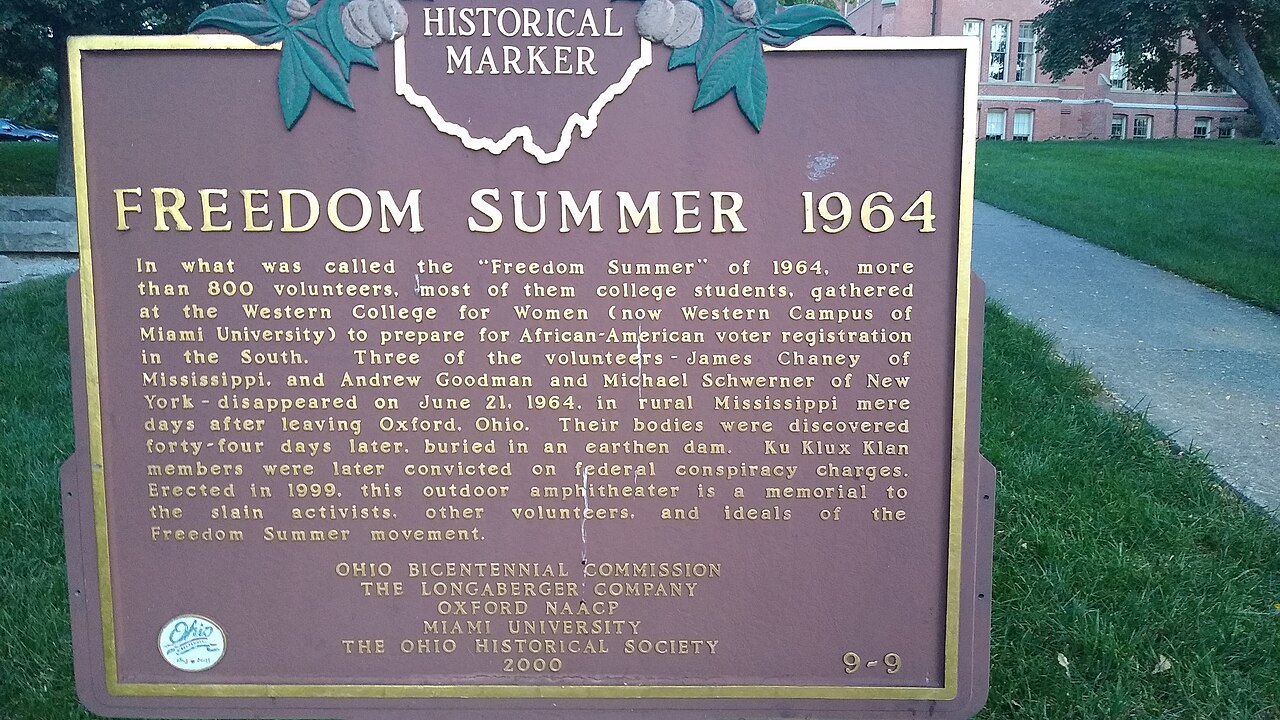
In the summer of 1964, hundreds of young activists gathered in Oxford, Ohio, on the campus of Western College for Women, to train for what would become Freedom Summer. Over the course of two weeks, nearly 800 volunteers were prepared for one of the most dangerous campaigns of the civil rights era: registering Black voters in Mississippi, teaching in Freedom Schools, and confronting the violent machinery of Jim Crow.
Ohio was not on the sidelines of the civil rights movement. It was helping to build it—training organizers, shaping strategy, and preparing people for the work of democracy under fire.
This pattern repeated itself across the state. In cities like Cleveland, Columbus, and Cincinnati, local activists organized around school desegregation, fair housing, and police accountability. They staged protests, filed lawsuits, and built organizations that could sustain long-term struggle.
And they achieved real victories.

In Cleveland, a multiracial coalition of Black activists, labor organizers, and progressive whites elected Carl Stokes—the first Black mayor of a major American city. His election was not just symbolic. It demonstrated what was possible when grassroots organizing translated into electoral power.
But progress was uneven. And that unevenness—those persistent gaps between promise and reality—set the stage for the next phase of struggle.
Black Power and Urban Uprisings
By the late 1960s, many Black Ohioans had grown weary of the slow pace of change, and that frustration fueled the next phase of struggle.
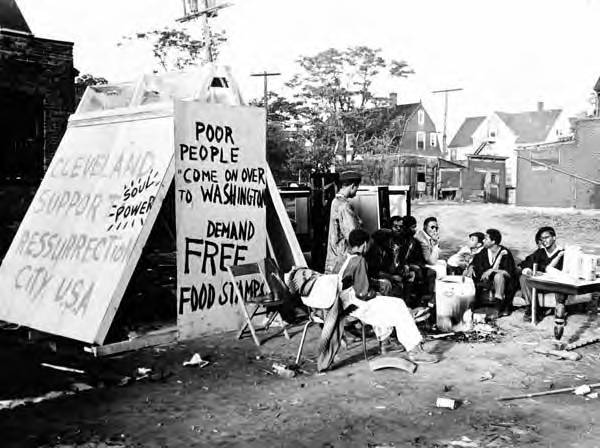
And across Ohio, that frustration did not remain contained—it erupted. In Cleveland, in Toledo, in Dayton, in Cincinnati, Black communities rose up in response to conditions that had been ignored for far too long.
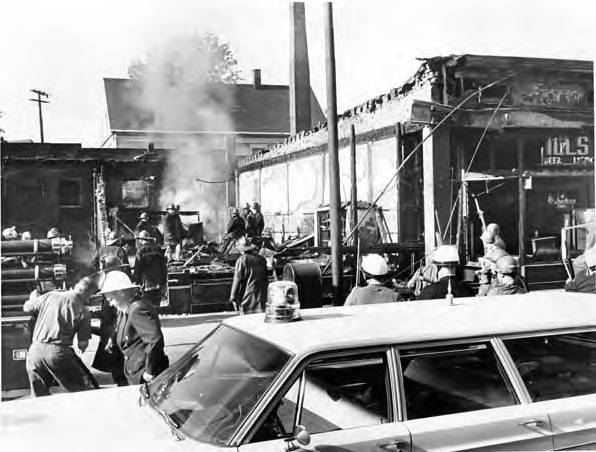
The most prominent of these was in Cleveland’s Hough neighborhood in July 1966.
We often call it a riot. But that language obscures more than it reveals.
Hough was a densely populated Black neighborhood marked by overcrowded and deteriorating housing, exploitative landlords, limited job opportunities, and persistent police harassment. The immediate spark—a dispute at a neighborhood bar—was not the cause. It was the catalyst. What followed was the expression of accumulated grievances.
For several days, residents confronted police, damaged property, and asserted their presence in a city that had systematically marginalized them. Four people were killed. Hundreds were arrested. National Guard troops were deployed.
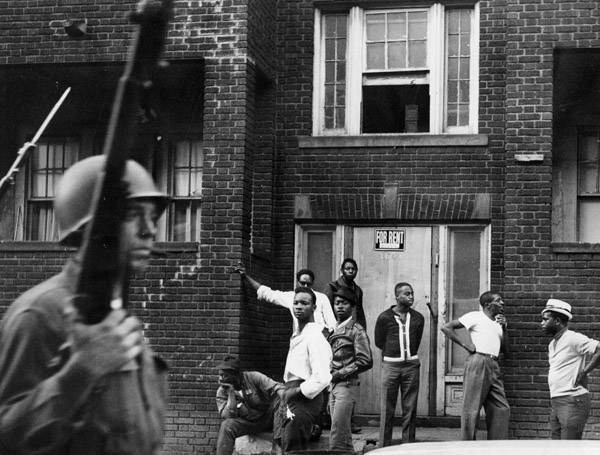
This was not random violence.
It was a political act—an attempt to force recognition, to demand change, to make visible conditions that had long been ignored.
And it was not isolated.
Similar uprisings across Ohio reflected a shared reality: that civil rights legislation had not translated into economic justice, safe housing, or equitable treatment in everyday life.
At the same time, another form of resistance was taking shape—on college campuses.
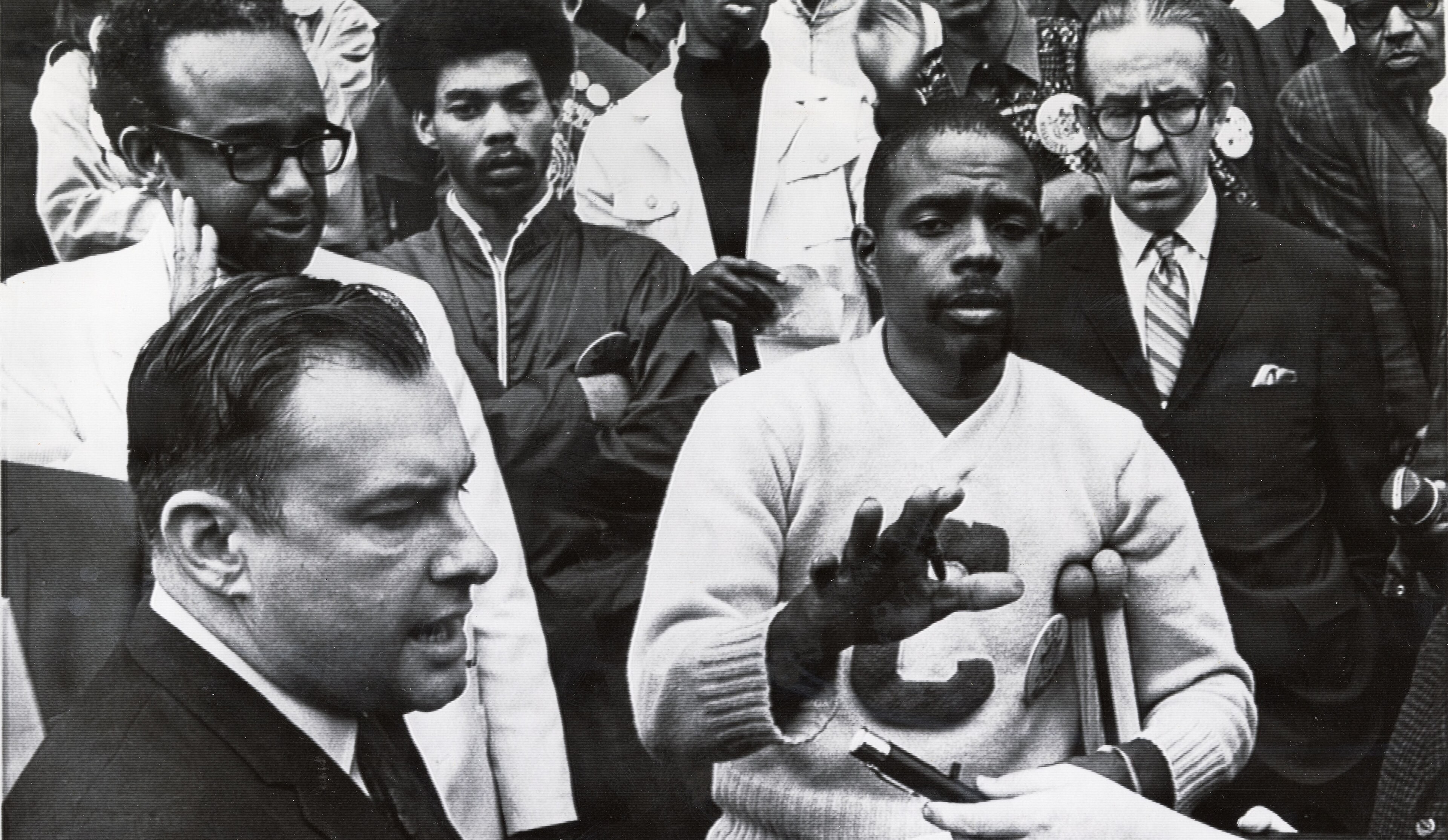
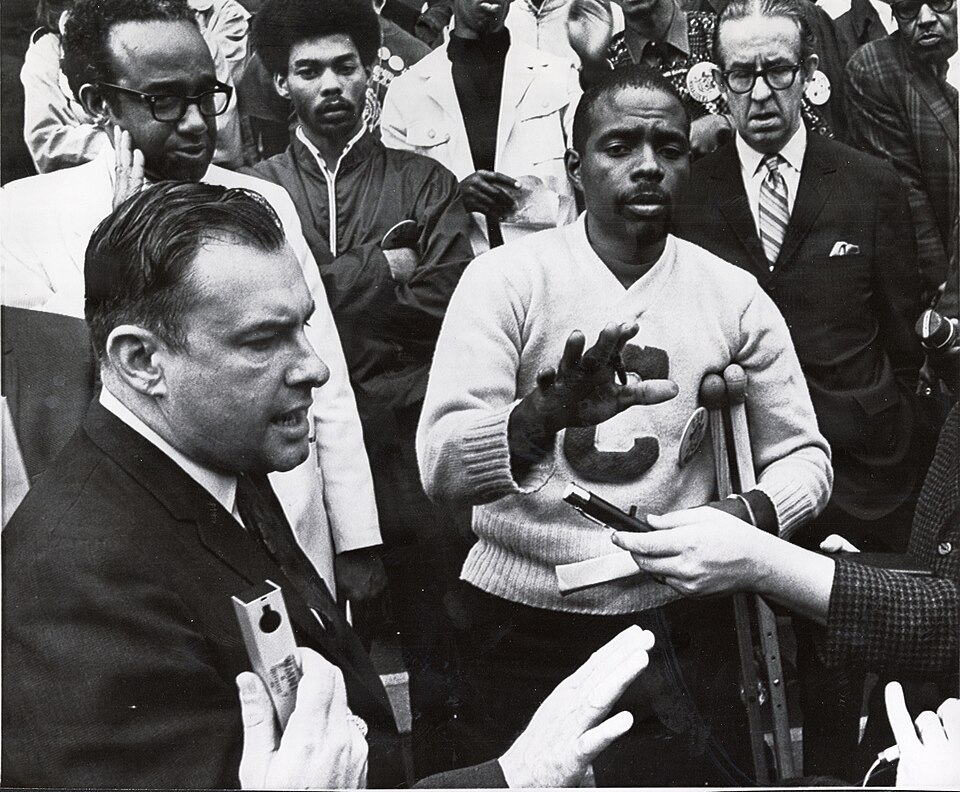
At The Ohio State University in the late 1960s, Black students organized to challenge their exclusion from a predominantly white institution. They demanded increased Black enrollment, the hiring of Black faculty, the creation of Black studies courses, and greater institutional accountability. Groups like the Black Student Union mobilized protests, sit-ins, and negotiations with university leadership.
![The Black United Students' first Black culture center, Kuumba House in Kent State University, where many events of the first Black History Month celebration took place[9]](/sites/default/files/inline-images/Kuumba_House_-_Black_United_Students_1st_Black_Culture_Center_1969.jpg)
In April 1968, tensions came to a head after four Black female students were forcibly removed from a campus bus by police—an incident that crystallized broader grievances about discrimination, policing, and unequal treatment on campus. In response, members of the Black Student Union organized and confronted university administrators, ultimately leading to the takeover of the administration building, now known as Bricker Hall.
Dozens of students were arrested or expelled for their actions. But they forced the university to listen.
These demands were not symbolic. They were structural. They sought to transform the university into a space that recognized Black history, Black intellectual life, and Black presence.
And they produced results.
The protests helped lead to the creation of African American studies programs across the state, as well as new diversity initiatives, and institutional changes that reshaped Ohio's universities.
Ohio State established programs, increased recruitment, and began to respond—however imperfectly—to student demands.
These efforts became part of the broader emergence of affirmative action and diversity initiatives nationwide—and a reminder that those gains were not given, but won through struggle.

Taken together, the uprisings in places like Hough and the organizing on campuses like Ohio State reveal something essential.
These developments were not a break from the civil rights movement. They were its continuation. They reflected both the gains that had been made and the limits of those gains. And they pointed forward—to the struggles that would follow.
The Present: Persistence and Struggle
Those struggles did not end in the 1960s or 1970s.
They continued through the 1980s and 1990s, as deindustrialization hollowed out urban economies, eliminating the very jobs that had drawn Black migrants north.
At the same time, public policy accelerated the growth of mass incarceration through the War on Drugs, aggressive sentencing laws, and expanded policing—policies that fell disproportionately on Black communities in cities like Dayton and Youngstown, and reshaped Black neighborhoods across Ohio.
They continued in the 2000s, as predatory lending and the subprime mortgage crisis stripped wealth from Black homeowners at higher rates, and as redevelopment projects and rising property values displaced long-standing Black communities in cities like Columbus and Cleveland.
The challenges have not disappeared. They have evolved.
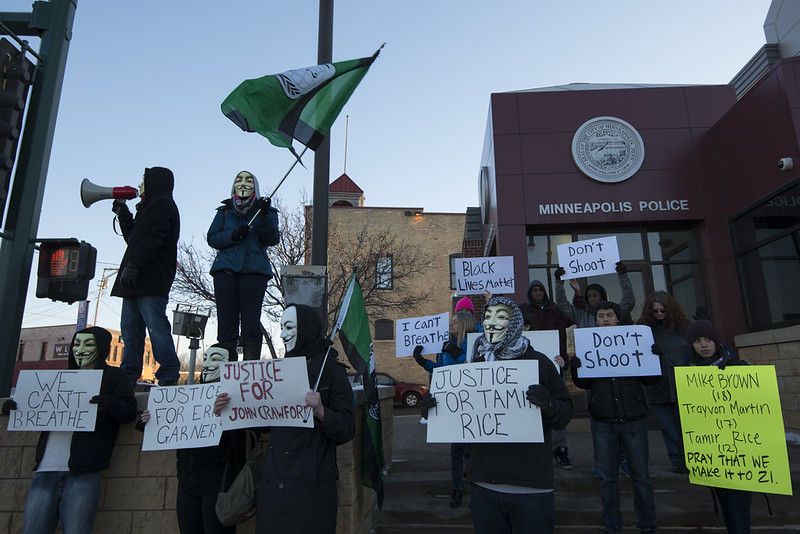
Policing remains a central issue, as seen in the murders of Tamir Rice in Cleveland and John Crawford in Beavercreek—both cases that sparked protest and renewed calls for accountability. These incidents are not isolated; they reflect patterns of surveillance, force, and unequal treatment that have deep historical roots.
Mass incarceration continues to shape life chances, removing individuals from communities and limiting access to employment, housing, and political participation long after sentences have been served.
Housing inequality persists through appraisal gaps, rental discrimination, and uneven development, while gentrification raises property values and displaces Black residents from neighborhoods they built.
In this context, a new generation of activists has organized under the banner of Black Lives Matter.
Black Lives Matter is not a single organization but a decentralized movement—a network of local groups and organizers responding to police violence and systemic racism. It emerged in the 2010s following high-profile killings of Black individuals and quickly took root in Ohio. In Cleveland, Columbus, Cincinnati, Dayton, and beyond, activists organized marches, teach-ins, policy campaigns, and mutual aid efforts.
They demanded accountability for police misconduct, transparency in investigations, investment in Black communities, and a broader rethinking of public safety. They also insisted on something more fundamental: that Black life be valued, protected, and respected in practice, not just in principle.
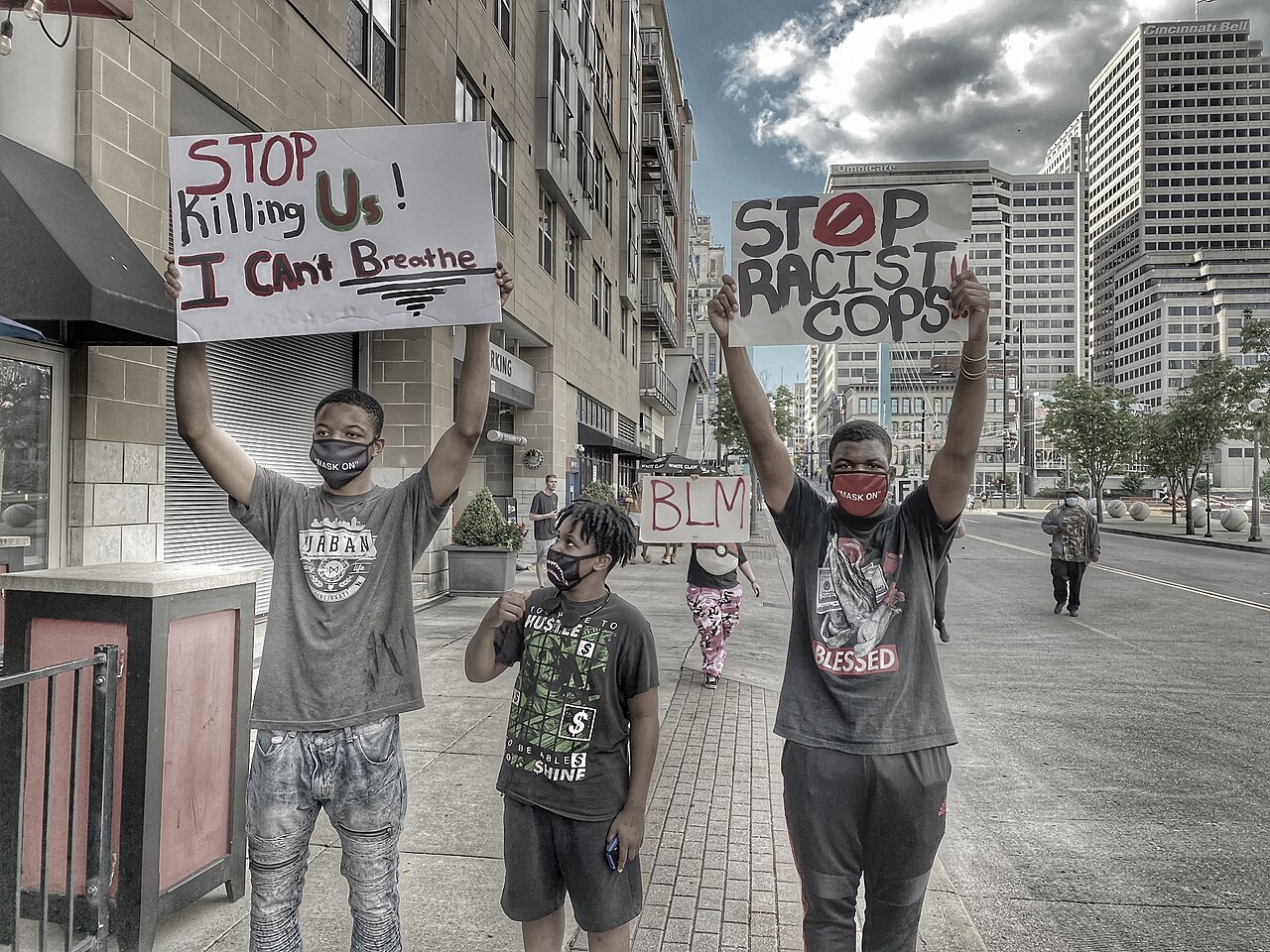
This is part of a longer tradition. The tactics may look different—social media organizing, rapid-response protests, coalition-building across movements—but the goals echo earlier demands for safety, dignity, economic justice, and political power.
These are not new problems. They are old problems in new forms.
And understanding them requires understanding the history that produced them.
Conclusion:
So what does this history tell us?
It tells us that the fight for freedom in Ohio did not begin in the 1950s.
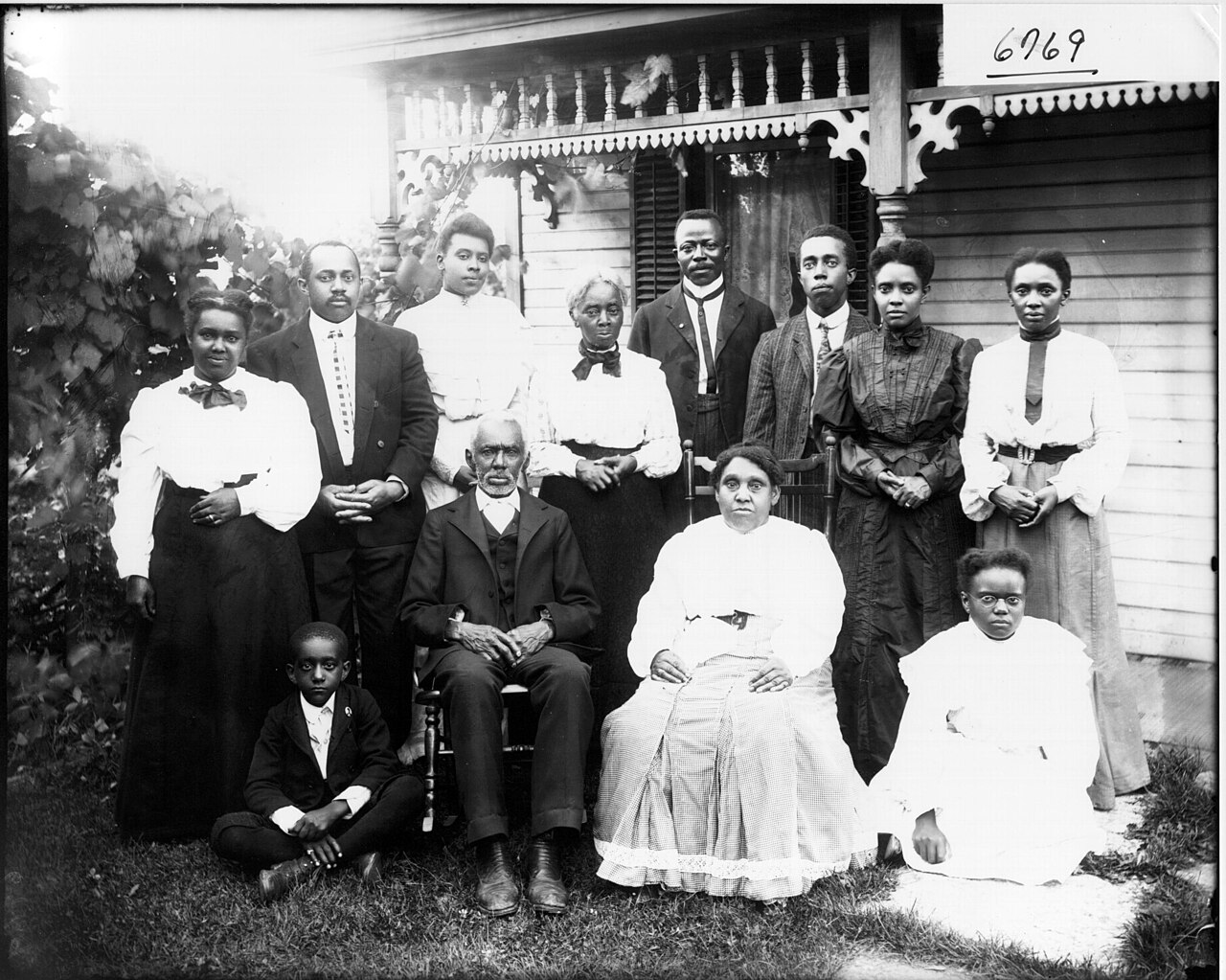
It began at the founding of the state—when Black people were excluded, policed, and pushed out—and it has continued, in different forms, in every generation since.
It tells us that progress has never been linear.
Every gain—emancipation, landownership, education, voting rights, fair housing—has been met with resistance. Sometimes that resistance came in the form of mobs in Cincinnati. Sometimes it came in the form of policy—redlining maps, highway construction, sentencing laws. Different tools. Same purpose.
It tells us that when systems produced inequality, Black Ohioans responded with organizing.

They built institutions. They created networks. They trained organizers in Oxford. They elected leaders in Cleveland. They rose up in Hough. They occupied buildings at Ohio State. They marched in the streets in the era of Black Lives Matter.
Different moments. Same struggle.
It also tells us something about the present.
The challenges we see today—policing, housing inequality, mass incarceration—are not new. They are the latest expressions of longstanding systems and structures. That is why they feel so persistent. And that is why they require more than symbolic solutions.
They require the same thing they have always required:
Organized struggle.
Clear vision.
And the courage to confront injustice directly.
That is the throughline of this history.
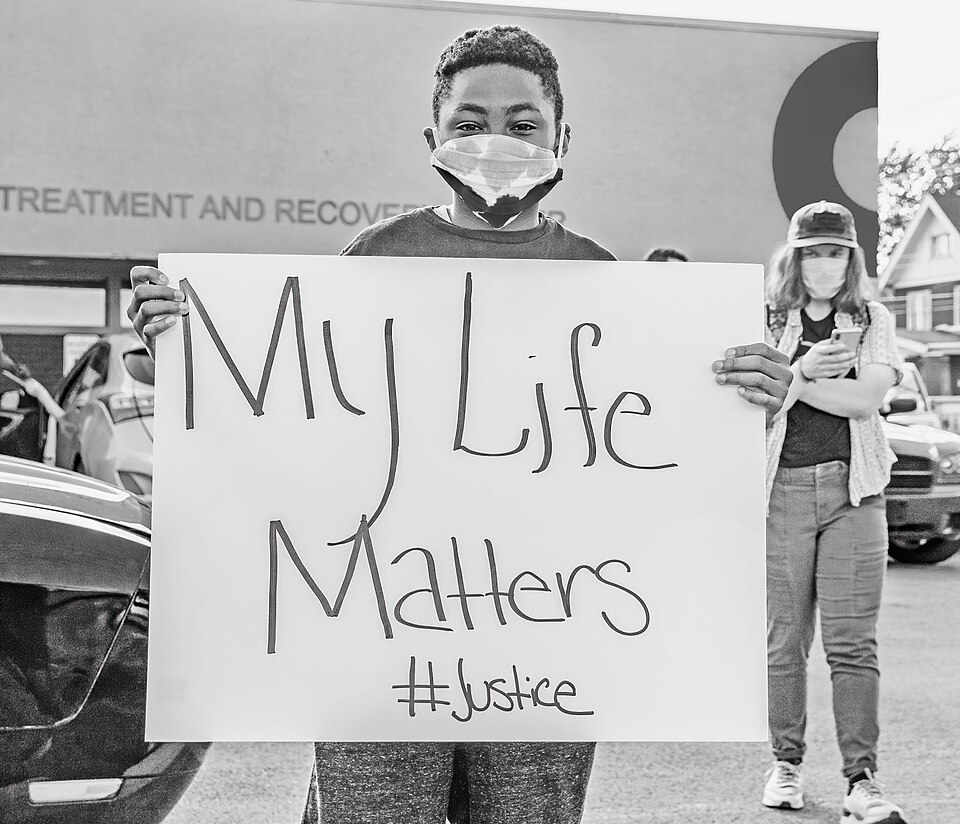
From John Parker crossing the river at night, to Pleasant Litchford building a life on land he owned, to students taking over Bricker Hall, to organizers demanding that Black lives matter—people in Ohio have insisted that democracy live up to its promise.
Not once. But over and over again.
So the question is not whether this struggle continues.
It does.
The question is what we do with this history.
Do we treat it as something that happened elsewhere, long ago?
Or do we recognize it as something that has unfolded here, and is still unfolding now?
Because if this history teaches us anything, it is this:
Democracy is not self-executing.
Freedom is not self-sustaining.
They have to be fought for.
Protected.
Expanded.
And that work—here in Ohio, as much as anywhere else—has always depended on ordinary people doing extraordinary things.
That is the history.
And that is the charge.
Taylor, Nikki M. Driven Toward Madness: The Fugitive Slave Margaret Garner and Tragedy on the Ohio. Athens: Ohio University Press, 2016.
Kendi, Ibram X. The Black Campus Movement: Black Students and the Racial Reconstitution of Higher Education, 1965–1972. Palgrave Macmillan, 2012.
Wilkerson, Isabel. The Warmth of Other Suns: The Epic Story of America's Great Migration. Random House, 2010.
Taylor, Keeanga-Yamahtta. From #BlackLivesMatter to Black Liberation. Chicago: Haymarket Books, 2016.
Documentary Films:
Great Migrations: A People on the Move, hosted by Dr. Henry Louis Gates, Jr., premiered on January 28, 2025 (PBS)
Freedom Summer (2014). American Experience/PBS.


.jpg)
_-_NARA_-_542010.jpg)


.jpg)


.jpg)


.jpg)


.jpg)
.jpg)
